
Trenching, Duct Banks and Pads for Utilities and Energy Companies in Texarkana, Texas
Water, sewer, duct bank, fiber and equipment-pad construction for utilities and energy companies in Bowie and Cass counties, built for clay trenches.
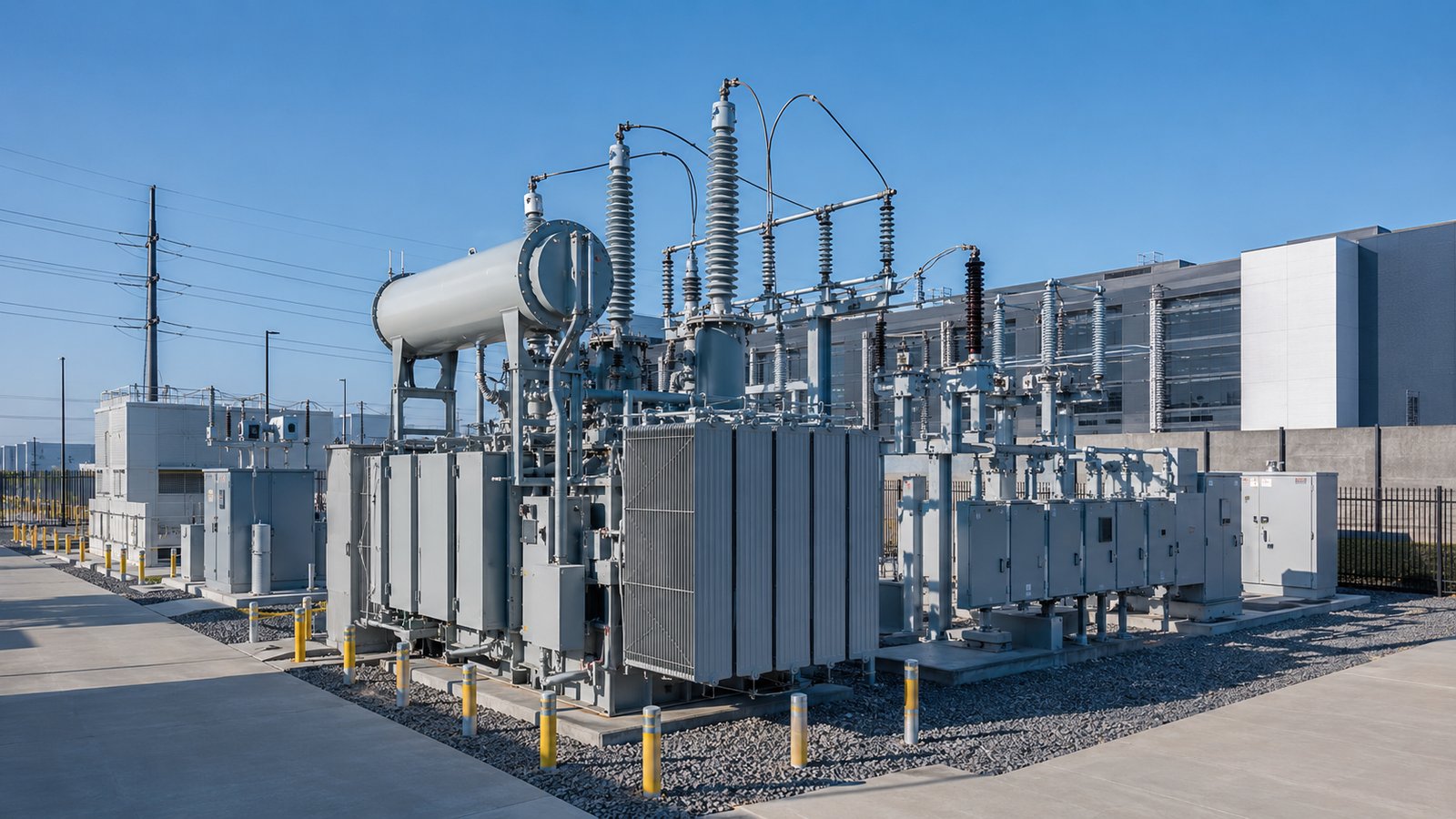
Right of way is the first constraint on any utility job, and the second is whatever is already buried in it. Water companies, electric cooperatives, gas distributors and fiber builders all work in the same narrow corridors along roads and rail, and each has its own standards for depth, separation, bedding and restoration. We are the contractor who digs, sets, backfills and restores to those standards.
For utilities and energy companies in Bowie and Cass counties we install water and sewer mains, electrical duct banks and conduit, fiber routes, vaults and manholes, and the concrete pads, foundations and containment that sit around substations and equipment yards. We also relocate lines when road projects move them, and we prepare the sites where new plants and campuses will take service.
A utility owner is usually buying schedule certainty and restoration quality. The first means a crew that shows up and finishes a segment. The second means a trench that does not settle and a surface the landowner or road authority accepts.
Clay, groundwater and backfill
Soil decides trench behavior. The USDA describes the Texark soil, with a type location in Bowie County near Dalby Springs, as a very-fine clay on flood plains with an apparent water table at 2 to 3.5 feet and very slow permeability. A trench in that ground holds water, walls slough, and pipe bedding can float. We plan dewatering, trench boxes and select backfill ahead of time, and we avoid leaving a long length of trench open ahead of the pipe.
Compaction matters just as much as depth. Clay backfill placed wet and walked on will settle under a road or a slab, and the settlement shows up as a dip in a driveway or a crack in a pad. We place backfill in lifts, test density, and use flowable fill or select material where a crossing demands it. For crossings and tight corridors, see how we handle utility potholing and locating before any machine touches the line.
Pipe, power, structures and restoration
Our scope for utility owners falls into four groups. Pipe work includes water main installation and sanitary sewer installation. Power and communications work includes electrical duct banks and conduit for fiber. Structures include manholes, vaults and equipment foundations. Restoration includes paving patches, curb and sidewalk replacement, seeding and erosion control.
We also build the concrete that supports the equipment. Transformer pads, switchgear slabs, generator foundations and containment curbs have to be level, correctly reinforced and ready when the equipment arrives. A pad that is off by a half inch causes trouble for a crane and a headache for the manufacturer's commissioning team, so we survey the pad, not just the form.
Locates, spotters and storm season
Utility work puts crews near live infrastructure, so our process starts with locates, potholing and a hot-work or excavation permit where the owner requires one. We hold daily tailgate meetings and keep spotters on the ground when equipment works near overhead lines. A competent person classifies the soil and sets the protective system for every trench deeper than the allowed limit.
Storm season brings its own hazards. The City hazard mitigation plan reports that the area is prone to tornadoes and hailstorms, and Bowie County has had two tornado-related FEMA disaster declarations going back to 1953. We stage equipment where it can be secured and keep a plan for stopping work and protecting open trenches when a line of storms is forecast. Energy companies that serve the oil, gas and midstream sector often ask about the same practices on pipeline-adjacent work.
Outage windows and corridor relocations
Utility schedules are driven by outages, easements and permits. A water line tie-in might need a shutdown window agreed weeks in advance, and a duct bank crossing a road may need a TxDOT permit and a traffic control plan. We sequence work to the window, pre-fabricate where possible, and test and restore quickly so a customer is not left without service.
TxDOT corridor work moves lines too. On the US 82 project near US 259, TxDOT describes a new storm drain system with inlets, reconstructed ramps on both sides of US 259 and relocation of an existing trail about 25 feet south. Projects like this generate relocation work for utility owners, and the utility relocation trade crews coordinate with the road contractor to avoid conflicts.
New load and new water in Bowie County
Demand for new service is rising in the region. Project Big Pine, announced in April 2026 by TexAmericas Center and Potentia Development, is a planned 500-acre data center and power-intensive campus in Bowie County with an estimated $3.5 billion in projected investment, a nearby 345-kV transmission line, natural gas, a water solution and high-capacity fiber. Other outlets cite 400 or 450 acres, and the project is a plan, not a finished campus, so timing will depend on approvals and financing.
Water capacity is a similar story. TexAmericas Center announced in 2021 that a new onsite $200 million water treatment plant was funded and soon to be under construction, while Wright Patman Lake holds 77,300 acre-feet of conservation storage for municipal water supply. Owners planning a service extension to a new customer should expect trenching, boring and structure work across several segments. See our notes on industrial and manufacturing owners for the customer side of those extensions.
Send the route and the specs
Send the route map, your construction standards and your outage windows. We will return a segment-by-segment price, a restoration plan and a schedule.
Common Questions
How do you protect existing lines when digging a new trench?
We request locates, pothole to verify depth and position, and hand-dig near crossings. Machines stay clear of a located line until it is exposed. We record what we find so your records improve with every job.
What do you do about groundwater in the trench?
Where the water table is shallow, we use sump pumps, well points or staged dewatering and discharge to an approved location with erosion control. In clay that holds water, we limit open trench length and install bedding promptly so pipe does not float.
Can you restore pavement and landscaping after the pipe is in?
Yes. We patch asphalt and concrete to the owner's or road authority's standard, replace curb and sidewalk, regrade and reseed, and maintain erosion control until vegetation holds. Restoration complaints end more utility relationships than pipe failures, so we treat it as part of the work.
Do you build equipment pads and foundations for substations or compressors?
We build pads and foundations to engineered drawings, including reinforcement, anchor bolt templates and containment. Survey control is part of the work so the manufacturer sees the level, flat pad it expects.
How do you work with TxDOT and local permitting for road crossings?
We prepare the crossing plan, traffic control and permit package for the owner or support the owner's submission. The City of Texarkana reviews floodplain permits through the City Engineer, and TxDOT permits govern state highways, so we sort out which agency applies before we schedule.
Can you handle emergency repairs as well as planned construction?
We take emergency calls when crews and equipment are available, and we will say so plainly when they are not. A broken main in saturated clay needs shoring, dewatering and fast bedding, and the repair is only done once the backfill is compacted and the surface is restored. Owners who want a standing arrangement can set up pre-agreed rates, so a call at night does not begin with a negotiation.