Haul Roads, Pads and Containment for Oil, Gas and Midstream in Northeast Texas
Access roads, equipment foundations, containment pads and drainage for oil, gas and midstream operators in Bowie and Cass counties, built on red clay.
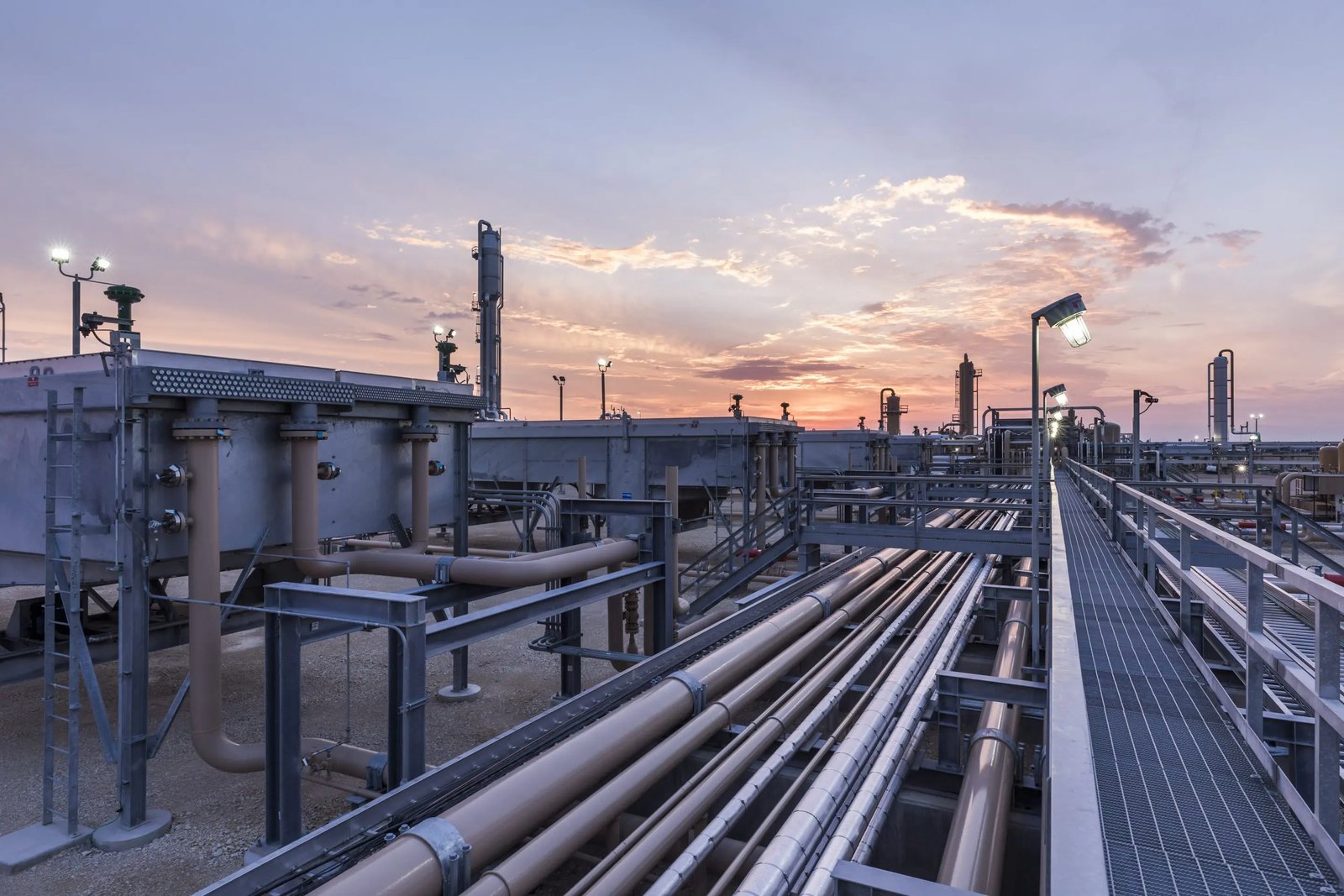
Red clay haul roads decide whether an oilfield or midstream site stays on schedule. A lease road that is firm in August becomes a rutted trough after two days of rain, and a loaded truck that cannot get to the pad does not deliver anything. We build the access roads, the pads and the containment that let equipment get in, set, and stay stable in Northeast Texas conditions.
The Handbook of Texas describes Cass County towns whose economies have long rested on farming, forestry and oil. Atlanta lists oil among its principal industries, and Queen City and Linden carry similar histories. We do not claim any particular field or operator. We simply know the ground in Cass and Bowie counties and what it takes to build a pad on it.
Our work for oil, gas and midstream companies is civil and concrete: grading, base, equipment foundations, secondary containment and drainage.
Access first, then the pad
We start with the access route. Before a pad is cut, we look at how trucks will reach it: grade, drainage, turning radius and what the road will do when wet. Geotextile fabric and a compacted stone or treated base keep a haul road alive through a rainy month, and cheap shortcuts show up as stuck trucks and repair bills. Our road subgrade preparation work follows the same logic whether the road leads to a pad or a plant.
Next we sequence the pad: strip topsoil, stockpile it for reclamation, cut or fill to grade, proof roll, place base, then form and pour. Reclamation is part of the plan from day one, so the topsoil goes back where it belongs. We document each step with photographs for the operator and the landowner, since lease restoration disputes tend to be decided on records.
Foundations, containment and drainage
Our scope for energy owners covers site preparation, equipment pads and foundations, containment, and drainage. A compressor skid, separator, pump or tank needs a foundation designed for its weight and vibration, with anchor bolts set by template and a surface that sheds water. The equipment pads and machine foundations we build are poured to the engineer's drawings, with reinforcing inspected before placement.
Containment is the other major piece. A containment pad has to hold a spill and keep rain from overwhelming it, so curbs, slopes, joints and sealants are chosen for the fluids on site. We also install culverts and ditches to move stormwater around the site, and we place bollards and site concrete where equipment needs protection from traffic.
Operator permits and local approvals
Oil and gas facilities answer to regulators we do not control, such as the agency that oversees the energy industry in Texas and the state environmental agency, and the permits belong to the operator. Our part is building to the approved plan, keeping records, and avoiding shortcuts that cause a compliance problem later. We discuss spill prevention plans, stormwater requirements and containment capacities with the operator's engineer before we price.
Local permitting depends on the site. Inside a city, grading and building permits come from the city, and plans must meet Texas Accessibility Standards where they apply. A third-party guide reports Bowie County does not issue a general building permit, so unincorporated sites should be confirmed with the county. In Cass County towns such as Atlanta, a third-party guide says a written permit is required for improvements above a small cost threshold, and the edition of adopted codes should be confirmed with the city directly.
Heat, rain and sediment control
Weather and ground define the risk. The Texas Almanac lists Cass County rainfall of 49.2 inches in 2019 and a July mean maximum of 92.1 degrees Fahrenheit, and the City hazard mitigation plan describes the area as prone to tornadoes and hailstorms. Rain stops dirt work. Heat affects concrete placement, so on summer pours we adjust mix temperature, add retarders where the engineer allows, and use fog misting or curing compound.
Water management is the next issue. Lease sites and pipeline yards tend to be remote from city drainage, so every pad needs somewhere for water to go and a plan to keep sediment out of it. We install silt fence, inlet protection and stabilized entrances, and we keep them maintained, because a stormwater inspector or landowner will check. For long linear projects, the trenching and backfill trade crews follow the same compaction rules as on a plant site.
Cass and Bowie county sites
We serve operators in Cass County, including Atlanta, Queen City and Linden, and across Bowie County. The Handbook of Texas notes that the 1935 opening of the Rodessa oilfield helped soften the effects of the Depression in Atlanta, which gives some sense of how long energy has been part of this landscape, although it says nothing about current activity.
Rail also matters to midstream and processing. TexAmericas Center's rail provider lists transload, storage and spotting services on the East and Central Campuses, and industrial owners there may need pads and aprons for material handling. For customers on the processing side, see our notes for industrial and manufacturing owners, and for gathering and pipeline utilities see utilities and energy companies.
Send us the pad and the route
Send the pad layout, the access route and the containment requirements. We will return a priced scope with the haul-road base and the reclamation steps included.
Common Questions
Can you build a lease road that survives a wet month?
Yes, with the right base. We strip, proof roll, place geotextile where soils are soft, and build a compacted stone or treated base with crown and ditches. The cost is higher than a bladed road but much lower than repeated stuck trucks and regrading.
What goes into a containment pad?
A containment pad needs a sound subgrade, reinforced concrete, curbs sized to the required volume, properly sealed joints, and a drain or sump arrangement that handles rain. Details depend on the fluids and the operator's plan. We build to the engineer's drawings and record each step.
How do you handle landowner and lease restoration?
We stockpile topsoil, protect it, and replace it after construction, then seed and stabilize. Photographs and daily logs document the before and after. Landowners are neighbors, and we treat them accordingly.
How hot weather affects concrete on a remote pad?
High temperatures speed setting and raise cracking risk. We plan pours for early morning, chill mix water where needed, use fog or evaporation retarders, and cure promptly with blankets or compound. For remote sites we confirm ready-mix haul time before scheduling.
Do you work on plant sites as well as lease pads?
Yes. Larger facilities need foundations, drainage, paving and underground utilities, and we build them with the same crews. We also handle expansions inside operating plants when a work plan and permits are in place.
What does it cost to add a stable base to an access road?
The answer depends on length, soil and the traffic the road must carry, so we price from a walk of the route. A short spur over firm ground may need only crowning and ditches. A long approach across wet clay may need undercut, fabric and several inches of compacted stone. We show the options with unit prices, and operators usually find the stable base pays back the first time a heavy load arrives in wet weather.