
Concrete, Utilities and Earthwork for General Contractors and CM Firms in Texarkana, Texas
A concrete, site utilities and earthwork partner for general contractors and CM firms in Texarkana and Bowie County, with one party per handoff.
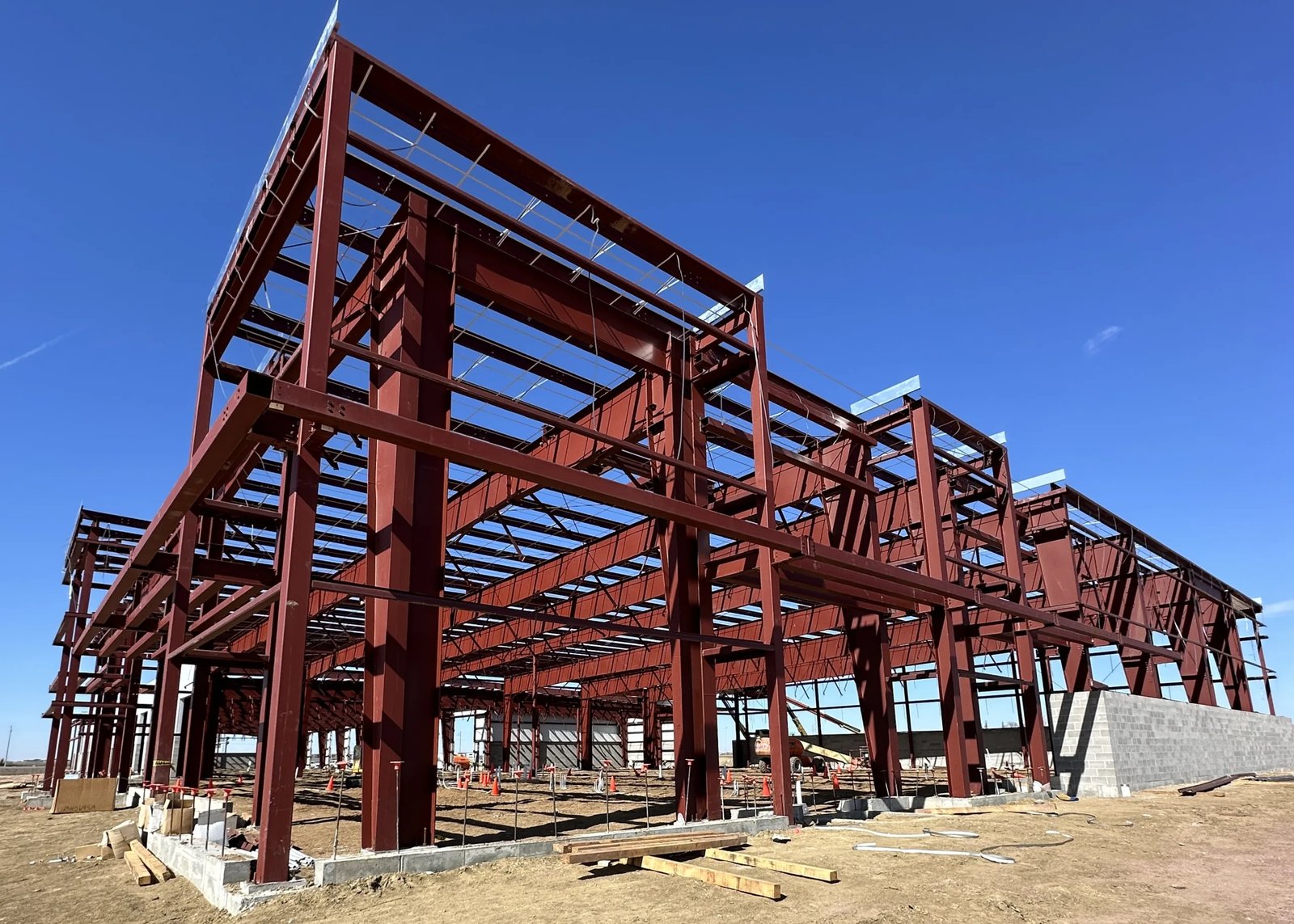
Bid day exposes the weak spots in a sitework and concrete package faster than any other day on a job. One sub carries the pad but not the undercut. Another carries the slab but leaves the vapor barrier and curing to someone else. A third lists utilities by the linear foot with no word about dewatering. The general contractor gets the gap in change orders later.
We are a concrete, site utilities and earthwork contractor in Texarkana that works under general contractors and construction management firms across Bowie and Cass counties. Our pitch is a narrow one: fewer interfaces. When stripping, subgrade acceptance, forming and concrete placement follow one plan, we track responsibility for each handoff.
Most of our general contractor work comes from repeat relationships. A superintendent who has watched a crew hold its pour dates through a wet March tends to call the same crew for the next building, and we would rather earn that call than win a one-time low bid.
What we coordinate with our trade partners
We coordinate the trades that decide a slab: grading, excavation, trenching and backfill, formwork, rebar placement, finishing and curing. That matters on a general contractor project because the quality of a floor is the sum of a dozen small handoffs, and each handoff between companies is a place for blame to land.
We rent pumps and bring in ready-mix, testing labs and specialty cutting subs for the work outside our coordinated scope, and we tell you which is which in the proposal. If your superintendent wants the pour day split between two placements, or wants the rebar chairs inspected before the concrete truck is dispatched, we build that into our coordination plan. Coordinating directly means we can move a trade partner on Tuesday instead of waiting for a sub-of-a-sub to return a call.
A package that matches your schedule of values
A typical package from us for a GC covers the earth and the concrete from the property line to the building: clearing, mass grading, pad prep, utilities, footings, slab, and the exterior flatwork. We break it into line items that match your schedule of values so pay applications are easy to review. If you want us to bid only the concrete, or only the utilities, we will, but we say up front where a split creates a scope gap.
Alternates are welcome. Bidding a soil treatment option next to an undercut-and-replace option, for example, gives an owner a real choice. See how we handle lime and cement soil treatment against conventional replacement, and how over-excavation and recompaction is priced when a geotechnical report flags soft layers.
Lookaheads that survive rain
Schedule risk in this market is mostly weather and review time. The City hazard mitigation plan puts annual rainfall in the Piney Woods area at 42 to 58 inches, and Bowie County declared a disaster after heavy rain and flooding in April 2025. A baseline schedule that shows zero weather days on an earthwork activity is not a serious schedule.
We submit a pour calendar and a lookahead that your project manager can drop into the master schedule. It lists mobilization, subgrade proof roll, forms, rebar inspection, placement, saw cutting and curing duration for each element. When a rain event moves a date, we send a revised lookahead the same day so the follow-on trades are not guessing. Review times matter as well: plans must also meet Texas Accessibility Standards, and building code editions are adopted at the local level, so confirm the edition in force with the Inspections Department before you freeze drawings.
Trench safety and campus access
Safety on a GC job is a contract term and a daily habit, and we treat it as both. Trench work follows competent-person rules, with sloping or shoring set by soil type, and our excavations are protected from traffic and open edges. Clay near saturation behaves differently from the same clay dry, so the competent person re-evaluates a trench after every significant rain.
We attend preconstruction and weekly coordination meetings, provide our site-specific plan on request, and respect your owner's badging and access rules. On campus work, including projects like the university campus or the medical campuses, we adapt hours and haul routes to protect patients, students and staff.
The buildings our GC clients bring us
Our GC clients bring a wide mix of projects. Warehouses and distribution centers tend to be the largest pours by area. Medical and educational buildings tend to be the tightest on tolerances and inspections. A 50,000 square foot, $45 million academic building planned at Texas A&M University-Texarkana, for example, is the kind of three-story project that needs careful foundation work and a clean site for crane access.
On the healthcare side, a Texas Department of Licensing and Regulation record describes the replacement hospital for Wadley Regional Medical Center on West Park Boulevard as about 338,924 square feet with an estimated cost of $151,868,375, which shows how large the local building programs can get. For smaller owners, GCs often pair us with an office building or a plant shell for industrial and manufacturing owners. If you are weighing us against another approach, commercial developers in the area often ask the same question.
Put us on your bid list
Send the drawings, the geotechnical report and your bid date. We will return a package priced to your schedule of values with the exclusions spelled out.
Common Questions
Will you bid concrete only, or does it have to be the whole sitework package?
We bid either, and we will also bid grading and utilities alone. The tradeoff is interface risk. If you split the earth and the concrete between two subs, one of them carries the subgrade proof roll and the other carries the slab, and any failure of that handoff becomes your problem. We price the combined package lower when we control both sides.
How do you handle unforeseen soft ground discovered after award?
We stop, document the condition with photos and a probe, notify you and the geotechnical engineer, and price the remedy as a defined unit rate, undercut and recompact, lime treatment, or stabilization fabric. Unit rates for undercut are best settled at bid time so there is no argument in the field.
What does your quality control look like on a slab?
We use third-party testing for cylinders and slump, hold inspection points for subgrade and rebar, and keep a curing log. Joint layout is drawn before the pour and cut on a schedule that matches the mix and weather. Flatness and levelness requirements are discussed before bid, not after the first complaint.
Do you carry the permit work for utilities and paving?
Yes for the pieces in our scope. Inside city limits, permits come from the city, and a third-party guide reports Bowie County does not issue a general building permit, so unincorporated work should be confirmed with the county. We handle those items and send your project manager copies of everything.
Can you work in a CM-at-risk or design-build structure?
We do. Early involvement helps the most in design-build, where we can offer pricing on foundation options and site grading before drawings are final. We provide budget numbers during design and then convert them to a guaranteed price when documents are complete.