Concrete Work Near Red River Army Depot, Texas
Equipment pads, floor repair, coring and demolition for industrial and defense-related buildings in the Red River Army Depot area west of Texarkana, Texas.
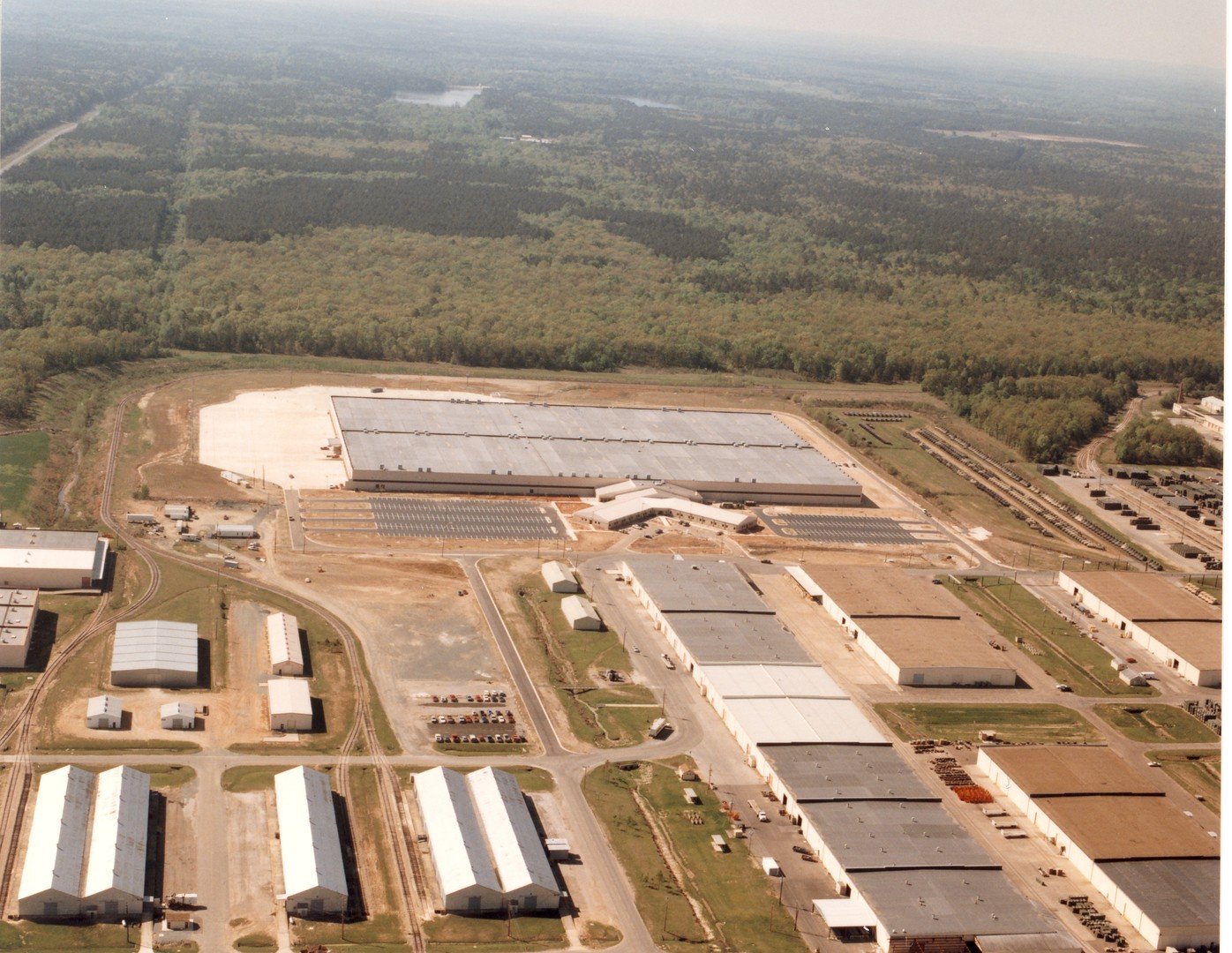
Old floors inside working buildings are the concrete problem at Red River Army Depot. The installation west of Texarkana occupies over 15,000 acres and houses more than 1,400 buildings, per the Army, and most of that floor space was built for a different century's equipment. When a maintenance mission changes, the slab changes with it: a new machine foundation, a trench for power, a patch where a fixture was removed, a ramp where a floor meets a door.
We describe what we can do for the kind of work that happens in a place like this, and we make no claim to contracts there. Access to a federal installation, procurement and security are controlled by the government and its prime contractors, and anyone who works inside the fence follows those rules. If you are a prime or a tenant planning slab work in old shops, warehouses or yards, the questions we ask are the ones every industrial owner should answer: what is the floor made of, what is under it, what will sit on it, and what has to keep running while we work.
Planning for the depot began in 1939 as the Texarkana Ordnance Depot, the Army's history notes, and over 22,000 construction workers arrived to start building it in 1941. In 1946 it stored more than 58,000 returning combat vehicles. That heritage means thick, old reinforced slabs and a lot of buildings that were built fast, so we read as-built drawings with caution and verify with a scan before we saw or core.
A mission that keeps changing the floor
DVIDS describes the depot as the Center of Industrial and Technical Excellence for the Bradley Fighting Vehicle System, which it also rebuilt in the 1980s, with a mission of ground combat and tactical systems sustainment maintenance. The Army notes the depot hosts 16 tenant organizations including the Defense Finance and Accounting Service and Defense Logistics Agency Distribution Red River. Different tenants mean different floors: heavy vehicle bays, warehouse racks, office areas and yards.
A March 2026 local report described a contract awarded to launch the first phase of an advanced automation manufacturing initiative at the depot, valued at $39.2 million initially with potential to reach $80 million and work expected to be completed by March 16, 2027. We do not know the scope and do not suggest we are involved. We cite it because automation equipment is a good illustration of what drives foundation work: robots and machine tools need level, stiff, vibration-aware bases that older floors often cannot supply.
Working inside a secure federal site
On a federal installation, safety and access rules are strict. Workers may need background checks and vehicle inspections, and tools and materials may be inspected at the gate. We schedule extra time for these steps, carry the insurance and training documents primes ask for, and keep the crew list stable so badges do not hold up a pour day. Material deliveries follow the same gate rules, so we confirm delivery windows and driver requirements with the prime before ordering the first load.
Inside the buildings, hot work, lockout, confined spaces and vehicle traffic apply. We use wet cutting or vacuum on every saw cut, keep the area barricaded and sweep before leaving. If a mission-critical bay cannot shut down, we phase the work in strips and protect the live portion.
Cutting, coring, breaking and rebuilding
Our trade partners handle the unglamorous work that keeps old buildings useful. Concrete sawing, cutting and coring opens a slab for a new trench or a floor drain without cracking the area that stays. After a scan for rebar and conduit, we cut in straight lines, remove the section and haul it out as clean debris where possible.
When a bay needs a new machine base, we build equipment pads and machine foundations with epoxy-doweled connections to the existing slab, anchor bolts set to the vendor's template, and non-shrink grout where the manufacturer calls for it. Where a floor has worn, spalled or cracked, concrete repair and restoration brings it back with the right repair mortar and a joint plan for the next twenty years of traffic.
Yards, ramps and the places vehicles turn
A depot with combat vehicles in the yard needs heavy pavement. Tracks and heavy wheels punish ordinary concrete, so slabs where vehicles turn or stop need thickness, reinforcement and joint details from the engineer's design. We follow the plans, and we speak up where we see a joint layout that will invite spalling or a transition where a ramp is too steep for a trailer.
We also tie in new foundations for storage, ventilation or automation equipment and keep the work clean. On sites with many old buildings, concrete demolition and removal is a regular first step, and we separate rebar, haul debris to approved sites and keep dust under control.
Rail, roads and the people who use them
Union Pacific's short line page says the Texas Northeastern Railroad serves Red River Army Depot at Defense, just west of Texarkana. Rail adds another dimension to the yard: spotting areas, loading pads and crossing slabs. See our page on Union Pacific and KCS rail for how we plan around active lines.
A neighboring industrial park, TexAmericas Center, has its own owners and procedures, and we keep the two separate. Whether you are a general contractor or construction manager bidding a depot package or a manufacturing plant owner near the fence, we are glad to talk through concrete scope, schedule and access before you finalize the bid.
Talk through a floor, a bay or a yard
If you are a prime, a tenant or a nearby industrial owner, send us the building description and what has to change. We will outline the cut, repair or foundation scope, the testing, and the access steps we expect.
Common Questions
Can you work inside the Red River Army Depot?
We cannot claim that. Access, contracting and security are controlled by the Army and its prime contractors. What we can say is that we can support primes and owners with concrete sawing, coring, repair, equipment pads and demolition, and that we will meet whatever access and safety rules the government sets.
How do you handle old slabs with unknown reinforcing?
We scan with ground-penetrating radar or a locator before we cut or core, review any as-built drawings and mark the findings on the slab. If the scan shows congestion, we shift the cut line or call the engineer before proceeding.
What does a machine foundation need that a regular slab does not?
It needs a stiff, level base, a dowelled connection to the old floor, embedded anchor bolts at the vendor's locations and often a separation joint to isolate vibration. We review the vendor's drawings and require them in hand before forming.
How long do repairs take in an occupied shop?
It depends on the repair material. Rapid-set mortars let a bay return to light use within a day, while a full structural patch can take a week or more to cure. We phase the work so the shop can operate on the side we are not touching.
What should a prime ask a concrete subcontractor before bidding this kind of work?
Ask how the sub will verify what is under the slab, how many workers need badges, how it controls dust and slurry in an occupied building, and what testing it will provide. Also ask for a phased schedule that shows which bays stay in service. A sub that answers those clearly has probably worked in live industrial buildings before, and we will put our answers in writing for any prime that asks.