
Data Center Construction in Texarkana and Bowie County
Concrete pads, data hall slabs, duct banks and campus earthwork for data center projects in Bowie County, Texas, built around clay soils and wet weather.
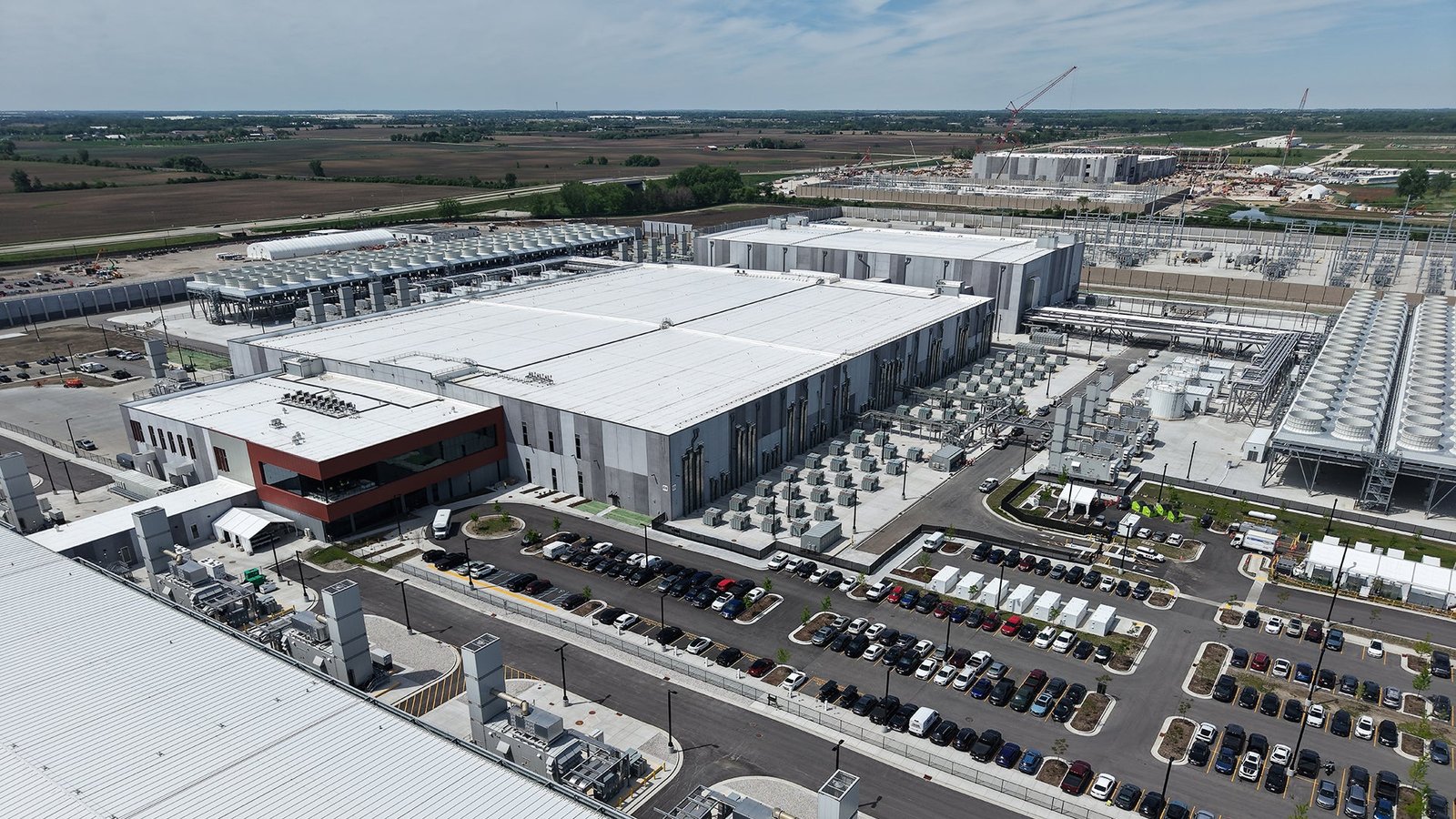
Twenty-four to thirty months is the target the developers of a planned Bowie County data center campus have set to energize it, and that number tells you how a data center schedule is built. The electrical gear is the long pole. The building has to be ready in time for it, and the concrete, the underground duct banks and the earthwork are what get it ready. If the pads are late, the switchgear sits in a warehouse accruing storage fees.
We do not build the white space or the cooling plant. We build what they stand on and what feeds them: engineered pads for generators and transformers, heavy slabs for the hall, duct banks, fiber trenches, site drainage and the haul roads that bring in the largest equipment the owner will ever move. That is a big enough job to deserve its own planning, and a data center owner who treats it as an afterthought finds out at the first rain.
The building itself can take several forms. Some owners choose tilt-wall construction for the halls because the panels go up fast and give a secure shell, while others follow the heavier path of a manufacturing plant with a thick slab and large mechanical yards. Either way the concrete scope starts with the same questions about soil, power routes and drainage, and we would rather answer those with the owner in the first meeting than in the first change order.
The Bowie County campus pipeline
Project Big Pine, announced in April 2026 by TexAmericas Center and a development partner, is a planned power-intensive campus on roughly 500 acres, with an estimated $3.5 billion of projected investment and about 120 permanent jobs. The announcement cites a nearby 345-kV transmission line, natural gas, a water solution and high-capacity fiber. Other outlets cite 400 or 450 acres, so treat the acreage as approximate, and treat the entire project as planned rather than built.
The ground behind it matters. TexAmericas Center holds roughly 12,000 acres of former military land west of Texarkana, and the removal of the Army's RCRA permit opened more than 6,800 acres for development. The Army's record puts the former ammunition plant 12 miles west of Texarkana. Large flat tracts with transmission, gas and rail access are the reason this land is on any data center shortlist.
Pads, halls and the concrete that carries the load
A data hall floor is a flat, heavily loaded slab with cable trays, raised access systems and rack rows that may weigh thousands of pounds each. Generator yards and chiller plants need equipment pads that carry the dynamic load of running machinery, and transformer pads need oil containment. We build post-tensioned slabs where the engineer wants fewer joints and thinner sections, and conventionally reinforced slabs where the structure favors them.
Outside the building, a campus needs miles of electrical duct banks encased in red-dyed concrete, manholes and vaults at every pull point, and conduit and fiber trenching to the property line. We lay these out with the electrical engineer so that the bends, the spacing and the depth match the cable pulling plan, because a duct bank that is poured wrong cannot be corrected without breaking it out.
Earthwork on a campus scale
A 500 acre property takes real earthwork. Our trade partners run mass grading with scrapers, dozers and compactors, strip and stockpile topsoil, and build the detention and drainage network before buildings go up. Haul roads are built to carry loaded transformer trailers, which may weigh well over a hundred tons, and are maintained through the wet months.
Soil work is a bigger issue than owners expect. In Bowie County the Billyhaw series, type-located at Texas Highway 8 and Interstate 30 in New Boston, is a very fine clay with 60 to 80 percent clay on the Red River flood plains and very slow permeability. Where a pad must hold equipment without settling, we over-excavate and rebuild with compacted engineered fill or treat the clay in place.
Building the early works in the right order
On a campus, the first year goes to civil work: clearing, grading, stormwater, roads, and the underground utilities that the building will tie into. Foundations and slabs follow in phases so that the first data hall can be enclosed while later phases are still in earthwork. We recommend that the owner commit to the duct bank routes and the pad locations early, because every later change ripples into the electrical schedule.
Weather is a factor even though the building is indoors. Bowie County received about 52 inches of rain in 2019, and a disaster declaration was issued in April 2025 after heavy rain and flooding. We keep haul roads graveled, drains open and subgrade protected, and we build in a few weeks of float for the grading package. A campus that loses a month to mud on the pads may not make the energization target.
Storms, security and site rules
The City of Texarkana hazard mitigation plan notes that the area is prone to tornadoes and hailstorms, with seven tornadoes in the record the plan keeps, which starts in 1950. Data halls are built to stand, but construction sites are exposed, and a storm plan with shelter locations and laydown tie-down rules is part of our safety program.
Security restrictions are another layer. Many owners limit site access, photography and subcontractor lists. We cooperate with background check and badging rules, and we keep the crew roster stable so that people who know the site stay on it. See our utilities and energy company experience for how we manage restricted sites.
Start with the power and the pad schedule
Send the one-line diagram, pad schedule and civil drawings. We will build a sequenced estimate for the duct banks, pads and earthwork that lines up with your energization date.
Common Questions
Is the Big Pine campus under construction?
It was announced in April 2026 as a planned campus with a target to energize within 24 to 30 months. We treat it as a planned project, not a built one, and we do not claim any role on it. We build to the same standards for any owner who brings a power-intensive project to the area.
What soil issues should a data center owner expect?
Clay. The local series are very fine smectitic clays with high shrink-swell, and the flood plain soils drain slowly. Pad design should assume that surface moisture changes, so we recommend a geotechnical program at each building and generator pad rather than a single park-wide report.
Why red-dyed duct banks?
The red concrete warns later excavators that high voltage cables run below. It is a common practice for electrical duct banks, and it costs little. We pour duct banks with spacers that hold the conduit in position and vibrate the concrete to fill the voids.
How much flatness does a data hall floor need?
Less than a high-bay warehouse with narrow aisle trucks, but more than an office slab. The designer sets the flatness, and our quality control plan includes surface tests. The bigger issue is joint layout, because cable trays and rack fasteners must avoid the saw cuts.
What approvals apply on unincorporated land?
A third-party guide reports no county-issued general building permit in Bowie County, so the review path depends on the site and the design. State accessibility rules, fire code review and utility interconnection approvals still apply. Plan the approvals early, because they can control the schedule more than construction does.