Manufacturing Plant Construction in Texarkana, Texas
Equipment pads, containment, heavy slabs and utilities for manufacturing plants in Texarkana and Bowie County, Texas, including TexAmericas Center sites.
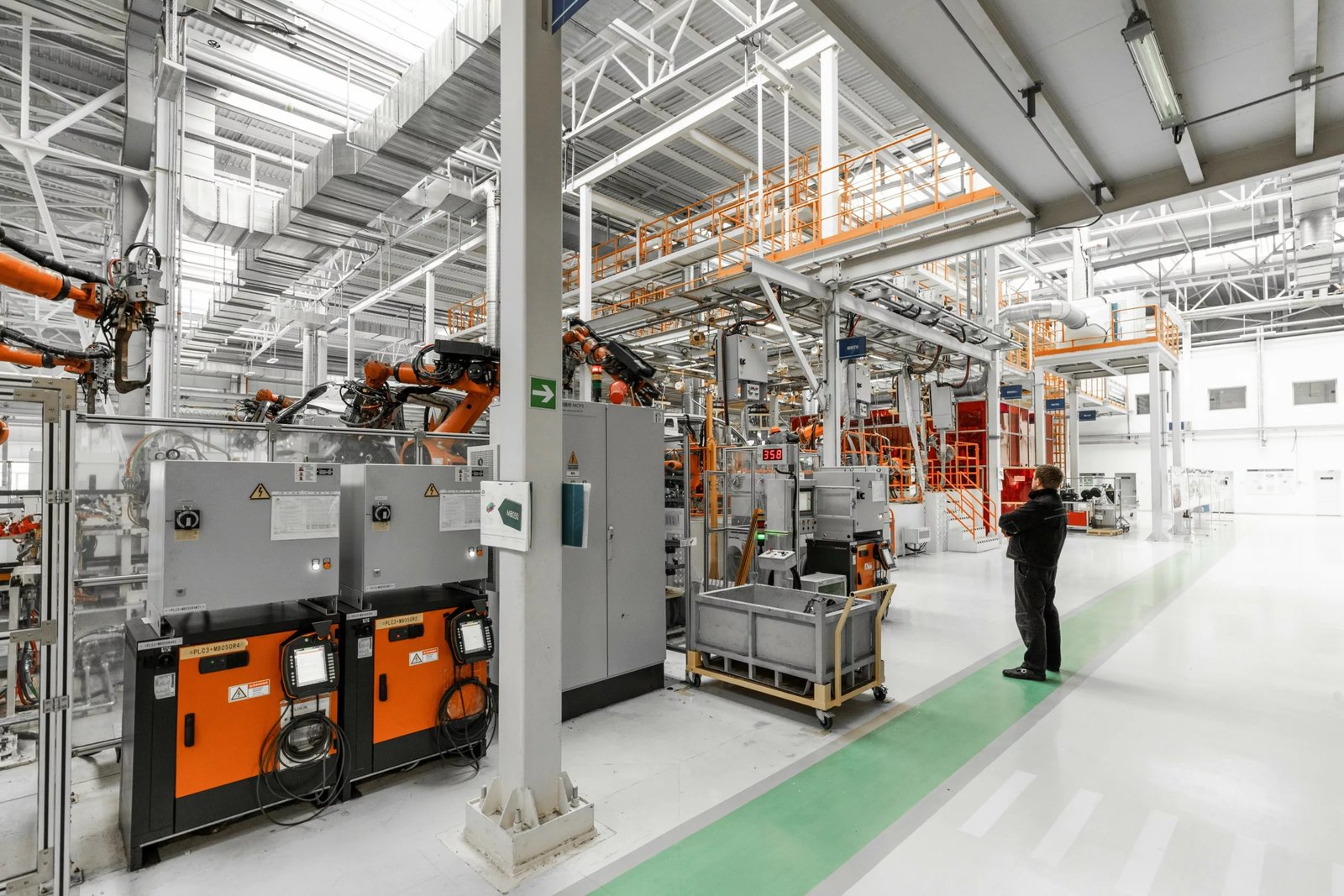
Process equipment is heavier than the building around it, and manufacturing foundations are designed around that fact. A reactor skid, a press, a rail-served tank farm or an automation cell will each ask the slab to do something an office floor never does: carry a point load that would punch through a thin section, stay level to a tolerance the machine vendor sets, and survive a spill. We build manufacturing plants from the dirt up, and the concrete is usually the longest lead conversation we have with the owner.
The Texarkana area has a deep manufacturing history, much of it tied to the military. The Handbook of Texas lists lumber products, sewer tile, tires, railroad tank cars and paper products among the area's industries of about 1970, and describes the arrival of the ammunition plant and the depot during World War II. Today the base is wider. Chemical, recycling, automation and defense work all land on the same flat clay country west of the city, where rail and highway come together.
Plants do not all look alike. A food line behaves like our food and beverage processing work, with washdown floors and drains. A plant with long clear spans and heavy cranes often uses pre-engineered metal building framing on top of a heavily reinforced slab. We read the process first and then decide which kind of floor, footing and drainage it needs, because a plant that is priced as a generic shell tends to come back as a change order the first time a vendor sends a drawing.
What is being built west of Texarkana
A specialty chemical manufacturer announced an expected $50 million expansion at TexAmericas Center, adding about 100 million pounds of annual capacity. Its 2024 initial site is a 20-acre property with a 25,000 square foot rail-served facility, operations at the existing building begin in the first quarter of 2027 and the expanded facilities are expected by the first quarter of 2028. Property tax abatements were approved by Bowie County and the Texarkana College board.
An advanced recycling facility announced in February 2025 carries more than $145 million in capital investment, and TexAmericas Center's annual report coverage counts 44 companies and 1.4 million square feet of industrial and commercial space in use. Those numbers are different sizes of building, but each needs equipment pads, containment, trench and underground utility work before the first machine arrives. See how we frame that under industrial and manufacturing owners.
The concrete we put under process equipment
We pour equipment pads and machine foundations with isolation joints that keep vibration from traveling into the floor, and we set embeds and anchor bolts from the vendor template, not from memory. Anchor bolt position matters more than almost any other tolerance in the project, because a bolt that is half an inch off means a drilled hole in a nearly finished pad or a rejected machine.
Where chemicals are handled, we build secondary containment with sealed joints and a sump slope. In clean production areas we place sealed floors with hardeners that resist abrasion and cleaning. We coordinate the forming, reinforcing, placement and finishing, so there is one point of contact who knows what was embedded and where.
Soil, rail and the existing ground
Much of the ground around the former ammunition plant has been industrial ground for a very long time. The Army record lists the facility as starting with 15,588.85 acres, of which 14,291.87 acres have been conveyed, and with over 2 million square feet of space. In April 2021 the state environmental agency removed the Army's RCRA permit, which opened more than 6,800 additional acres to development. Anyone building there should expect to review environmental records, as-built drawings of abandoned structures and any limits on excavation before the first trench opens.
The clay beneath the plain is another factor. Where a plant carries a heavy floor load, a soil report may call for treated subgrade, drilled piers or an engineered fill pad. We lay out drilled pier foundations where settlement tolerance is tight and keep a separate crew for over-excavation and recompaction when the borings show soft pockets.
Working inside an operating plant
An expansion next to a live process line asks different questions than a greenfield job. We hold daily coordination with the owner's operations lead, mark every hot work and excavation boundary, and use utility locating and potholing before any trench near existing lines. Lockout rules and permits to enter live areas are normal, and we budget the hours they cost.
Concrete trucks and pumps in a working plant need defined routes and laydown areas, and a spill from a process vessel can end a pour day. We rehearse the placement route, protect existing slabs where trucks cross and keep washout out of the drainage that feeds the owner's permitted discharge point.
Codes, review and who inspects
Inside Texarkana the city Inspections office reviews plans under the International Building Code, with the Texas Accessibility Standards also applying. The edition in force should be confirmed with the City. Industrial sites in unincorporated Bowie County may face no county building permit, according to a third-party guide, but state environmental rules, fire marshal review and insurer requirements still shape the drawings.
For plants that handle chemicals, the stormwater permit and the containment design drive more field decisions than the building permit does. Our erosion control and SWPPP work is set up before grading and kept current through completion, which avoids the stop-work orders that follow a failed inspection.
Bring the equipment list with the drawings
Send the equipment layout, vendor bolt templates and soil report. We will price the pads, containment and floors with the load assumptions written beside each line.
Common Questions
Can you build a plant addition while operations continue?
Yes, and most expansions here are built that way. We separate the work zone from the operating area with barriers, schedule noisy or dusty operations around shifts and coordinate every shutdown tie-in with the plant manager. The cost is in the hours spent waiting for permits and access, which we price openly.
How do you handle anchor bolt tolerances?
We build a steel template from the equipment vendor's drawing, set the bolts in the form, survey them before the pour and again after. If a bolt moves during placement, we find it while the concrete is still plastic. That check costs an hour and avoids drilling into finished concrete.
What slab thickness does a manufacturing floor need?
It depends on the heaviest wheel and point loads, not on a rule of thumb. A plant with forklifts and pallet jacks needs a different section than one with press foundations or rail-mounted equipment. We work from the structural engineer's drawings and flag areas where the loads on the plan look light.
Is the land at TexAmericas Center ready to build on?
The park advertises more than 6,800 shovel-ready acres following the permit removal and a planned water treatment plant. Shovel-ready does not mean grade-ready. You still need geotechnical borings, an environmental review of your specific parcel and a utility connection plan for water, power and sewer.
Do you coordinate rail work?
We build the pads and aprons that sit next to track and coordinate with the short line provider that serves the park, which also offers transload and spotting. The track itself is built by the railroad or its contractor, and we plan our slab elevations around their grade.