
Sanitary Sewer Installation in Texarkana, Texas
Gravity sanitary sewer, laterals and manhole installation near Texarkana, with laser grade control, clay and groundwater planning, and air and vacuum testing.
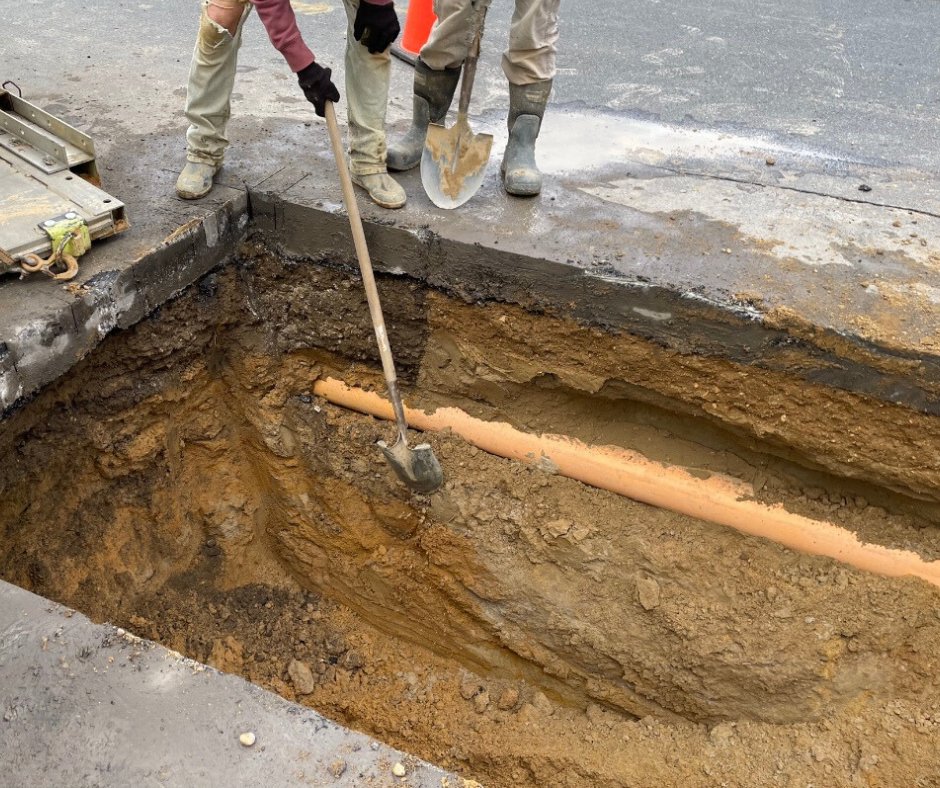
Gravity does not negotiate. A sanitary sewer line that is a quarter inch off grade at one joint will pond, then settle, then back up, and no amount of finish work above it will hide the problem. That is why sewer work is the most unforgiving buried scope we build, and why we put a laser and a grade rod on every foot of it.
Sanitary sewer installation covers main lines, service laterals, cleanouts, manholes, connections to existing sewers and sometimes small lift stations or force mains. The pipe is laid from the low point upstream, with grade checked at each joint, and the system is tested after backfill. The failure points are bedding, joints, manhole connections and the backfill above the pipe. We pay attention to all four.
We install sanitary sewer for commercial buildings, industrial plants, subdivisions and municipal extensions around Texarkana, Nash, Wake Village and the Northeast Texas towns beyond. Here is how we handle the work in this ground, and what to expect from a bid.
Clay trenches and high groundwater
The USDA describes the Billyhaw soil, with its type location at Texas Highway 8 and Interstate 30 in New Boston, as a very-fine smectitic clay with 60 to 80 percent clay, on Red River flood plains, rarely to commonly flooded, with very slow permeability. Very slow permeability means water that enters the trench stays there. A sewer trench in that kind of ground fills after a rain and needs pumping before bedding can go in.
We handle it with sumps, a stone bed and a short open trench, and we stop work when groundwater rises faster than pumps can keep up. Flotation is the other risk: an empty manhole barrel or a light pipe can float in a saturated trench, so we backfill and weight structures as soon as they are set. On clay we also watch for the opposite problem, which is trench walls that dry, crack and then slump into the bedding after a few days of sun. The cure is the same in both cases: open less trench, close it sooner and keep one eye on the weather.
Grade, bedding and joints
We shoot the invert at the starting manhole, lay pipe up grade with the bell end forward, and check every joint with a laser and a rod. Bedding is shaped to support the lower haunch of the pipe, because a pipe bearing on a point load instead of a bed will crack or deflect over time. Backfill goes in layers on both sides of the pipe so the load stays balanced.
Joints are cleaned, lubricated and assembled to the manufacturer's rules, and gaskets are checked for position. At every manhole connection we use a flexible boot or approved connection to allow for movement. That movement is real in clay, and rigid connections are where sewers crack first.
Testing and what inspectors look for
Gravity sewers are usually tested with a low-pressure air test or a vacuum test for manholes, plus a deflection check on flexible pipe, and in some jurisdictions a video inspection. The engineer or the utility states which, and the city inspector may need to witness it. Inside the city of Texarkana, Texas, the Inspections office at 220 Texas Blvd handles building and plumbing review. Connections to the public system go through the sewer utility's own process.
Because city codes are adopted locally, the plumbing code edition in force can differ from what appears in a state summary. We confirm editions with the city before sizing building drains and cleanouts to the plan.
Growth and where lines are going
Wake Village grew from 5,492 residents in 2010 to 5,945 in 2020, and development around it keeps pushing sewer capacity outward. New buildings in the Wake Village area and nearby tend to tie into existing trunk lines, which means new work has to work with old pipe of unknown condition.
In the south and west of Texarkana, where many industrial uses exist, the comprehensive plan suggests green linkages as a buffer, and notes that floodplain areas are generally not able to be developed. For us that means sewer extensions often follow high ground, and crossings of drainage ways become the main design task. We build those crossings with ductile iron or encased pipe where the engineer requires.
Where the money goes
Depth is the first factor. A sewer at six feet and one at fourteen feet are not the same job: the deeper trench needs shoring, wider excavation and slower production. Pipe diameter, manhole count, crossings, bore lengths and restoration of pavement or landscaping follow. Dewatering can be a major line item in wet seasons.
We show each manhole, each crossing and each connection as a line in the bid, because those are the places a price can change after the work starts. A clear unit price for rock or unsuitable material removal keeps surprise charges out of the invoice. Owners who ask us to hold a price should also expect us to ask for the geotechnical report, since the boring logs say more about trench cost than any other document in the set.
Work that ties into sewer
A sewer plan always sits beside a storm plan. The storm drain installation trade crews build the rainwater side so that surface flow does not enter the sanitary system through manhole lids, and our manholes, vaults and structures work handles the precast and cast-in-place pieces that connect them.
Before the first cut we recommend utility potholing at every crossing. After the sewer is accepted, the repair of the road or lot above it is only as good as the trenching and backfill behind it, which is why we test compaction in every lift.
For plants that expect sewer capacity for process use, our estimates for industrial and manufacturing owners include a capacity check with the utility before design is frozen.
Request a sewer installation price
Send the utility plan with invert elevations and the connection point. We will price it with depth, crossings and dewatering shown separately.
Common Questions
What slope should a sanitary sewer have?
The engineer sets it based on pipe size and flow, and local standards state minimums. Small building laterals are often laid at a standard fall per foot, while larger mains can run flatter. We build to the plan, check each run with a laser, and raise any discrepancy before pipe is laid.
How do you keep groundwater out of the pipe?
Gasketed joints, flexible manhole connections and good bedding. Trench groundwater is controlled during construction so it does not carry sediment into the pipe. After completion the air and vacuum tests prove the system is tight.
Can a sewer be installed when the ground is saturated?
Often, but not always. We can pump a trench and place stone bedding, and in the worst conditions we shut down. The city rainfall pattern means delays are normal, so we put weather allowances in the schedule and communicate early.
What is a cleanout and where does it go?
A cleanout is an access point that lets a service line be cleared without digging. The plumbing code and the plan set locations, usually at the building, at changes of direction and at intervals along long runs. We install them to the plan and set the lids at finished grade.
Do you connect to the public sewer?
We prepare the connection and coordinate with the utility, which sets its own rules about who makes the final tap, what inspection is needed and when a line may be taken out of service. Those requirements go on the schedule at the beginning.