
Utility Relocation in Texarkana, Texas
Relocating water, sewer, gas, power and fiber lines for road widening and site work near Texarkana, with potholing, tie-in planning and outage coordination.
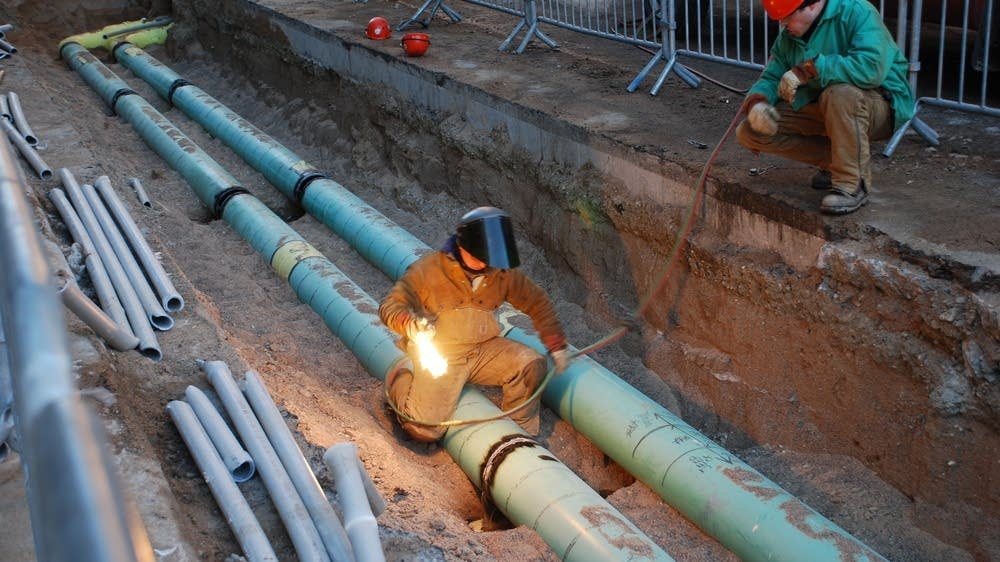
About 10,000 cars a day use the stretch of US 82 between I-30 and US 259, and that road is being widened to five lanes with a continuous center left-turn lane, work scheduled to begin in November 2024 and finish in 2028. Every foot of that widening pushes the edge of pavement outward, and everything buried or hung in the old shoulder, like water lines, gas mains, power poles and fiber, has to get out of the way first.
Utility relocation is the work of moving existing lines clear of new construction while keeping service on. It is not glamorous and it is rarely simple. The line is live, the owner is a third party with its own crews and rules, and the new route has to be built, tested and tied in before the old one is cut. The contractor in the middle is usually the one that hears about it when the schedule slips.
We handle relocation for private developers, general contractors and public agencies working in and around Texarkana. Here is how we approach it, where the delays come from and how to keep the owner of the utility on your side.
Why relocation shows up here
TxDOT says the US 82 corridor in Bowie County is part of the Texas Trunk System, the National Highway System and the Texas Freight Corridor, and that the Atlanta District is preparing plans to widen the existing two-lane highway to a four-lane divided highway in separate projects. Each separate project has its own utility conflicts and its own schedule.
On I-30, the Exit 220B westbound ramp to Richmond Road closed starting January 5, 2026 for several months so crews could build new pavement connecting the ramp to the newly widened main lanes. Work like that exposes every pipe and cable that was sitting beneath the old slope. Private development next to these corridors inherits the same issues, because a new driveway connection often lands on top of a utility the road project already moved once.
What gets moved and how
Relocations include water and sewer mains, gas lines, overhead and underground electric, communications, fiber and sometimes pipelines. Underground lines are moved by trenching a new route and tying in, or by boring beneath the work zone. Overhead lines mean poles, guy wires and clearance to new pavement.
The utility owner almost always controls the actual work on its own facility. We prepare the corridor, build what the owner permits us to build and coordinate the cut-over date. Where the owner does the work, our trade partners prepare trenches, install conduit or sleeves, and restore everything afterward. Potholing and locating comes first, since a plan sheet is a guess until someone sees the pipe.
Sequence is the whole job
The order is simple to state: locate, design the new route, build it, test it, switch over, abandon the old one. Each step has an owner and a lead time. We map who owns each line, who approves our route and how much notice they need for a shutdown. That list is the schedule, more than any bar chart.
The cut-over is where things go wrong. We confirm valves, tie-in fittings and crews before the outage window, because a shutdown that has to be repeated costs the customer service and costs the contractor trust. After the switch, the old line is capped, grouted or removed as the owner requires, so it does not become a hazard for the next digger.
Surprises under the road
The trouble with older ground is that records lag. Utilities installed many years ago may not be where drawings say, may be made of materials no one expected or may serve customers no one remembers. We pothole at every conflict point and carry an allowance for unmarked lines. Along corridors like US 82, the new roadway design also adds a new storm system with inlets, and the relocated utilities have to clear those too.
Wet ground adds risk. Heavy rain turns a trench into a pond, and a pipe laid in mud has to be dug up again. We use dewatering where needed, and we stage materials so the tie-in work goes fast once the shutdown starts.
Agreements and approvals
Relocation involves approvals that ordinary utility work does not: an agreement with the utility owner, state or county permission to work in right of way, and sometimes reimbursement terms. Who pays is a legal question that depends on easement history. We do not guess, and we ask owners to settle responsibility early.
The state accessibility standards and city plan review apply to what is built above ground, and the City Inspections office should be consulted on any private work. Outside city limits, a third-party guide reports no general county permit requirement in Bowie County, so confirm with the Commissioners Court.
Cost and risk allocation
Relocation budgets fail when they assume the utility owner will move at the contractor's pace. Standby time, repeat mobilizations and overtime for night cut-overs are the real cost. We price the physical work firm and list the owner-dependent items as allowances, with unit rates for extra potholes, extra footage and added fittings.
The cheapest relocation is the one that is designed once. Changes after a utility has approved a route can restart the review. If a road design shifts by a few feet, ask us before the utility is notified, so we can tell you what it will do to the relocation route.
Services that travel with a relocation
Moving a line often means building new structures, including manholes and vaults where the new route changes direction, and new water main installation where a main is replaced rather than shifted. Both need testing before cut-over.
For public work, the owner of the road is usually the client, and municipal and public works agencies prefer a contractor who has dealt with utility owners before. We also work along the US 82 corridor, where the widening makes this a daily issue.
Talk through your relocation early
Tell us which lines are in the way and who owns them. We will map the approvals, build the new route and plan the cut-over with the owner.
Common Questions
Who pays for a utility relocation?
It depends on the easement and the agreements. Where a utility sits in public right of way by permit, the owner often pays to move it for a road project. On private land the answer follows the easement. We recommend getting the responsibility decision in writing before the design is complete.
How long does a relocation take?
Design and approval often take longer than construction. Construction for a short run may be a few days, but approvals, material and the utility's own scheduling can add months. We build the schedule backward from the date the old line must be out.
Can service stay on during the work?
Usually yes, except for a short outage at cut-over. We build the new line beside the old, test it and switch over in a planned window. If a customer cannot tolerate an outage, we arrange temporary service or a bypass.
What if we find an unmarked line?
We stop, protect it and identify the owner. If no owner can be found, we report to the engineer and the owner of the project and decide together how to proceed. We never cut a line we cannot identify.
Do you move overhead power lines?
Overhead electric belongs to the power company and its crews do the work. We can prepare the site, set underground conduit for a conversion and coordinate with the power company on dates. Clearances to new pavement are checked on the plan.