
Concrete and Sitework Along the I-30 Corridor in Bowie County, Texas
Truck courts, concrete paving, culverts and driveways for private sites beside the I-30 widening in Bowie County, Texas, planned around lane and ramp changes.
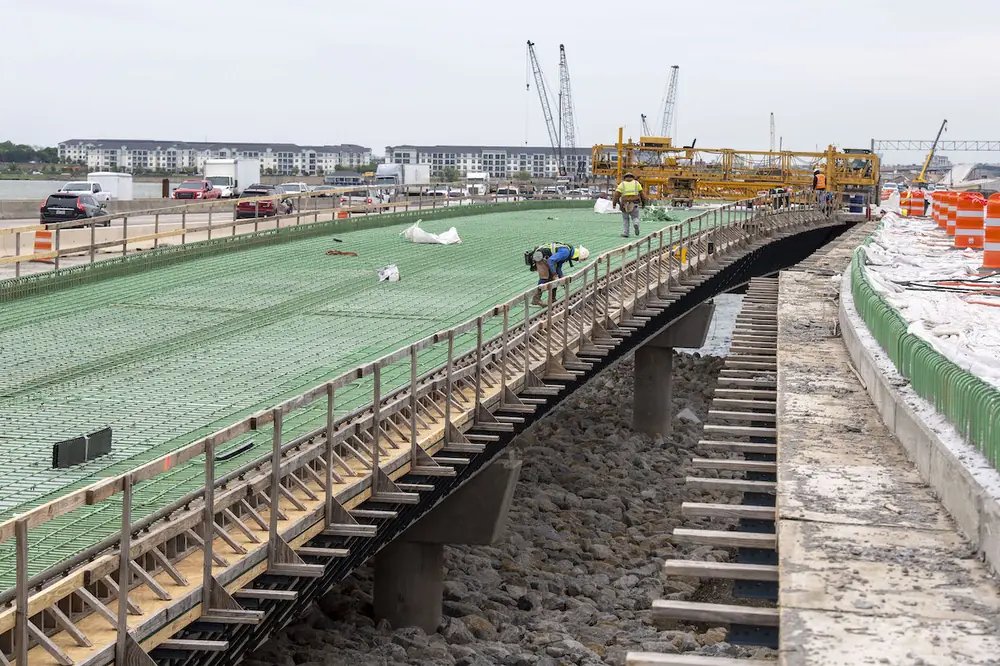
Highway widening changes who can reach your site, and when. Along Interstate 30 in Bowie County, the road is being rebuilt in concrete, frontage roads are being added, bridges are being replaced at the farm-to-market crossings, and the exits that serve private land have been closed and reopened in stages. For a developer with a pad, a distribution building or a truck yard beside the interstate, the concrete questions start with access: can a mixer reach the site on the day of the pour, and what will the road look like by the time the building opens?
TxDOT's I-30 Widening Project, Stage 2, covers 6.8 miles from 0.6 mile west of FM 989 to the state line, widening four to six mainlanes with three 12-foot travel lanes each way, 10-foot shoulders and a continuous concrete median barrier. It replaces asphalt with continuously reinforced concrete pavement, adds a new mainlane bridge at the KCS railroad interchange and, according to the department, needs no additional right of way. The contract was awarded in May 2020 at $88.9 million, with construction beginning in August 2020, and the page gives no completion date.
TxDOT's corridor page lists related Bowie County work: a frontage road from FM 3419 to FM 989, about 2.5 miles, with new exits to FM 2148; bridge replacement and widening on I-30 at FM 989, with FM 989 widened from the north frontage road to Gibson Lane; and bridge replacement at FM 3419. For private owners nearby, that is a lot of change in a few miles, and it affects pad grades, drive approaches, utility crossings and construction traffic.
What a concrete roadway tells a private developer
When a state highway is built with continuously reinforced concrete pavement, the neighbors learn the same lessons the department did: subgrade preparation drives the life of a pavement, joints and steel placement matter, and curing in the summer heat has to be controlled. The same methods apply to private truck courts and heavy parking areas. If a developer expects semis, concrete outperforms asphalt in a truck yard where trailers park with landing gear down.
We use the highway as a template. The concrete paving trade crews build private pavements with the same attention to base, reinforcement and curing, adjusted to the engineer's design for the lot. A distribution building on the frontage road needs truck terminal and cross-dock pavements that will not rut, and the cost of heavier pavement is easier to defend when the road next door was built that way.
Drainage, culverts and the work that crosses the right of way
Highway projects change where water goes. A new frontage road, a widened bridge and new inlets alter runoff for the parcels beside them. We install culverts and headwalls that carry site drainage under a drive or a frontage connection, and we set the invert elevations to the engineer's plan so water leaves your site and enters the system the way the drainage study intended.
Utility crossings are another piece. Water, sewer, electric and fiber lines often cross the right of way by bore or open cut, and each method requires coordination with TxDOT and the utility owner. We handle the trench and backfill on our side of the right of way and coordinate the boring subcontractor so that the pipe, the casing and the pavement repair fit together on a single schedule.
Erosion control is the quiet requirement on every corridor job. Disturbed ground next to a state highway drains into the highway ditch, so silt fence, inlet protection and a stabilized construction entrance go in before the first cut. Texas stormwater rules and the owner's pollution prevention plan apply, and we keep the inspection log and rainfall records the plan asks for. A clean entrance also keeps clay off the new pavement, which the state maintenance crews appreciate and your neighbors will notice.
Driveways, access permits and state standards
A driveway onto a frontage road is a permit item. TxDOT reviews access location, spacing, grade and drainage, and the approved driveway design controls our pour. We ask for the permit and the approved plan before we price, because a permit that requires a longer deceleration lane or a different radius changes the quantities.
Wikipedia says Nash, in eastern Bowie County, has access to I-30 at Exit 218 along its northern boundary, and TxDOT lists the Richmond Road exit on westbound I-30 as Exit 220B and Summerhill Road as Exit 222. Those exits mark places where private land meets the interchanges, and where driveways, aprons and queuing storage have to fit around state-owned ramps. Our page on Richmond Road and Summerhill Road describes the retail side of the same interchange area.
Working beside live lanes and a railroad bridge
Pouring beside an open interstate is a safety discipline. We set barricades and signs according to the traffic control plan, keep trucks and pumps out of the shoulder unless the plan allows it, and brief every worker on the escape route. High-visibility clothing is a given, and nobody works on the shoulder side of a truck while traffic is moving.
The corridor also includes the KCS railroad crossing, where TxDOT is building a new mainlane bridge. A railroad adds clearance and flagging rules that apply to any project near the tracks. See our Union Pacific and KCS rail page for how we plan around them.
Planning around a corridor in motion
The best schedule on a corridor like this is one that checks the lane closure schedule weekly. We read TxDOT's project notices, call the project office before large pours and have a second route ready. A truck stuck in a detour can arrive with concrete past its allowable time, and a rejected load costs more than a phone call.
That attention is especially useful for logistics and warehouse developers, whose buildings depend on truck access and whose calendars hinge on road work. When a new exit or frontage road opens, we can mobilize quickly because we have already planned the approach. Public owners using municipal and public works programs that tie into the state system get the same planning, with documentation to match.
Check access before you pour
Send us the site plan and the driveway permit status. We will review the access, the drainage and the pavement section, and give you a delivery plan that holds up when the lanes move.
Common Questions
Does highway construction delay private concrete deliveries?
It can. Lane closures, ramp closures and detours change travel times, and a mixer has a limited window to discharge. We watch the project notices and plan an alternate approach for each pour.
Why would a private owner choose concrete paving next to a concrete highway?
Heavy trucks parked or turning in one spot can rut asphalt, and concrete stays flat under them. It costs more up front, so we compare the pavement section options with you before the design is final.
Who approves a driveway onto a frontage road?
TxDOT reviews driveways on state facilities, and the city or county may review others. We need the approved drawing before we form the apron so the grades and radii match.
Is the I-30 widening finished?
The TxDOT page we cite gives no completion date, so we do not guess. Check the department's project notices or call the project office for the current stage before you plan deliveries.
How close to the interstate can you pour?
As close as the traffic control plan and right-of-way line allow. If any work is inside TxDOT right of way, we need a permit and inspections before starting.