
Retail Shopping Center Construction in Texarkana, Texas
Pads, paving, curb and utilities for retail centers on the Richmond Road and Summerhill Road corridors in Texarkana, Texas.
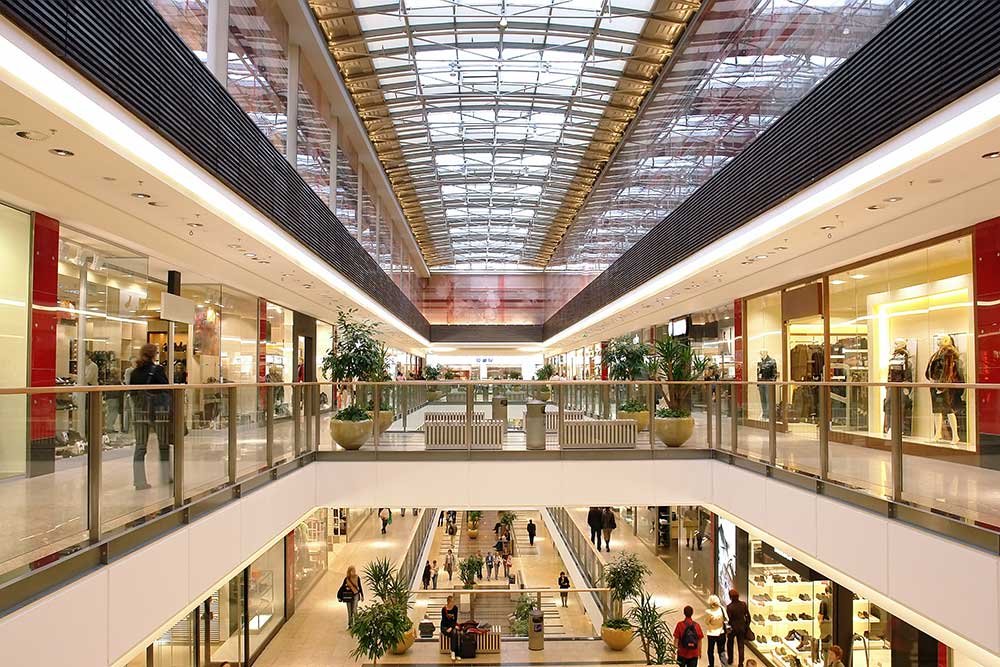
Both Richmond Road and Summerhill Road are described in the City comprehensive plan as major arterials with mostly five lanes and a center turn lane. Richmond Road ties the newer parts of Texarkana north of IH 30 to the center of town, and Summerhill Road runs from the southwestern edge toward Bringle Lake in the north. Retail follows those lanes because customers do. A shopping center there is built around entrances, queues and stacked turn movements as much as around stores.
That fact changes how a retail site is built. Before any slab is poured, the driveway throats have to match the road, the turn lane has to line up, and the parking field has to drain somewhere that the City will accept. The pads for the stores are the easy part: small slabs, repeated. The pavement that holds the cars, the delivery trucks and the garbage trucks is the long-term work.
We build retail sites from clearing through concrete and utilities. We care more about subgrade, joints and drainage than about the look of a new curb, and we explain why before a lot is bid.
What the arterials and the interstate do to a retail site
A December 2015 trade article described a 500-acre master-planned development west of Richmond Road and land available along I-30's regional retail corridor. It named no tenants or completion dates, so we treat it only as a planning reference, but it shows that the market has long expected retail growth in that direction. The comprehensive plan also suggests primary gateway signage along IH 30 at Kings Highway and Summerhill Road.
Access matters in the middle of a build. TxDOT closed the westbound Exit 220B ramp from I-30 to Richmond Road beginning January 5, 2026 for several months so crews could tie new pavement to the widened main lanes. Customers and trucks used Exit 222 at Summerhill Road and the frontage road instead. Shopping center owners lose sales during closures like this, so we plan deliveries around them and do not add to the traffic. Other office building sites in the same corridor share the same constraints.
Pad sites, outparcels and phased openings
Retail rarely opens all at once. A large major tenant may open first, with inline shops and outparcels following by phases. The civil plan therefore needs temporary drainage, temporary access and a utility layout that can be extended without tearing up completed pavement. We install sleeves and stub-outs under drive aisles for the later phases while the base is open, and we mark them on the as-built.
Creeks complicate that. The hazard mitigation plan lists Cowhorn Creek, between Summerhill Road and Robinson Road, among the impaired streams, and floodplain areas are generally not able to be developed under the comprehensive plan. A retail site near a creek loses buildable area to the floodplain, which pushes stores into a tighter footprint and pushes the detention pond into a corner. We design our detention and retention ponds early so the owner sees that cost before the land closes.
Concrete and earthwork on a retail center
The work includes mass grading of the pad area, fine grading of the building pads and the drive aisles, utility trenches for water, sewer, fire and storm, and the slab for each building. After that, we place the curb and gutter, sidewalks, accessible ramps, dumpster enclosures, truck docks and any concrete paving at the loading area. On an outparcel for a restaurant or bank, we also pour the drive-through lane, which wears quickly under idling trucks and slow turns.
Loading areas deserve concrete rather than asphalt in most cases. Delivery trucks stop and turn on the same patch of ground day after day, and asphalt creeps under that load in a Texas summer. Our page on curb and gutter explains why we form them in one pass with the pavement edge wherever the plan permits.
Where retail budgets run over
The parking lot is usually the largest single concrete or paving item on a retail project. Thickness, subgrade treatment and reinforcement all depend on the truck traffic, and a center with a grocery tenant needs a heavier section at the rear than one with only inline shops. The second driver is utility extensions: a retail site that sits a few hundred feet from the nearest sewer main costs more than one that sits next to it.
The third driver is rain. Annual rainfall in the Piney Woods area runs from 42 to 58 inches, and a retail site with open pavement in a wet month cannot be paved on schedule. Developers should carry weather days and avoid a fixed opening commitment to the tenant until the base is in. A commercial developer asking for a bid should expect us to ask for the tenant opening dates alongside the plans.
Working beside live traffic and live customers
Retail construction often happens next to stores that are open, and the ground rules for that are written before mobilization, not after the first complaint. We separate work zones with fencing, route trucks away from customer entrances and keep walkways clear. Concrete pours at night are possible when the tenant wants no interruption, but they raise lighting and noise questions that the owner should approve ahead of time.
We follow the City's inspection process on public work in the right of way, including driveway aprons and sidewalks. Where a frontage carries a state route designation, TxDOT may control driveway placement and the work inside its right of way. We start that conversation early because it is the slowest piece of a retail schedule. Our self storage work shares that edge, since both products depend on frontage and visibility.
Send the site plan and the tenant mix
Retail pads are sold before they are built, so the earlier we see the plan, the more we can protect. Send the civil drawings, the pad list and the target opening dates. We will respond with grading and utility phasing, a paving plan for the drive aisles and a realistic read on rain days. Use the quote form near the top of the page.
Common Questions
How do retail pads handle expansive clay?
Pads sit on a prepared subgrade, which may mean lime or cement treatment and a tested fill cap. The geotechnical report drives that decision. We proof roll the area while the engineer watches and retest if a heavy rain falls before the slab is placed.
Why use concrete instead of asphalt at loading areas?
Heavy trucks stop, turn and idle in the same place every day. Concrete resists rutting and fuel staining better than asphalt in summer heat, and a well-jointed section lasts longer under that load.
Does a creek near the site really affect the layout?
It can. The comprehensive plan notes that floodplain areas are generally not able to be developed, so buildable acreage shrinks along waterways and the detention pond often lands in the leftover corner.
Can pavement be placed in winter?
Yes, but the plan should account for cold weather. Records for nearby towns list lows below zero in some years, so blankets, heated water and a hold on pours below freezing are part of the winter schedule.
What approvals cover a driveway onto Richmond or Summerhill?
Both carry state route designations (Spur 559 and SH 93), so driveway placement may need TxDOT approval alongside City review. Confirm which agency controls your frontage; your civil engineer submits those plans and we help sequence them with the grading work.