
Detention and Retention Ponds in Texarkana, Texas
Detention and retention pond excavation, embankment and outlet structures for Texarkana sites, built for clay soil, heavy rain and floodplain review.
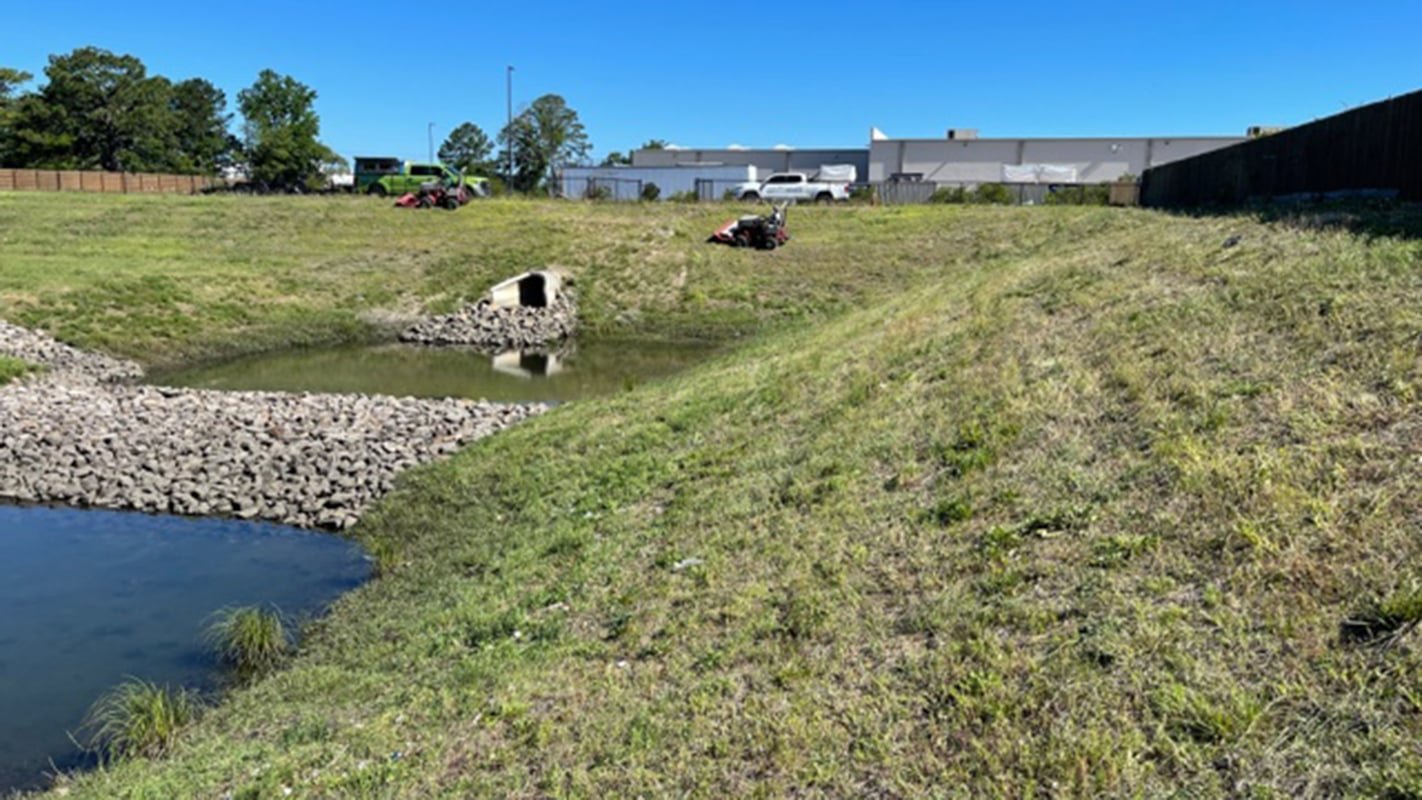
The biggest detention pond in this part of Texas is Wright Patman Lake, and the idea behind it is the same one that drives every small basin we dig. The Corps lists a flood control pool of 2,509,000 acre-feet between elevations 227.5 and 259.5 feet, with water held back during floods and released only as downstream creeks and rivers can carry it. A commercial detention pond does the same job at a scale of a few acre-feet: catch the runoff from a roof and a parking lot, hold it, and let it out slowly.
Detention ponds hold stormwater temporarily and release it at a controlled rate. Retention ponds hold water permanently or let it soak away. Both are required by cities and counties when new impervious surface would send more water downstream than the site did before development. They are among the first pieces of work on a site because everything else drains to them.
We excavate, shape, line and finish detention and retention basins, and we build the outlet structures, spillways and inlet protection that make them work. This page covers the planning questions we raise early, the soil issues in this area and the details that keep a pond from turning into a maintenance burden.
Clay holds water, which helps and hurts
Clay is the reason many ponds in Northeast Texas hold water at all. Very slow permeability means a basin with a clay floor stays wet after a storm, which suits a retention pond and frustrates a dry detention basin that is supposed to drain. The design decides which one is wanted, and we build the bottom to match: sloped to the outlet, with a low-flow channel or underdrain if the engineer specifies one.
The same clay is what holds a slope, until it dries and cracks or gets saturated and slides. Side slopes are typically flatter than for a cut in sandy ground, and they are compacted and vegetated promptly. An unvegetated pond bank in rainy country erodes the first season. We seed or sod as soon as grades are final, and we use erosion blankets on steeper banks.
Excavation, embankment and outlet works
The basin is excavated to the shape on the grading plan, and the material is reused as embankment where it is suitable. Embankments for ponds that hold water are built in compacted lifts, keyed into the ground and tested for density. Unsuitable material, such as organic soil or wet fat clay, is stockpiled for drying or hauled off. The pond and basin excavation trade crews handle both the digging and the earth shaping.
The outlet structure is the part that controls release. It is typically a concrete riser box with an orifice and a weir, connected to a pipe through the embankment. An emergency spillway protects the embankment in a storm larger than the design storm. We coordinate pouring those structures, which gives us control over the elevations that matter.
Floodplain review and sizing
The City of Texarkana, Texas requires a floodplain permit reviewed by the City Engineer, and portions of the city, mostly following waterways, lie in the 100-year floodplain. A pond built inside the floodplain can change flood storage, so many cities do not allow one without compensating volume. We pay attention to the plan limits and to survey elevations early.
The design storm, the allowable release rate and the required storage come from the engineer's drainage study, and the city reviewing the plan applies its own criteria. Where a state or county road is downstream, additional review may follow. We recommend getting the pond approved before other site work depends on it.
Build the pond first
On a site with a basin, the basin is the first earthwork. It becomes the sediment trap for the rest of the construction, and the soil it yields is often the fill the building pad needs. We rough-excavate early, build temporary outlet protection and keep construction runoff routed into it. Near the end of the job we clean the sediment out and finish the final shape.
That second pass matters. A pond used for sediment control during construction silts up, and a pond handed over at 70 percent of its design volume will not meet its permit. We survey the basin as a final step and give the owner a volume check before the engineer inspects.
Connected drainage work
Ponds are fed by pipe, so our storm drain installation usually arrives at the same time. Under entrance roads and between basins, culverts and headwalls carry flow.
During construction, erosion control and SWPPP measures protect the pond and the downstream creek.
Water level is a construction issue too. A deep basin in wet ground may need dewatering while the floor is excavated, and the pump discharge has to be treated before it leaves the site.
What drives pond cost
Volume moved is the first number, and haul distance is the second. A pond whose spoil can be spread on site is much cheaper than one whose spoil must be trucked away. After that come outlet structure complexity, liner or clay blanket, rock for spillways and inlet aprons, and the finish: seed, sod, blankets and any fencing or landscaping the city requires.
Weather risk belongs in the number too. A wet spring can double the time to dry out a basin floor. We ask for a unit price on wet-material handling and for a dry-weather allowance in the schedule, so a long wet spell does not turn into a claim.
Where ponds are most often required
Warehouse and distribution sites generate large paved areas and large runoff. Logistics and warehouse developers usually build detention at the back or low side of the site, and the pond sizing can affect how much land is left for trucks. A 150,000 square foot spec building with 24 acres of site, for example, will have a drainage plan that cannot ignore the pond.
On a distribution center site, the pond also affects security and fence layout. Near Wright Patman Lake, the water table and floodplain can restrict what is allowed.
Get your pond built early
Share the drainage study and grading plan. We will price the excavation, outlet structure and finish work, and tell you how much of the cut can be reused on site.
Common Questions
How big does a detention pond have to be?
The engineer sizes it from the drainage study. It depends on the area of the site, the percent impervious, the design storm and the allowed release rate. A paved industrial site may need storage equal to a foot or more of depth over a significant share of its acreage. Ask early, since land use depends on it.
Is a retention pond different from a detention pond?
Yes. Detention ponds drain down after a storm, and many are dry most of the time. Retention ponds hold a permanent pool or infiltrate. The distinction affects liner, grading and safety features such as benches and fencing.
Can the excavated soil be used elsewhere on site?
Often, if it is suitable. Good clay can become structural fill when moisture-conditioned and compacted, and unsuitable material must be wasted. We balance cut and fill so as little as possible leaves the site.
What maintenance does a pond need?
Mowing, sediment removal, outlet inspection and repairs to eroded banks. A pond with a clean outlet and healthy vegetation requires far less. We hand over a simple inspection list at turnover.
Do ponds need fences?
That depends on depth, side slopes and local requirements. Shallow, gently sloped dry basins often need none, while deeper permanent pools may. The engineer and the city decide, and we build what the approved plan shows.