
Mass Grading in Texarkana, Texas
Bulk earthwork, cut and fill balance and compaction for building pads, industrial parks and campuses in Texarkana, planned around clay, rain and testing.
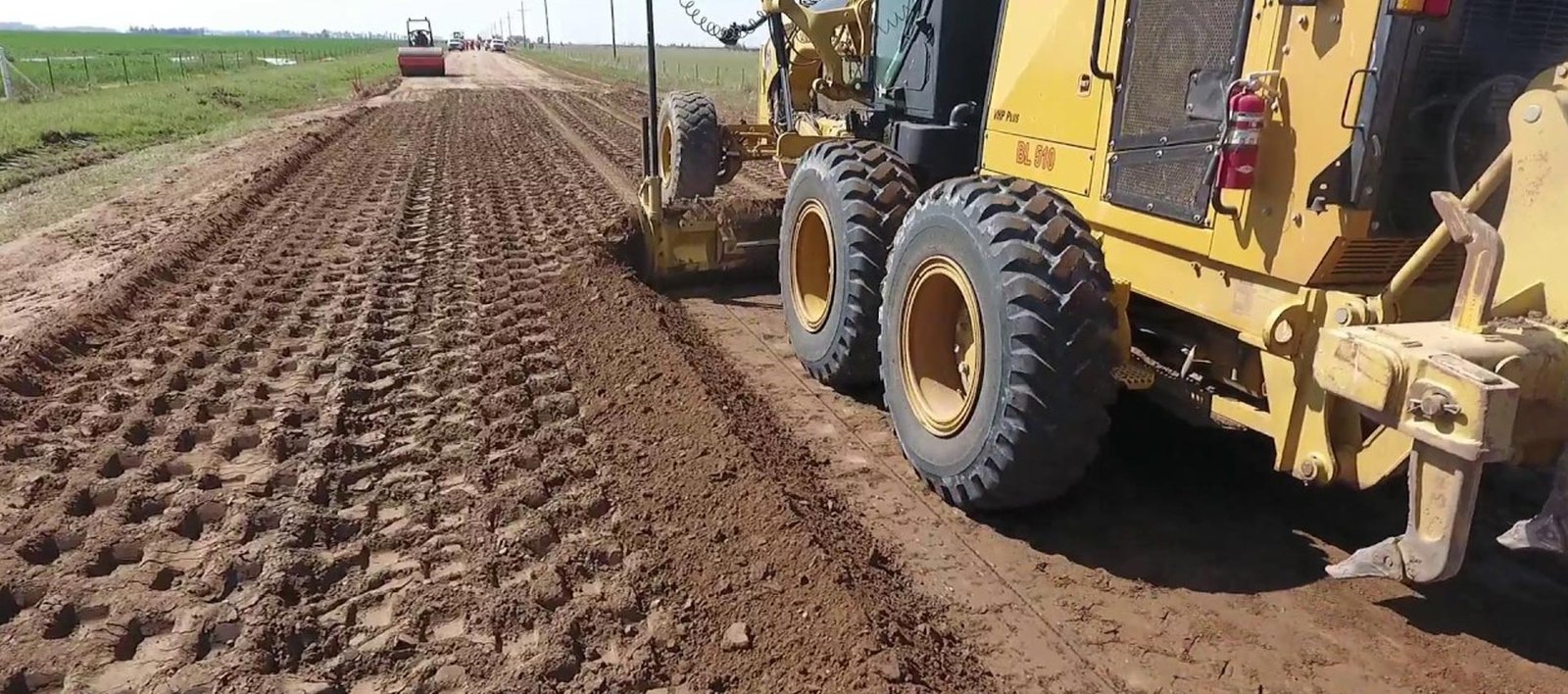
Twenty-four acres for a 150,000 square foot building sounds generous, until you subtract the truck court, the dock approach, the parking, the detention pond and the rail or road access. What is left is a building pad that has to sit level to within a fraction of an inch, at a precise elevation, on ground that was probably sloped, wooded and full of clay. Mass grading is how a rolling Northeast Texas parcel becomes that pad.
The job is moving earth in bulk: cutting high ground, filling low ground, balancing the two so that little leaves or enters the site, and compacting every lift so the finished surface holds a building and a truck lane. It is done with scrapers, dozers, excavators, haul trucks, compactors and a lot of survey. The work looks simple from the road and is a long sequence of decisions in the cab.
We grade sites for distribution buildings, manufacturing plants, schools, hospitals, subdivisions and municipal projects around Texarkana. This page explains how we plan the cut and fill, what the clay does to production and how to read a grading bid.
Big sites, big earthwork
Project Big Pine, announced in April 2026 by TexAmericas Center and Potentia Development, is a planned 500-acre data center and power-intensive campus in Bowie County with an estimated $3.5 billion in projected investment; other outlets cite 400 or 450 acres. It is a plan, not a finished campus, but any project of that size starts with years of grading.
Smaller sites carry the same logic. Texas A&M University-Texarkana sits on 375 acres near Bringle Lake, and a campus that adds a 50,000 square foot building and new housing relies on cut and fill to find level ground in a landscape that is not level. We plan grading in phases that follow construction, so owners do not pay to prepare ground that will sit idle.
Clay: wet, dry and in between
Soils in the Texarkana area range from sandy and loamy uplands to heavy, high-clay soils in the flood plains. The USDA describes the Texark soil as a very-fine smectitic clay with 60 to 80 percent clay, with cracks up to 2 inches wide when dry. That material is workable only in a narrow moisture range. Too wet and it pumps under the roller. Too dry and it breaks into clods that will not knit.
We watch moisture constantly. Disking dries wet material. A water truck wets dry material. In wet spells, we stop hauling on the clay and work from stabilized roads. We also recognize when the clay cannot reach the density the engineer wants without help from lime or cement, and we bring that up before a failed density test does.
Balance, haul and compaction
The earthwork plan begins with a quantity takeoff: how much cut, how much fill, and how much material is suitable. The plan sets haul routes, stockpiles and phases, and it identifies borrow or waste areas if the balance is off. On a good site the cut and fill nearly equal. On a site with unsuitable soil, the numbers shift toward import and export.
Placement is in lifts of controlled thickness, each compacted to the specified percent of maximum dry density at the right moisture. A testing agency verifies density with gauges, and we proof roll with a loaded truck to find soft spots. A pad that passes tests but moves under a loaded truck is not done. Tests are taken in the same pattern the engineer sets, and failures are reworked, not argued. We also keep a daily log of weather, moisture adjustments and test locations, so that the story of any pad can be told from paper rather than memory.
What the scope covers
Mass grading includes stripping topsoil, excavating cut areas, placing structural and general fill, shaping drainage swales and basins, building haul roads and finishing to within tolerance of plan grades. It also includes the temporary erosion controls that go in first and the final stabilization that goes in last.
Fine grading, the last few inches, is a separate step with different equipment and tolerances. The fine grading trade crews follow mass grading and prepare the pad for stone, slab or pavement. Between the two, building pad preparation brings the surface to its final subgrade standard.
Geotechnical and stormwater rules
The geotechnical report is the contract for the soil. It sets the suitability of onsite material, the compaction standard, the moisture range, the depth of any over-excavation and the criteria for stabilization. We read it before we price and we ask the engineer questions when the plans and the report disagree.
Disturbed area triggers state stormwater requirements and, near creeks, floodplain review. The City of Texarkana, Texas requires a floodplain permit reviewed by the City Engineer, and filling in the floodplain is typically restricted. Grading plans that touch drainage ways go to the city for review before work starts.
Where grading money goes
Haul distance and quantity set the base price: moving a cubic yard fifty yards costs a fraction of moving it a mile. Soil treatment, import and export, rock or unsuitable material, and the density the building requires come next. Machine hours multiply when wet weather cuts production, so the schedule and the budget are tied together.
We ask owners to hold a contingency for soil surprises and to approve unit prices for undercut and replacement before the work begins. That way, a soft spot found on Tuesday is repaired on Wednesday without a long negotiation.
Work that follows or shares the site
Before grading, site clearing and grubbing removes trees and topsoil. During grading, detention and retention ponds are dug first so they can collect runoff.
Afterward, the same crews move to site utilities and then to concrete.
Logistics owners are among the heaviest users of mass grading, and logistics and warehouse developers expect pads delivered flat, tested and ready for a slab. For the largest campuses, our TexAmericas Center coverage describes how we handle phased work on large acreage.
Get a grading plan you can price
Send the grading plan and the geotechnical report. We will return a quantity takeoff, a balance of cut and fill, and a clear price for any treatment or import.
Common Questions
How is a building pad checked?
By survey for elevation, by density tests for compaction and by proof rolling for stability. The engineer sets the numbers. We usually add a final check of the pad against the slab elevation before any stone is placed.
Can onsite clay be used as fill?
Often, within limits. Moisture-conditioned clay can make acceptable general fill, but building pads usually need select fill or treatment. The geotechnical report decides, and we avoid placing material the report rejects.
What if the cut and fill do not balance?
We import or export material. Import adds the cost of buying and hauling, and export adds disposal. A good plan shifts finished grades by small amounts to balance without compromising drainage, and we point out options early.
How does rain affect grading?
Heavily. Wet clay cannot be compacted and bogs equipment. We plan for lost days in wet months, protect work with sealed surfaces, and keep drainage open so storms do not flood the work area.
When is lime or cement treatment worth it?
When wet clay would delay the schedule or fail density tests. Treatment dries and stiffens the soil so it can be compacted. It costs money but often saves more in time. We price it as an option alongside undercut and replace.