
Self Storage Facility Construction in Nash and Bowie County, Texas
Pads, drive aisles, drainage and utilities for self storage facilities in Nash, Wake Village and Bowie County, Texas, built on clay.
Nash grew from 2,169 residents in 2000 to 2,960 in 2010 and 3,814 in the 2020 census, and Wake Village grew from 5,492 to 5,945 over the last decade of counts. Those two towns sit on the edges of Texarkana, and they are where houses, apartments and garages keep filling up. Self storage follows household growth, which is why homebuilders and multifamily developers are often the first people to call about a nearby site, and a storage owner with a half-built subdivision nearby has a reasonable reason to look at a site along the interstate frontage or a county road.
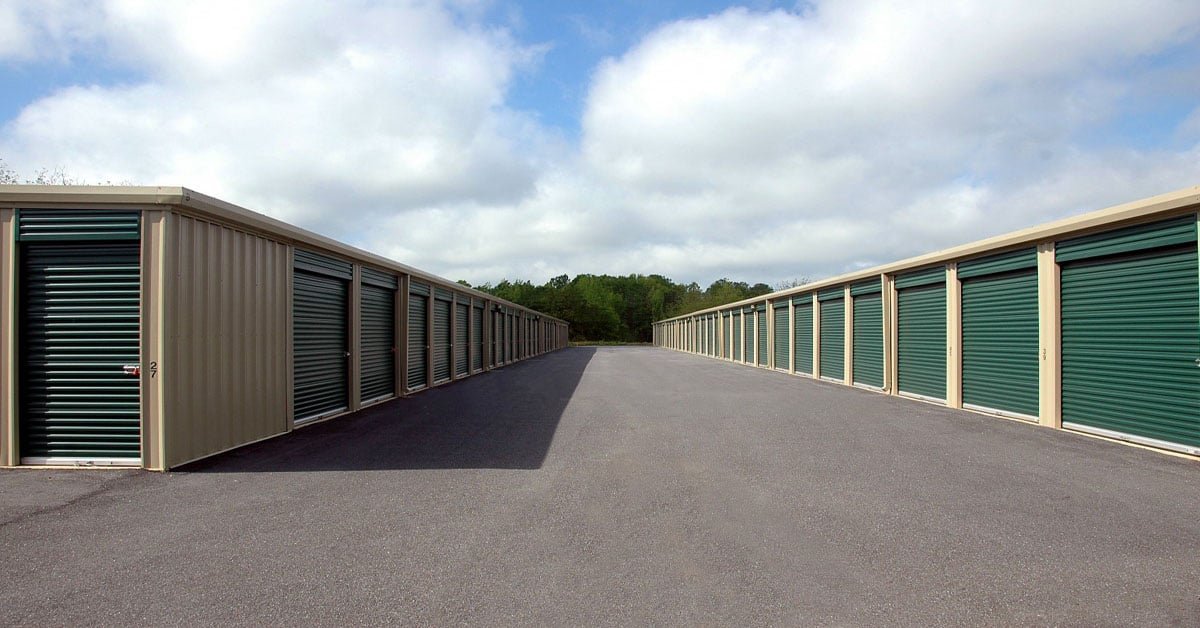
The building is simple, and that is where the money gets tight. A drive-up storage building is a slab, a row of doors and a roof. The slab is the entire foundation, and the paving between the buildings is the entire access. Nothing hides a bad subgrade in a storage yard, because every door row shows a settled corner as a crooked door.
We build the pads, the paving and the drainage for self storage in Bowie County, and we write estimates that show owners where the cost per door really comes from. That means separating the slab, the paving, the drainage and the utilities so that an investor can see which line moves when the soil report changes.
Slab first, doors second
Storage slabs are thin and unforgiving. A four inch slab with welded wire or fibers laid on poorly compacted clay will crack across each door and rack the frame. Our approach begins with the geotechnical report, then proof rolling, then a base course thick enough to span soft spots. On clay that cracks as it dries, we recommend moisture conditioning and, where the borings justify it, lime treatment under the building rows.
The USDA description of the Billyhaw soil, whose type location is at Texas Highway 8 and Interstate 30 in New Boston, calls for a very fine smectitic clay with 60 to 80 percent clay and very slow permeability on flood plains. A storage site on or near ground like that needs a drainage plan before a floor plan. We place the buildings on the high side of the property whenever the owner lets us, and we over-excavate and recompact any pocket that fails the proof roll.
The pieces of a storage job
A typical project includes clearing, stripping and grading a site of a few acres, then building the base for slabs and drive aisles, a detention pond or underground storage, a fire hydrant or fire line if the jurisdiction asks for one, a sewer or septic arrangement for the office, and the perimeter. The office slab is small but carries a bathroom, so plumbing and ADA routes follow.
Drive aisles in a storage complex are usually asphalt or concrete. Concrete costs more up front but handles turning moving trucks without scarring, and it makes drainage easier to control with shaped aprons at the door line. Our concrete paving page covers those joint patterns. We also pour the pads for a boat and RV storage lot when owners want a hard standing for heavy vehicles.
Cost per door depends on the dirt
Self storage runs on tight margins, so the details of the sitework matter. Fill volume and haul-off are the first surprise. A site that must import clean fill to lift buildings above a creek or floodplain can add real cost per acre. The second surprise is detention. Storage yards are mostly impervious, so the stormwater that leaves them is a large share of the site's design.
The third is utilities. Water and sewer are optional on a storage site, but fire protection often is not, and a long run of pipe to a hydrant is a cost that rural sites can avoid only by staying in the right jurisdiction. Texas building rules are adopted locally, and a third-party permit guide reports no county-issued general building permit requirement for Bowie County, listing septic as the exception. That guide is not an official source, so confirm with the Commissioners Court. Our warehouse work shares many of these cost levers on a larger scale.
Where storage owners are building in Bowie County
Interstate 30 forms the northern boundary of Nash, with access at Exit 218, and Farm to Market Road 989 and U.S. Route 82 intersect nearby. Wake Village sits immediately west of Texarkana on U.S. Highway 67 and the farm road. Storage owners want frontage near those routes and near rooftops, and the highways have both.
In the same corridor, TxDOT's frontage road project from FM 3419 to FM 989 includes about 2.5 miles of new road with new exits to FM 2148. New frontage roads open parcels that were landlocked, and they also change drainage patterns. A storage site next to a new frontage road benefits from visibility but inherits the stormwater of a larger highway system, so we read the TxDOT plans before the civil engineer commits to a pond size. The flex and light industrial pages describe sites with similar frontage.
Nash, Wake Village and beyond
We work across Bowie and Cass counties. For storage, the most active areas are the small cities on the Texarkana edge, especially Nash and Wake Village, where rooftop growth is documented in the census. Each city handles permits itself, so a Nash project and a Wake Village project do not share a permit office.
Beyond those, we serve highway towns such as New Boston, Hooks and Leary along U.S. 82 and I-30, and towns in Cass County along U.S. 59. Distances matter for concrete: ready-mix trucks have a limited time on the road, so we plan batching and delivery windows for far sites. Owners who build on a multi-site basis, as many storage developers do, should discuss a regional schedule with us rather than bidding each project separately.
Send the acreage and the unit mix
Self storage pencils out on cost per square foot of slab and cost per acre of dirt. Send the parcel, the unit mix and any soil information you have, and we will return a pad, drainage and paving estimate that shows both. The quote form near the top of the page takes the details.
Common Questions
How thick should a storage slab be?
The structural engineer sets that, and four inches with reinforcement is common for light-duty storage. The thickness matters less than the subgrade under it, and we spend our effort on proof rolling and base preparation.
Is concrete or asphalt better for the drive aisles?
Concrete costs more at the start but resists scarring from turning trucks and is easier to shape for drainage. Asphalt is cheaper per square foot. We price both and show the lifetime difference.
Do I need fire protection on a storage site?
It depends on the jurisdiction and the building size. Fire code is enforced locally, so ask the Fire Marshal or the Building Official in the city that covers your parcel before committing to a site plan.
Does the clay in Bowie County matter for storage?
It does. The Texark and Billyhaw soil descriptions from USDA list very fine clay with deep cracks when dry. A slab on that ground needs controlled subgrade preparation, or the doors will rack.
Can you build in phases as units fill?
Yes. We stub utilities and pre-grade future pad areas so each phase can start without tearing up completed pavement.