Manholes, Vaults and Structures in Texarkana, Texas
Precast and cast-in-place manholes, junction boxes and utility vaults for Texarkana sites, set to grade and sealed against groundwater and heavy rain.
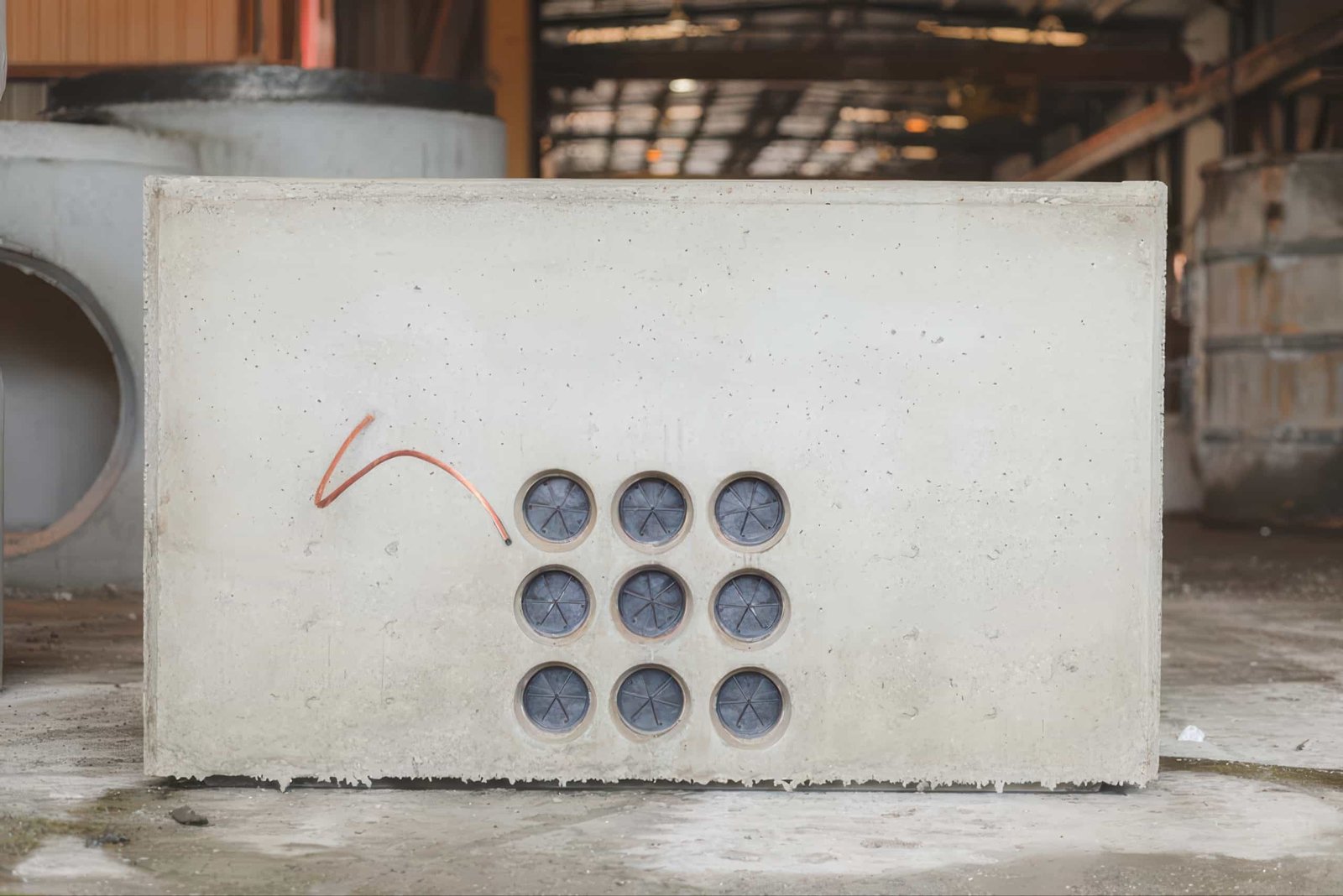
A manhole barrel that is empty weighs less than the water it displaces. Set one into a trench where the water table is two to three and a half feet down, and a heavy rain can float it right out of line before anyone has backfilled around it. That is a real risk in parts of Bowie County, and it is the reason we think about weight, base thickness and backfill sequence before a structure arrives on site.
Manholes, vaults and other buried structures are the access points and junctions of every underground system. A sewer manhole lets a camera and a jet nozzle reach the pipe. A storm junction box joins runs at different angles. A meter vault holds the water meter and valves. A telecommunications vault gives crews a place to splice. Each one is a small concrete building that has to be watertight, strong enough for traffic and set at exactly the right height.
We set precast structures and pour cast-in-place ones, and we do both as part of larger utility work or as a stand-alone scope. Below is how we decide between them and how we make sure they stay put.
Water table, clay and flotation
The USDA describes the Texark soil, with its type location in Bowie County near Dalby Springs, as somewhat poorly drained, with very slow permeability and an apparent water table at 2 to 3.5 feet. Structures deeper than that sit in or near groundwater for part of the year. Bowie County issued a disaster declaration effective April 7, 2025 after heavy rain and flooding over a weekend, which is a reminder that surface water can arrive quickly too.
We control flotation with base slabs that extend past the barrel, weighted collars, early backfill and, when needed, dewatering. We keep the excavation pumped until the structure is set, joints are sealed and backfill has reached a safe level. A structure that moves after it is set cannot be moved back.
Precast or cast-in-place
Precast is the standard answer for most sewer and storm manholes. The barrels are made in a plant, arrive on a truck and are set with a crane or excavator in a short time. Joints use gaskets or sealants, and the structure can be tested the same day. Cast-in-place is the answer for odd shapes, large junctions, vaults with several penetrations and structures that have to match an existing one.
Cast-in-place takes longer because it requires forming, reinforcing, pouring and curing, and it is exposed to rain while the concrete gains strength. We plan the pour for a dry window, use curing methods suited to the weather and test the concrete as we would for any structural placement.
Setting structures to grade and tolerance
The inverts decide everything. We set the base to the survey, check the first barrel for plumb and level, and shoot the rim elevation before backfill. A frame and cover set a half inch too high becomes a speed bump and a plow target. A frame set too low collects water and traffic sinks it further.
Pipe penetrations are the leak points. We use flexible boots or approved connections and grout the annular space carefully. Steps, if the design includes them, are installed to the specification. After the structure is set, we vacuum test sanitary manholes where required and photograph each completed structure for the closeout record.
Standards, submittals and testing
Precast structures come with shop drawings that the engineer reviews before fabrication, and the review is where wrong pipe sizes, wrong penetration angles and wrong depths are caught. We check the submittal against the utility plan before it goes to the engineer, because a barrel built to a stale sheet is a six-week delay at best.
Testing follows the system. Sanitary structures are usually vacuum tested, storm structures are inspected for alignment and grade, and water vaults are checked for dimensions, drains and cover. Records of each go into the closeout binder, with structure numbers matching the plan.
Price factors
Depth, diameter, number of pipe penetrations and any special coatings drive precast price. Delivery is a real cost since barrels are heavy and need a crane or a large excavator. Cast-in-place structures cost more for labor but can be cheaper for unusual shapes and for single units where precast tooling is not available.
Dewatering and shoring often cost more than the structure itself. A deep manhole in wet clay needs a braced excavation and pumps. We separate these from the structure price so the owner sees what is driven by the ground rather than by the concrete.
Industrial yards and heavy loads
The City of Texarkana comprehensive plan clusters industrial uses south of Findley Street, where most existing industrial uses are located. Structures in industrial yards carry truck traffic, forklifts and sometimes heavy equipment, so the frame, cover and surrounding pavement must be rated and reinforced accordingly. We use traffic-rated covers and ring the frame with concrete collar slabs where wheel loads concentrate.
Process drainage in industrial plants can include oil separators, sampling manholes and chemical-resistant liners. Some of these are lined, some are coated and some use special concrete mixes. We follow the engineer's detail, and we work with the owner's environmental staff on acceptance.
Where structures meet other work
Structures are tied to the pipes that enter them, so the sanitary sewer installation and storm drain installation trade crews usually place them.
Structures also appear as part of electrical duct banks, where pull boxes serve the same purpose.
Covers at the surface belong to the paving crew too. Where a manhole sits in a concrete street or lot, we coordinate with the finishers so that joint layout and manhole location do not conflict, and we use concrete paving details that isolate the structure so pavement can move without cracking around the frame.
Owners who care about access points
Utilities and public works owners need structures that can be maintained for fifty years. Utilities and energy companies often supply their own standard details, and we follow them to the letter. Industrial owners care about vault location and size for equipment and meters, because future expansion needs space.
Our Texarkana industrial areas work covers many of these yards, where drainage structures, pull boxes and meter vaults are a standard part of the scope.
Price your structures with the pipe
Send the utility plan and the structure schedule. We will price precast and cast-in-place options and set them with the pipe so inverts and rims line up.
Common Questions
Can a manhole float?
Yes. An empty precast structure in a trench with groundwater can float, especially after rain. We prevent it with weighted bases, quick backfill and dewatering, and we do not leave a set structure unbackfilled overnight in wet weather.
How do you seal manhole joints?
Gasketed or sealed joints between barrel sections and flexible connectors at pipe openings. Sanitary structures are often vacuum tested, and the engineer may require exfiltration or leakage tests. The structure should be tight before backfill is complete.
What loads do vault covers need to carry?
The load rating depends on where the vault sits. A cover in a sidewalk needs less than one in a truck lane. The engineer specifies it, and we check that the delivered cover matches the plan before it is installed.
How deep can a manhole be?
Precast structures are available for considerable depths, but depth affects access, shoring, safety and cost. Deep manholes need larger bases and careful excavation support. We review depth with the engineer during the bid.
Can existing manholes be raised or lowered?
Yes, with adjustment rings or a rebuilt cone and frame. Pavement overlays and grade changes commonly require this. We include it in paving scopes so frames end up at the final surface.