
Dewatering for Excavations in Texarkana, Texas
Sump pumping, well points and surface water control for trenches, ponds and foundations in Texarkana, with filtered discharge and rain-day planning.
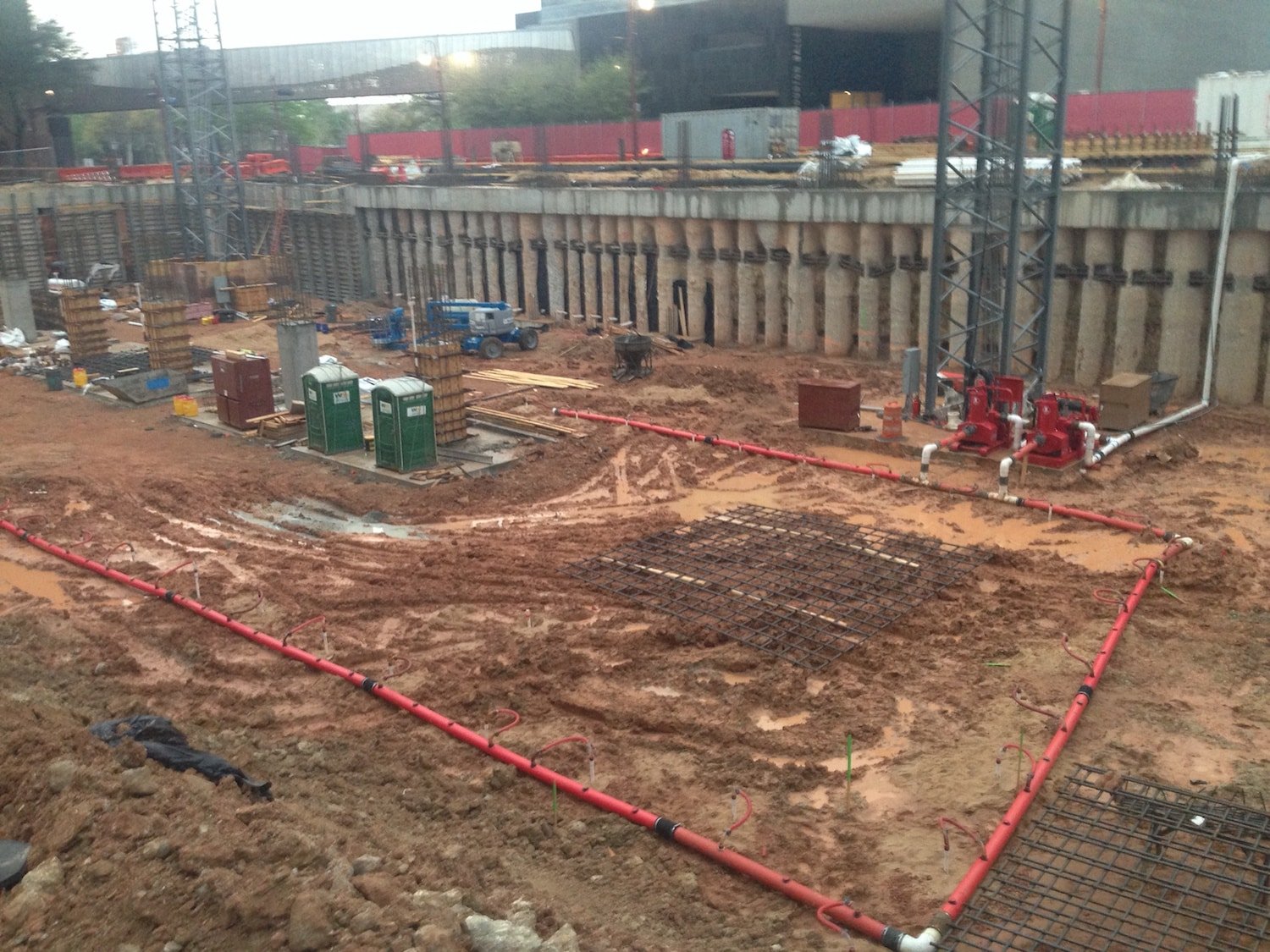
Bowie County declared a disaster effective Monday, April 7, 2025, after heavy rain and flooding over a single weekend. For an excavation contractor, that kind of weekend is a different kind of emergency: open trenches fill, pumps run out of fuel and a pit that was dry on Friday holds six feet of water on Monday morning. Dewatering is the work of keeping excavations workable, in ground that does not drain and rain that does not stop.
The methods range from a sump pump in the corner of a footing to well points around a long trench, deep wells for a basement, and diversion ditches that keep surface water out in the first place. Which one fits depends on how much water there is, where it comes from, how fast it moves through the soil and where it can go afterward. It is a design problem as much as an equipment problem.
We dewater excavations for utility trenches, ponds, foundations, pits and vaults across Northeast Texas. Here is how we decide what to use, what the rules say about discharge and what it costs to keep a job dry.
Surface water first, groundwater second
Most water in a Northeast Texas excavation is rain, not groundwater. Average annual precipitation in the Nash area is 51.24 inches, and a wet clay site sheds water slowly. The first step is therefore keeping surface water out: berms and ditches around the excavation, graded edges and covered stockpiles. This costs little and saves the most.
Groundwater is the second part. The USDA describes the Texark soil in Bowie County as somewhat poorly drained with very slow permeability and an apparent water table at 2 to 3.5 feet. Very slow permeability makes a strange kind of problem: the water does not flow quickly to a trench, so a sump pump can keep up, but it also does not drain away, so the pit stays wet for days after the rain stops.
Methods we use
Sump pumping suits shallow excavations in clay. A pit is dug below the trench bottom, filled with stone, and a pump keeps it drawn down. Well points suit sandy or silty ground, where a line of small wells around the excavation can lower the water table. Deep wells with submersible pumps serve bigger, deeper excavations. Each requires power or fuel, discharge hose and someone watching it.
The pump list matters less than the plan for the water. It must go somewhere, usually into a sediment basin, a filter bag or a grassed area, and then onward to a ditch or drain with permission. Pumping muddy water into a creek is a violation. We build the discharge path first, and we check it daily.
Discharge, erosion control and approvals
Pumped water carries sediment, and discharging it to a stream, a storm drain or a neighbor's property raises legal issues. Construction sites over a certain size are covered by state stormwater requirements, and our erosion control and SWPPP practice includes dewatering discharge points, filter bags and monitoring.
Inside the city of Texarkana, Texas, work in or near the floodplain needs a floodplain permit reviewed by the City Engineer, which affects where pumped water can go. We ask about it at the beginning of the job, and we do not discharge to a drainage way without confirming it is allowed.
A dry excavation is a planned one
We start with the geotechnical report and the plan for the work. If boring logs show groundwater, we know the depth and the soil. We then size pumps with margin, since the day of heavy rain is the day a pump gets tested. Backup pumps and fuel supplies stay on site for long excavations, and someone checks them at the end of every shift.
The sequence of the work is part of the plan. Open the trench only as far as the crew can lay and cover in a day, excavate low points first so water flows to the sump, and place bedding and pipe before the next rain. Stopping when water is winning is also part of the plan, because a trench worked wet damages the subgrade it is supposed to protect.
What dewatering costs
Costs include equipment rental, fuel or power, operator monitoring, discharge hose and filters, and, for longer jobs, a standby crew. Well points and deep wells need drilling and setup that can approach the cost of the excavation itself. Sump pumping is much cheaper but needs vigilance.
We separate dewatering from the base bid where we can, and quote unit prices by the day for pumping beyond a base allowance. The alternative, a lump sum for an unknown amount of water, usually means that the owner pays too much or the contractor loses money.
Seasons and standby
Spring is the wet season for this part of Texas and the busiest for site work, which is a bad overlap. We recommend that utility and foundation starts in March through June carry a dewatering allowance and a flexible start date. Late summer is drier but hot, and pump crews need shade and water too.
Standby is worth discussing with the general contractor before work begins. A pump that runs all weekend after a Friday storm is cheaper than a crew that loses Monday and Tuesday bailing out a trench. We agree on monitoring responsibilities in writing so that nobody assumes someone else is checking the fuel.
Where dewatering is part of the job
It is most often required for trenching and backfill, and for deep manholes and vaults.
It is just as common in pond and basin excavation below the water table. It also supports concrete work: a footing placed in water has uncertain strength, and slab subgrade that is wet will not compact.
For owners of industrial and public property, municipal and public works agencies add monitoring and reporting requirements. We build those requirements into the plan, with a log of pump hours, discharge quality and any visible sediment.
Keep your excavation workable
Send the excavation depths and the geotechnical report. We will recommend a dewatering method, a discharge path and a daily rate you can compare.
Common Questions
How do you know how much pumping a site needs?
From the boring logs, test pits, the season and the excavation depth. We also look at the site after a rain, because ground that looks dry in a drought can behave very differently in April. We bring more pump than we expect to use.
Can pumped water go into a storm drain?
Only if the owner of the system allows it and the water meets quality limits. Sediment-laden water needs a filter bag or a basin first. We ask the city or the system owner before pumping into any drain, and we document it.
Does dewatering settle nearby buildings?
It can, if the water table drops enough to consolidate soft soils under neighboring foundations. For deep or long-term dewatering near buildings, the engineer may require monitoring. For ordinary shallow trench work in clay, the effect is small.
What happens if it rains during excavation?
We pump, we protect the bottom and we stop work if conditions are unsafe. Open trench ends are sealed off, and we do not let crews work in standing water. Rain delay is built into our schedule for the wet months.
Can we avoid dewatering by scheduling around rain?
Partly. Working in drier months and keeping excavations short helps, but clay holds water for days, so even a dry week may not clear the ground. We build the schedule with both the forecast and the soil in mind.