
Trenching and Backfill for Utilities in Bowie County
Open-cut trenching, bedding, backfill lifts and compaction testing for water, sewer, storm and conduit lines in Texarkana and Northeast Texas.
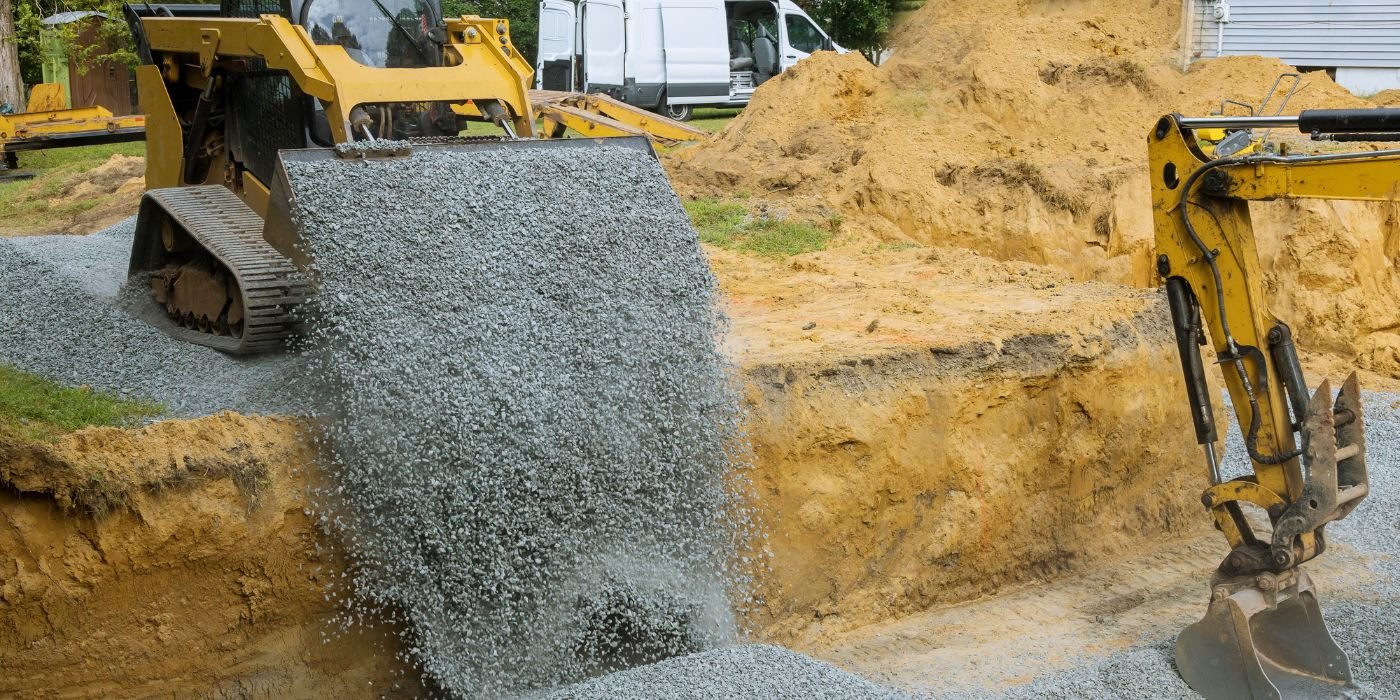
Plenty of pipe problems begin as backfill problems. The pipe was fine when it left the plant and fine when the crew laid it, and then a few years later a pavement dips over the trench line because the backfill settled. We build trenches so that does not happen, and the way we do it is slow, wet-weather aware and heavy on measuring.
Trenching and backfill covers the digging, the shoring, the bedding, the pipe zone, the lifts above it and the compaction testing that proves it. It also covers the restoration of whatever sat on top: pavement, gravel, sod or slab. For us the trench is not done until the surface above it holds a loaded truck without a mark.
We trench for gravity sewer, pressurized water, storm drains, fire lines, electrical duct and fiber. Each has its own grade tolerance, cover requirement and bedding spec, and each behaves differently when the soil is Bowie County clay.
Bedding, pipe zone and lifts
We cut the trench to the width the spec allows, wide enough for work and narrow enough that the pipe does not carry more load than it was designed for. The bottom is trimmed to grade, soft spots are removed and replaced with bedding stone and the pipe is laid on a continuous support, not on lumps. Haunching is the step crews skip when they are in a hurry, and it is the one that matters most: material worked under the haunches of the pipe by hand or with a small tamper keeps the pipe from sagging.
Above the pipe zone, backfill goes in lifts, usually six to twelve inches loose, compacted to the density in the specification at moisture the engineer allows. We do not push a trench full of wet clay and drive across it. Where the native soil will not compact, we bring in select material or flowable fill, and under roads we often use stone or cement-stabilized sand to keep the trench from becoming a soft line across the pavement.
Permits, locates and testing
Municipal utility work follows the owner's standard details, which in a city like Texarkana are approved through the City Engineer and plan review process. Work in the right-of-way needs a permit and sometimes a traffic control plan, and trenches that cross TxDOT roads need TxDOT approval for the crossing method. Boring or jacking a crossing is often required, while open cut in a state road is the exception.
Texas requires utility locate requests before excavation, and we call them in on every job. Compaction is tested at intervals the spec states, normally per lift per a set number of linear feet, and the crews do not cover a lift until the technician has signed it off. For pressurized lines, the testing includes pressure and disinfection, and for sewer lines it includes mandrel, camera and air or vacuum tests. We keep those results with the job record.
Unincorporated Bowie County has no general building permit as far as a third-party permit guide reports, so trenching outside city limits often runs under the utility district or owner's approval. Confirm that with the county before work starts.
Where trench quality shows
A manufacturing plant usually has the heaviest underground load: process water, fire loop, sanitary lines, storm and electrical duct banks, sometimes all in the same corridor. Poorly compacted trench lines under a plant floor or forklift aisle show up quickly. At TexAmericas Center, where the owner reported a new onsite water treatment plant described as funded and soon to be under construction, the scale of the pipework on a campus of that size gives trench quality real consequences.
Public roads are the other test. Along US 82 in Bowie County, TxDOT's project page describes a new storm drain system with inlets and relocation of the existing trail, work that depends on trenches that stay put under new pavement. Our US 82 corridor page covers the highway work shaping the area.
Wet trenches, long runs and tight corridors
Wet weather is the main variable. A trench that is open when a storm arrives collects water, loses its bearing and sometimes caves. We limit the length of open trench to what the pipe crew can lay and backfill in a day, put the spoil where runoff will not flow back in and keep a pump on site. Long open sections look like progress but only invite trouble.
Tight corridors matter as much as long ones. Sharing a trench among several utilities requires separation distances, color-coded tape and as-built recording. In developed areas where existing lines cross the new alignment, we expose them by potholing first and adjust the grade, which is cheaper than a repair afterwards. The same discipline applies on small-town work. TxDOT's US 82 plans for DeKalb add sidewalks inside the city limits and a new storm drain system with inlets, and the very-fine clay mapped in Bowie County floodplains, the Texark series with 60 to 80 percent clay and cracks up to two inches wide when dry, is exactly the soil that moves under thin sections of pavement. Trench backfill in ground like that earns its testing. See our water main and storm drain pages for how those lines are laid and tested.
What changes the trench price
Depth, soil, groundwater, restoration and traffic control carry most of the cost. A four-foot trench in dry loam is a production job. A twelve-foot trench in wet clay with shoring and pavement restoration is a project. Rock or old concrete turns a day's footage into a week's.
Backfill type is the quiet driver. Using native clay is cheap on paper and expensive if it fails. Stone or flowable fill costs more per foot and removes the settlement risk. For utility owners and municipal and public works clients the right choice often depends on what sits above the line, and we price both so the decision is theirs. Utility and energy companies usually specify the backfill and we follow it.
Send us the alignment
Plans, profile sheets and the specification are enough for us to return a trench price with bedding, backfill and restoration broken out. Call or request a quote.
Common Questions
How far ahead of the pipe crew do you trench?
No more than the pipe crew can lay and backfill in the same working day if rain is possible. We hold open trench to a minimum so a storm cannot fill it, and we close lengths with a temporary cap or cover when the crew leaves.
What compaction is required over a pipe?
The spec sets it, commonly 95 percent of standard Proctor density in roads and 90 to 95 percent elsewhere, tested lift by lift. Over the pipe zone we compact by hand tamper or light equipment so the pipe is not stressed.
Can the native clay be used for backfill?
In green areas sometimes, in roadways rarely. High-plasticity clay swells, shrinks and resists compaction, so many owners require select fill or flowable fill under pavement. The soils report and the engineer decide.
Do you open-cut road crossings?
Only where the road owner permits it. Many state and county roads require boring or jacking, and we coordinate the permit and the crossing method with the owner.
What do you do about existing lines in the way?
We pothole to expose them, record depth and material, and adjust the new grade or coordinate relocation with the owner. A line exposed on day one costs far less than one hit on day five.