
Pond and Basin Excavation
Detention basins, retention ponds and stock ponds dug, shaped and stabilized in Bowie and Cass counties, with clay liners, outlet structures and safe slopes.
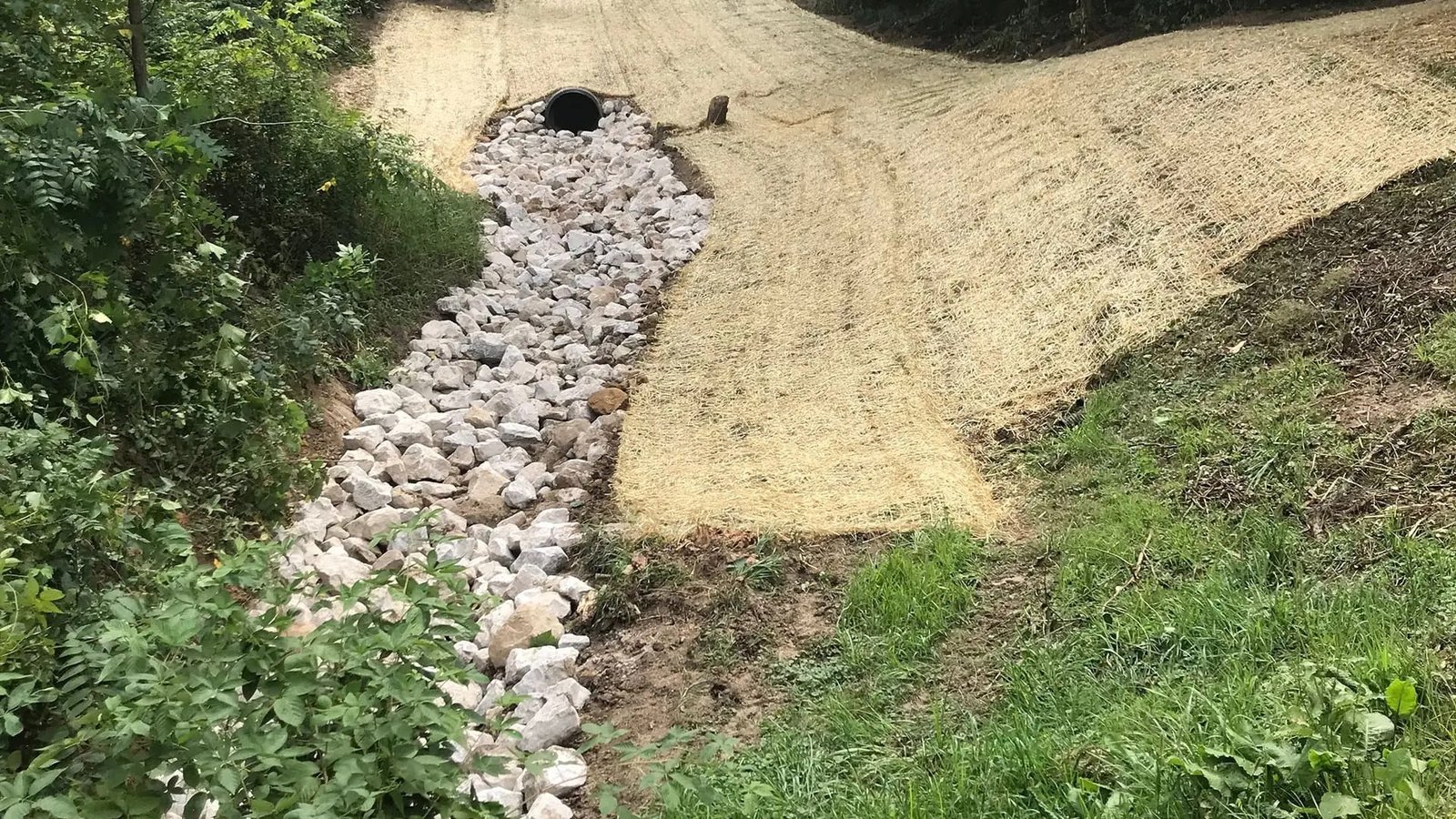
A pond is a hole that has to hold water or hold it back, and the clay under Bowie and Cass counties is both the best and worst thing to build one in. It holds water beautifully when it is compacted and keeps its shape. It slumps, slickens and cracks when it is not. We dig basins with that duality in mind.
Our pond and basin work covers stormwater detention basins that empty after storms, retention ponds that hold a permanent pool, sediment basins used during construction, agricultural and stock ponds and borrow pits that double as the first phase of a fill program. In each case the hole serves a purpose, and the excavation has to deliver the volume, the slopes and the outlet that purpose needs.
Water, clay and the floodplain
The region is built around water. Wright Patman Dam holds a flood control pool of 2,509,000 acre-feet on the Sulphur River southwest of Texarkana, and the City of Texarkana's hazard mitigation plan describes portions of the city, mostly along waterways, as lying in the 100-year floodplain, with impaired streams such as Swampoodle Creek just east of downtown. Developers who put hard surfaces on land that drains to those creeks are expected to detain the extra runoff on site.
The clay is why the ponds hold. The Texark soil series, with 60 to 80 percent clay and very slow permeability, is described by the USDA as somewhat poorly drained with an apparent water table at two to three and a half feet on flood plains. A basin dug into soil like that holds water with little help, but a detention basin that was designed to drain between storms can stay wet for weeks. We design our grading and outlet details to drain what the engineer wants drained.
From stakeout to stabilized slope
We lay out the basin from the civil drawings, stake the top of bank, bottom and outlet, strip topsoil and stockpile it for the finish. Excavation follows the design volume: a detention basin may be shallow and broad, a retention pond deeper with a safety bench. We cut to design slopes, usually three horizontal to one vertical or flatter for public safety, and we shape the bottom to the grades the engineer specifies, often with a low-flow channel to drain it.
Outlet structures, headwalls and emergency spillways come next. We coordinate with the culverts and headwalls and storm drain installation work so the pipes and the basin are built together. The excavated clay can often be used for embankments, berms and pads elsewhere on the site, which reduces haul-off. If the engineer requires a compacted clay liner or a core trench, we place it in lifts and test it like any other structural fill.
Slopes, water and public safety
Ponds attract kids, dogs and trouble. Safe slopes, safety benches, fencing where required and clear signage are part of the design and part of the build. A pond with a steep clay bank that was slick when wet is a drowning risk, and we do not leave one. We flatten slopes at the water line, add benches and make sure the exit points are obvious.
During construction, a deep excavation that fills with rainwater is a hazard to workers and neighbors. We limit the open pit, pump when needed and barricade the edge. Equipment working near slopes keeps a setback that accounts for the soil's strength when wet, since clay that held on Tuesday can slump on Friday.
Dams, permits and design rules
Texas regulates dams by height and storage, and larger ponds may fall under state dam safety rules, so the engineer determines whether the structure qualifies and what design standards apply. Smaller detention basins are part of the stormwater design and follow the city's drainage criteria. Work in or near streams and wetlands can bring in federal permitting, which the owner's consultant sorts out. We build to the approved plan and ask early whether any unknown permit still needs to be issued.
For construction stormwater, a basin is often the sediment trap for the entire project, so it is built first and cleaned out at the end, then reshaped to final grade and stabilized. That requires planning with erosion control and SWPPP work and with whoever maintains the pond afterwards.
What drives the cost of a pond
Volume is the first number: cubic yards excavated, multiplied by the cost of moving them. If the spoil stays on site as fill, the cost is low. If it must be hauled, the cost climbs, and our haul-off pricing shows the difference. Groundwater and rain are the swing factors: a basin dug into a high water table needs pumping, and a wet March can double the effort of working the clay.
Finishing counts too. Seeding or sodding the slopes, installing erosion blankets and building outlet structures add to the price. Owners often under-budget the finish, and an unstabilized slope erodes into the pond it surrounds. Large-lot agriculture and dairy owners use ponds for stock water and runoff, and the same clay sealing methods apply. Commercial developers are usually the ones watching the volume math most closely.
Related detention work
If your project needs the full drainage package, our detention and retention ponds page covers the design-side coordination, the outlet works and long-term maintenance access.
Digging in the right season
Ponds are best dug in the dry months, when the clay can be excavated, dried and placed without fighting mud. A summer excavation lets the spoil dry in the windrows, and a pond finished by early fall has time to grow grass before winter rain tests the slopes. A pond dug in spring runs into the season's heaviest rain, and every storm resets the work. We schedule basins early in the site sequence so they can serve as sediment traps, and we plan the final reshaping after the building and paving work is done.
Outlet structures must be in before the pond fills, and emergency spillways must be shaped and armored before the first large storm. We stage those items together so the pond is functional at the first rain, even if the finish work is still pending.
Tell us the volume and the outlet
Send the pond sheets and the geotechnical report. We will price excavation, liner, outlet works and finish as separate items.
Common Questions
How deep can a detention pond be?
The design sets it, usually four to ten feet for dry detention basins. Deeper ponds need safety benches, flatter slopes and sometimes fencing. The depth also depends on the outlet elevation and the water table.
Will a pond in clay hold water without a liner?
Often yes, because the clay has very slow permeability, but cracking in dry summers and sandy lenses can cause leaks. We probe the pit bottom and, if needed, place a compacted clay liner.
What do we do with the excavated clay?
Where it is clean and engineer-approved, it makes good berm and embankment fill, and it reduces haul-off. Wet clay needs drying before it compacts. We plan stockpiles and drying space into the sequence.
How do you protect slopes from erosion?
With topsoil, seed or sod, erosion control blankets and temporary diversions until grass is established. Steep banks in clay erode fast in the first storms, so we stabilize them quickly after shaping.
Who maintains the pond after construction?
The owner does, typically through an association or a property owner. We leave access paths, outlet details and as-built information that make maintenance straightforward.