
Asphalt Paving Base Preparation
Stone base, subgrade trim and moisture control for asphalt parking lots, drives and truck routes, finished and tested before the paving crew arrives.
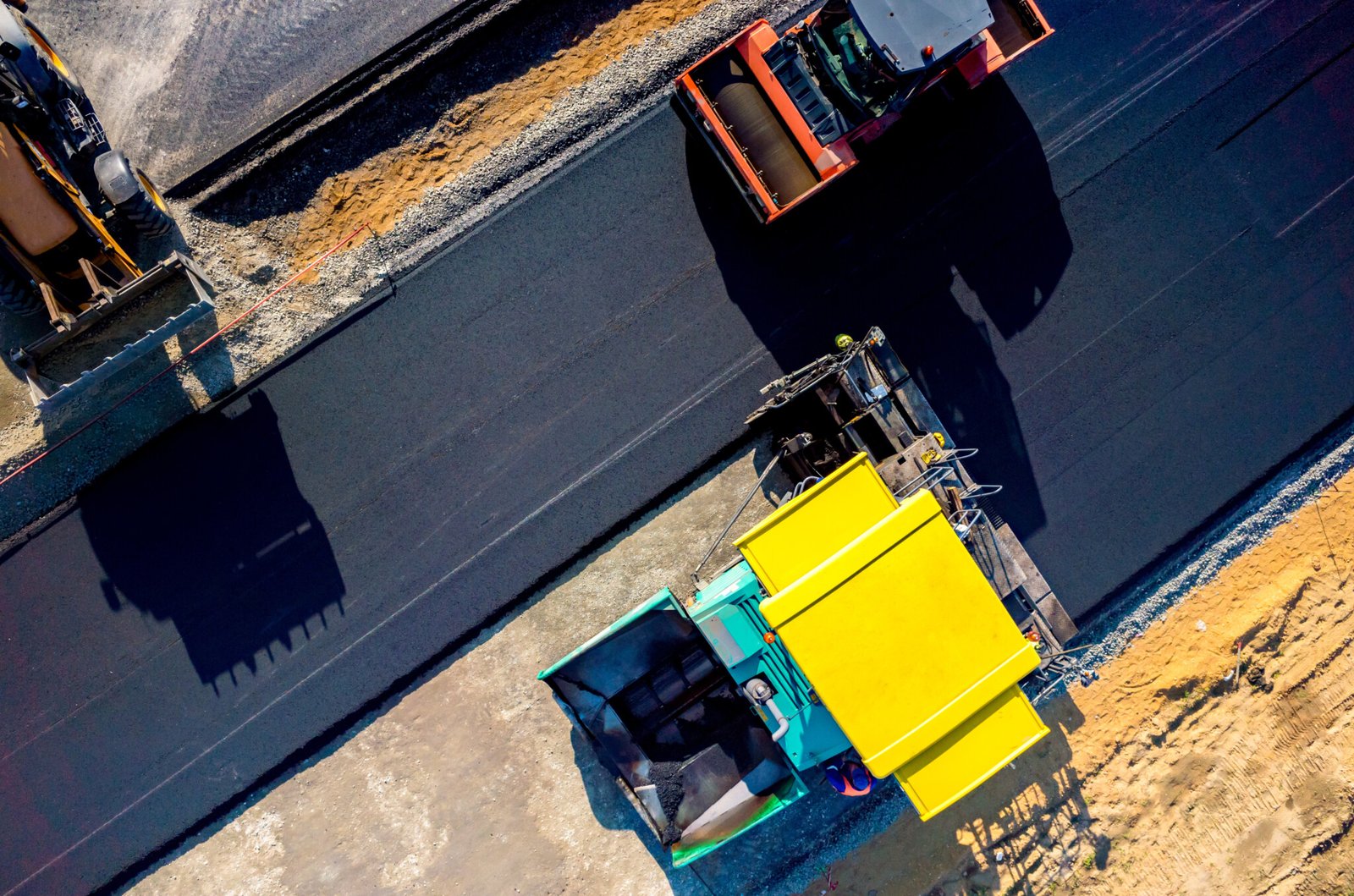
Asphalt is only as flat and as strong as the stone under it. A paving crew with a good screed cannot fix a base that is two inches low in a wheel path, and a hot mix laid on a wet base will trap moisture and fail early. Most of the value in an asphalt lot is made in the base preparation, weeks before the first truck of hot mix pulls in.
We prepare the base for asphalt in parking lots, access drives, fire lanes, truck routes and storage yards. That means finishing the subgrade, placing and compacting the flexible base in lifts, trimming to grade and keeping the surface in condition until paving day. We hand over a base the paving contractor can lay on without correcting anything.
One plan from subgrade to stone
Because we coordinate the subgrade, the base and the grade control, there is no gap in responsibility. Grade and compaction records identify the work accepted at each handoff. Problems found in testing are assigned to the grading trade partners, often the same day.
We run motor graders with grade control, vibratory smooth drum rollers, pneumatic rollers for tightening the surface, water trucks and end-dump and belly-dump trucks for stone. Belly dumps and a paver-style spreader place base rock to a uniform thickness, which makes the grader's trimming pass lighter and the final surface more consistent.
Layers and their jobs
A typical asphalt section has subgrade, a flexible base of crushed stone and then the asphalt itself. The base spreads load, drains water and gives a firm, even platform. Thickness depends on traffic and soils: an automobile parking lot might use six to eight inches of base, a truck route twelve or more. In some designs a geotextile separates clay from stone so fines do not work upward.
We place base in lifts, moisture-condition it to the optimum range and compact to the density in the specification, typically 95 percent of modified Proctor for flexible base. Final trimming happens after compaction, not before, so a roller does not undo the grading. Prime coat, if specified, is applied to a clean, slightly damp surface and given time to cure before paving. Where the lot meets curbs, walks and inlets, we verify the grade against each to keep water moving to its outlets.
Base cost and base value
Stone is the largest material cost in the base, and thickness is the biggest lever. Increasing base thickness by two inches across an acre is a significant purchase, but trimming it can cost more at the back end in early pavement failure. The right thickness is the engineer's call, and our job is to price it without padding.
Haul distance is the other lever. Stone is heavy, and a quarry thirty miles farther away adds a visible amount per ton. We source from approved quarries and price a nearby alternate when the design allows it. For owners who ask us to choose between asphalt and concrete, our concrete paving and parking lot concrete pages give the other side of the comparison. Concrete costs more up front and often less over time on heavy truck traffic.
Lots and drives for the buildings we serve
Retail and medical parking dominate the north side of the city. Texarkana's comprehensive plan places a Professional District north of IH 30 from roughly North Kings Highway to Richmond Road and a Medical District north and west of the IH 30 and Summerhill Road intersection, and a real estate trade article from 2015 described a 500-acre master-planned development west of Richmond Road, a dated reference with no confirmed tenants. Whatever gets built on those corridors will need drive aisles and parking, and our retail shopping center and office building work covers the site scope in more detail.
Industrial yards and truck docks are a different case. Logistics and warehouse developers need pavement that survives turning trailers, and they often choose concrete aprons with asphalt drive lanes beyond, so we coordinate the base with both.
Wet bases and warranty questions
The usual enemy of a base is rain. Crushed stone drains well, but the clay under it does not, and a saturated clay below a clean stone base will pump into the stone the first time a loaded truck crosses. We shape the subgrade to drain, add underdrains where design calls for them, and keep the base from sitting open through long wet spells. The area's annual rainfall, reported in the city's hazard mitigation plan as 42 to 58 inches for the Piney Woods region, makes that more than theory.
We also warn owners about construction traffic on finished base. Concrete trucks, delivery vehicles and dumpsters can rut a completed base within a week. Where heavy trucks must cross it, we keep them to a marked route, regrade the ruts and re-proof-roll before paving. See road subgrade preparation and fine grading for the steps that come before the stone.
Specs, accessibility and inspection
Base materials are held to a gradation and quality specification, usually a TxDOT-style flexible base grade or the owner's engineer's version of it. We provide supplier certifications and gradation tests on request and let the testing agency pull samples at the pit or from the stockpile. Material that fails the sieve comes back out.
In the city of Texarkana, plans are reviewed by the Inspections office, and parking fields must comply with the Texas Accessibility Standards administered by the state licensing agency, including accessible stall slopes and routes. Those slopes are tight, a small fraction of an inch per foot, so we trim the base in accessible areas with a digital level and check them again after compaction. The standards that apply to a parking lot are easier to meet at the base stage than to fix in finished asphalt.
Hand the paver a base that works
Tell us the pavement section and the paving date. We will price the stone, the trim and the testing and hold the date with the paving contractor.
Common Questions
How thick should the stone base be?
It comes from the pavement design, which looks at subgrade strength and traffic. Light-duty parking might use six inches, heavy truck areas considerably more. We do not reduce the engineer's section to save on stone.
Can the base be placed in wet weather?
Stone placed over firm subgrade can be, but it needs moisture control and we avoid placing on saturated clay. If the subgrade is soft, we fix it first, since stone over mud only hides the problem for a few months.
How long can the base sit before paving?
A few weeks is typical if the surface is protected and graded to drain. Longer waits mean re-trimming and re-rolling right before paving, which we schedule with the paving contractor.
Do you coordinate with the paving company?
Yes, we agree on grade tolerance, access, staging and the day of paving ahead of time. The base should be tested and accepted before the paver arrives.
Is a prime coat needed?
Some designs require it to bind the top of the base and shed water during paving. We apply it if specified, on a clean and slightly damp surface, and give it the time it needs before paving.