
Road Subgrade Preparation for Streets and Truck Routes
Subgrade shaping, stabilization and proof rolling for streets, entrances and haul roads in Bowie and Cass counties, built to hold pavement over clay.
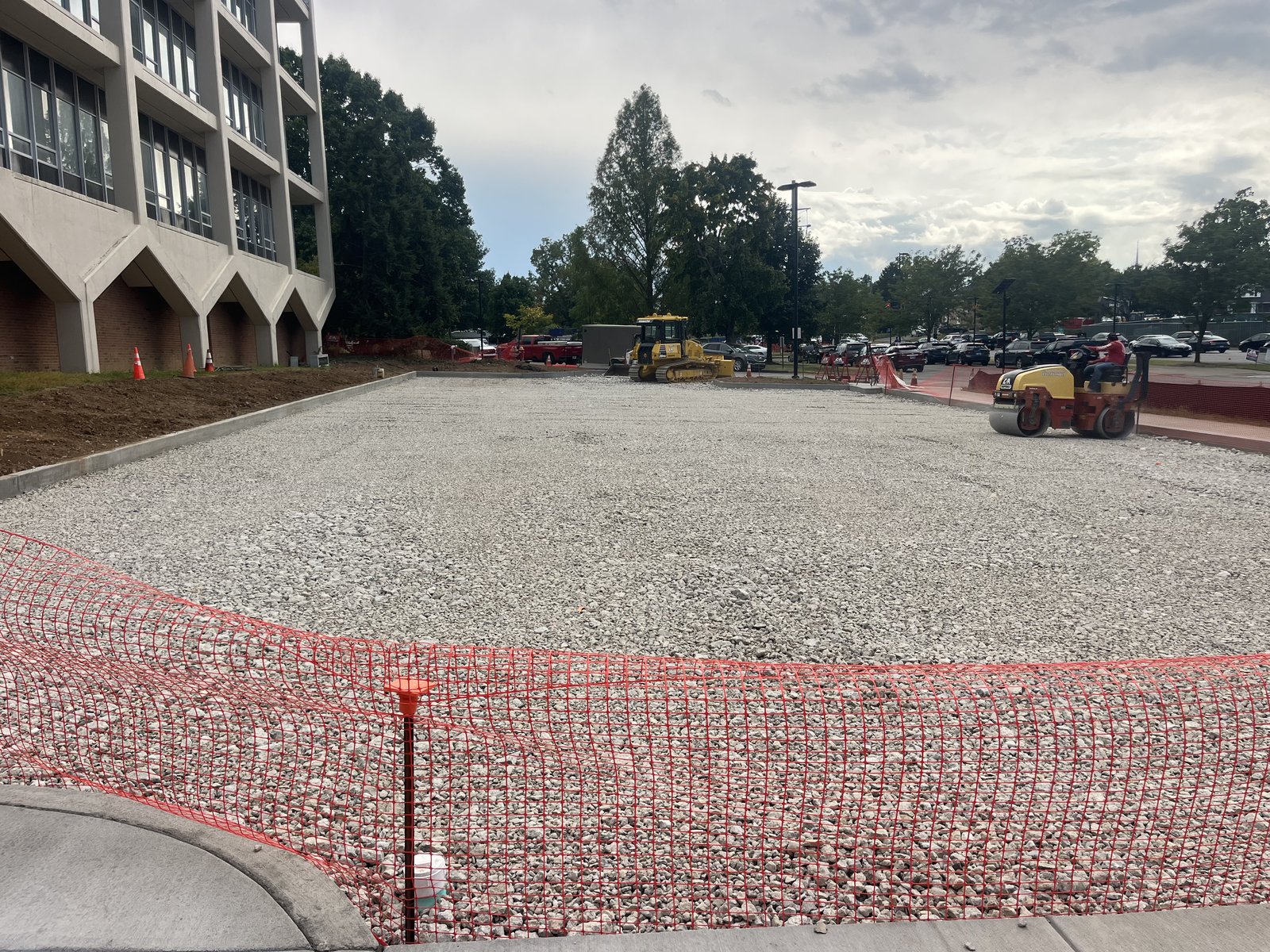
A road is a stack of layers, and the bottom one carries every layer above it. Pavement thickness, base stone and drainage design all assume a subgrade that will not move. In Bowie County, where the native clay swells and shrinks with the weather, that assumption has to be earned before a single yard of base is hauled in.
We prepare subgrade for public streets, private drives, parking lots, truck routes, industrial yards and entrance roads. The work includes stripping, cutting to the subgrade elevation, treating or replacing weak soil, compacting, shaping the crown and cross slope, and proof rolling to find the soft spots. The result is a surface that the base and paving crews can build on with confidence.
What the pavement is going to face
Traffic loads decide how much subgrade work is needed. A residential street needs less than an industrial truck court where loaded tractor-trailers turn on the same patch of pavement all day. The weak link is usually not the thickness of concrete or asphalt but the subgrade under it, which fails by pumping fines through joints or rutting in the wheel paths.
Water is the second enemy. Poor drainage lets water sit in the base and soften clay below. We shape the subgrade to carry water to inlets, ditches or the edge of pavement, and we confirm that edge drains, underdrains and curb lines are positioned before paving begins. Where utilities cross the roadway, backfill quality in the trench is checked before we place the base, since a soft trench is a path for water and a source of future dips.
Proof rolling and the honest answer
Proof rolling is the test that matters most for roads. A loaded water truck or heavy roller crosses the entire subgrade at a walking pace while the engineer or inspector watches for pumping, rutting and spring. Anything that moves more than the spec allows is marked, cut out and rebuilt. We run the proof roll before the base goes down, because a soft area under four inches of stone is a hidden defect, and a soft area under pavement is a pothole waiting for a date.
When a subgrade fails, we do not guess. We probe, sample and, with the engineer, choose between undercutting, lime or cement treatment, geogrid or a thicker base. We make sure the field answer is written down, because the pavement design depends on it and the owner has to live with it. The proof roll results go on the daily report with stationing and photos.
Who sets the standards
For public roads in Texas the standards come from the road owner: TxDOT on state highways, the county on county roads and the city on city streets. TxDOT's I-30 widening in Bowie County, for example, includes three 12-foot lanes each way, 10-foot shoulders, a continuous concrete median barrier and continuously reinforced concrete pavement replacing asphalt over 6.8 miles. That specification shows how much the state expects from the foundation under concrete pavement.
Private roads follow the owner's engineer, and the city's development requirements decide when public review applies. The city's inspections page also requires accessibility compliance, so crossings, curb ramps and sidewalks along a new road are graded to the Texas Accessibility Standards. Right-of-way work in the city requires permits and sometimes traffic control plans, which we coordinate with the general contractor.
Owners who build roads
Municipal and public works departments use us for street extensions, rebuilds and drainage corrections. Developers building subdivisions and commercial parks need subgrade ahead of paving, and industrial parks need truck routes that carry heavy loads without rutting. The TxDOT US 82 widening in Bowie County, from I-30 to US 259, was reported at a bid of $114.5 million for a five-lane section with a continuous center left-turn lane, serving about 10,000 vehicles a day, and shows the scale of the road work around us. Private owners follow the same logic at a smaller size: industrial and manufacturing owners spend the most per square foot, and they gain the most from a good subgrade.
Along the Richmond Road and Summerhill Road arterials, which the city's plan describes as mostly five-lane roads with a center turn lane, commercial driveways and parking lots connect to roads of that type, and their subgrades need to match the quality of the main road they join.
Work we do at the road bed
Typical scope includes clearing and grubbing the corridor, stripping topsoil, cutting to subgrade, treating or replacing soft soil, compacting and shaping, installing geotextile if specified, and proof rolling. We often coordinate with lime and cement treatment and with asphalt paving base preparation, which finishes the surface that paving crews actually touch. For concrete roads and truck courts, the same preparation pairs with concrete paving.
Working with traffic and weather
Road work happens next to traffic. When a corridor is open to the public, we stage subgrade in short segments that can be cut, compacted, proof rolled and covered with base in a single closure, and we keep lanes passable with temporary stone. The westbound I-30 ramp to Richmond Road, for example, was closed in early 2026 for several months so crews could tie new pavement to the widened main lanes, and the posted detour used the Summerhill Road exit. Projects that depend on those ramps plan haul routes around the closure. Our I-30 corridor page tracks the setting.
The weather rule is simple: do not leave a soft subgrade exposed overnight when rain is coming. A segment that cannot be covered gets sealed with a smooth roller and graded to drain. Then we reopen it carefully, test again and fix what the storm touched. We add the cost of reopening to the unit price as an allowance, not a surprise, and we log each rain day so the owner can see how the schedule moved.
Send the pavement section
The pavement design and soils report tell us what the subgrade needs to do. Send both and we will price the preparation, proof rolling and any treatment separately.
Common Questions
How firm does a subgrade need to be?
The pavement design states it, often as a density percentage and a stability check under a proof roll, sometimes as a bearing ratio or resilient modulus from lab tests. We build to the stated number and the testing agency verifies.
Why use lime or cement under a road?
Treated subgrade is stiffer, drains better and resists moisture swings, which extends pavement life on clay. On heavy-use routes it often costs less than a thicker pavement section.
Can you build a road subgrade in wet weather?
Only with care. We can dry or treat soft material, but standing water and rutting stop work. We close the surface at the end of each day and resume when moisture returns to the specified range.
What if utilities have to cross the road?
They are installed and backfilled before the final subgrade work. A trench cut through finished subgrade is a weak line under the pavement, so we want it done first and tested.
Do you work on state highway projects?
We take subcontract work under prime contractors where scope and qualifications fit, and we follow TxDOT specifications and testing on those jobs. Contact us with the project details and we will say what part we can coordinate.