
Rock and Hard Ground Excavation
Ripping, hammering and sawing through cemented layers, old foundations and cobble in Northeast Texas, with honest unit pricing for what the borings could not see.
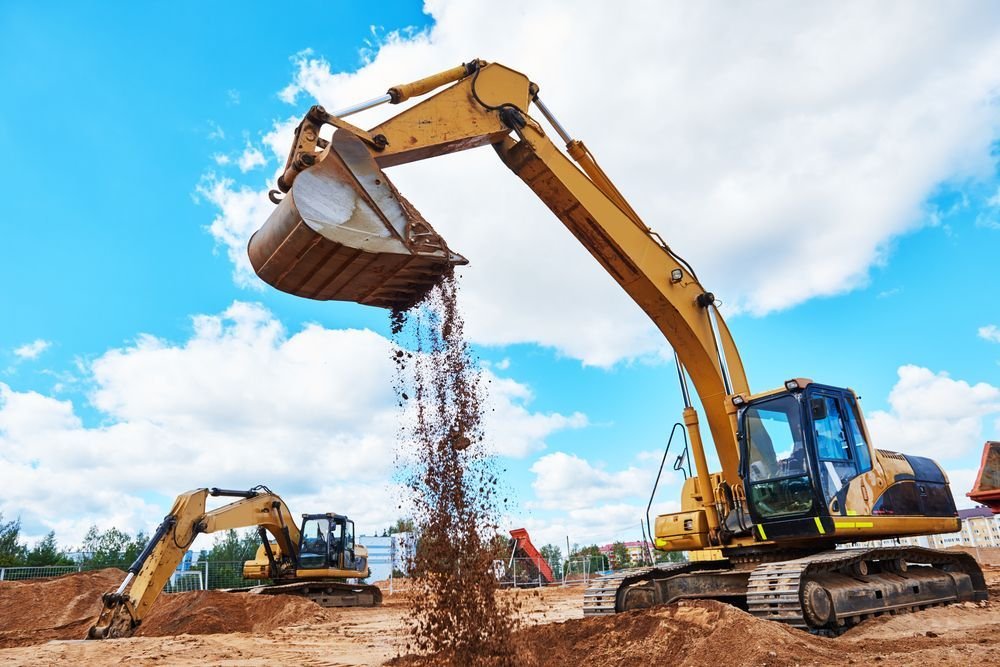
Hard ground does not announce itself. The boring logs said stiff clay to twenty feet, and then the bucket hits something that sounds like a bell. It might be a cemented sandstone ledge, an ironstone layer, a buried slab from a building that came down fifty years ago or a utility encasement nobody recorded. The job now is to get through it without breaking the machine, the schedule or the budget.
Rock excavation in East Texas is usually not the granite of a mountain site. It is cemented layers, hardpan and obstructions that fall between soil and rock, and the method that works is chosen by the material: ripping with a heavy dozer, hammering with a hydraulic breaker, cutting with a saw or trenching attachment, or in rare cases blasting by a licensed specialist.
What hard ground looks like in this region
Most of Bowie and Cass counties sits in soft sediments, and the hard material that turns up is usually local rather than regional. The City of Texarkana's hazard mitigation plan describes the uplands as mostly loams over loamy and clayey subsoils, and the Handbook of Texas lists sand and gravel and a slag-based road material plant among local industries, a reminder that hard, granular and manufactured materials all exist in the ground here. The Handbook says a plant just west of Hughes Springs made road-building material from mill slag, and old industrial sites like it can hold slag fill, buried foundations and hard pockets that will not rip.
Obstructions, not geology, are the common problem. Red River Army Depot houses more than 1,400 buildings on over 15,000 acres, and sites with that much history hold old footings, utility tunnels and slabs. Redeveloped parcels on any former industrial ground should be assumed to contain some. Our Red River Army Depot page covers the setting.
Match the tool to the material
We start with the borings and a few test pits, and we classify the material by how it responds. If a heavy dozer with a single-shank ripper can break it, ripping is the cheapest method and we use it. If the material rejects ripping, a hydraulic hammer on a large excavator breaks it into pieces a bucket can lift. Where noise and vibration matter, such as next to occupied buildings, we choose saws, drilling and splitting to keep energy down.
For trenches in hard material, a rock trencher or wheel saw cuts a clean, narrow channel at a predictable rate, which is often faster and cheaper than hammering when the run is long. Groundwater often rides on top of the hard layer, so dewatering is planned in the same bid. Pipe and conduit need clean bedding in rocky trenches, so we over-dig and place stone or sand to give the line a uniform cushion. Fragments over a specified size are kept out of the backfill, since a sharp rock pressing on a pipe is a failure waiting to happen.
Equipment that earns its keep
A large dozer with a ripper, an excavator with a hydraulic breaker, a rock saw attachment and a pair of hard-faced buckets cover most of what we meet, and the same machines serve demolition and site prep when old slabs are the obstruction. We keep the equipment in hand rather than renting on the day we find the ledge, which saves the time it takes to get a machine to the site and stops the hole from sitting open. When blasting is justified, we use a licensed specialist and coordinate the permits, notifications and vibration monitoring, and we do not blast near occupied buildings or utilities without an engineer's study.
A manufacturing plant expansion on old industrial ground is the usual place we meet it, and operators matter more than iron. A good breaker operator reads the rock, works along bedding planes and knows when to move to a different face. A poor one hammers for hours with no progress and wears out the tool. We price by the bucket of material removed rather than by hours of hammering, so our incentive is to find the efficient method.
Unit pricing and the unknown
No one can price hard ground with certainty without exposing it. The honest approach is a base price for soil excavation and a separate unit price per cubic yard for rock and hard material, defined by a clear test: material that cannot be removed by a stated machine in a stated time is rock. Both sides agree to the definition before the work starts, and the quantity is measured by survey.
We recommend that owners include a hard-ground allowance in their budget on any site with a history, like an old plant, a former ordnance site or a redevelopment lot in an industrial district, and that they ask for a few extra test pits during design. For pad and footing work, see our excavation and trenching and backfill pages. Utility and energy companies that install buried lines see the cost of hard trenching on every route and plan allowances accordingly.
Dust, noise and flying fragments
Rock work throws dust and fragments. Breaking and sawing release respirable silica, which is a serious long-term hazard, so crews work with water suppression, enclosed cabs and respiratory protection as the exposure calls for. Exclusion zones are set around hammers and saws, and pedestrians and neighbors are kept clear.
Vibration and noise also need attention. We monitor near structures when required and limit working hours near homes and hospitals, such as the medical campuses on the north side of the city. If a site is close to sensitive equipment or occupied rooms, we raise it with the owner before the first strike, not after.
Dig the test pits before you bid
Send the boring logs and the site history. We will price soil and rock separately and recommend test pits where the record is thin.
Common Questions
How do you know if it is rock or hard soil?
By a defined test: can a stated dozer with a single-shank ripper loosen it at a reasonable rate, or does it need a hammer or saw. The test is written into the contract so there is no argument after the fact.
Will blasting be needed?
Rarely in this region. Most hard material here can be ripped or hammered. If blasting is justified, a licensed contractor does it with permits, notifications and monitoring, and never near sensitive structures without a study.
What does hard ground do to a schedule?
It slows production sharply. A trench that advances 200 feet a day in soil might make 30 in rock. We build the slowdown into the schedule from the test pit information and update it as the cut progresses.
Can the broken rock be reused?
Often, as bulk fill or crushed to base material, if it meets the specification. That offsets some of the cost of removal. The engineer approves the use.
Who bears the risk of unforeseen rock?
The contract decides. A common arrangement is a unit price for rock with measured quantities, so the owner pays for what is actually removed and the contractor is not forced to gamble. We recommend that arrangement.