
Demolition and Site Prep for New Construction
Selective demolition, slab and pavement removal, utility capping and clean building pads for redevelopment sites in Texarkana and Bowie County.
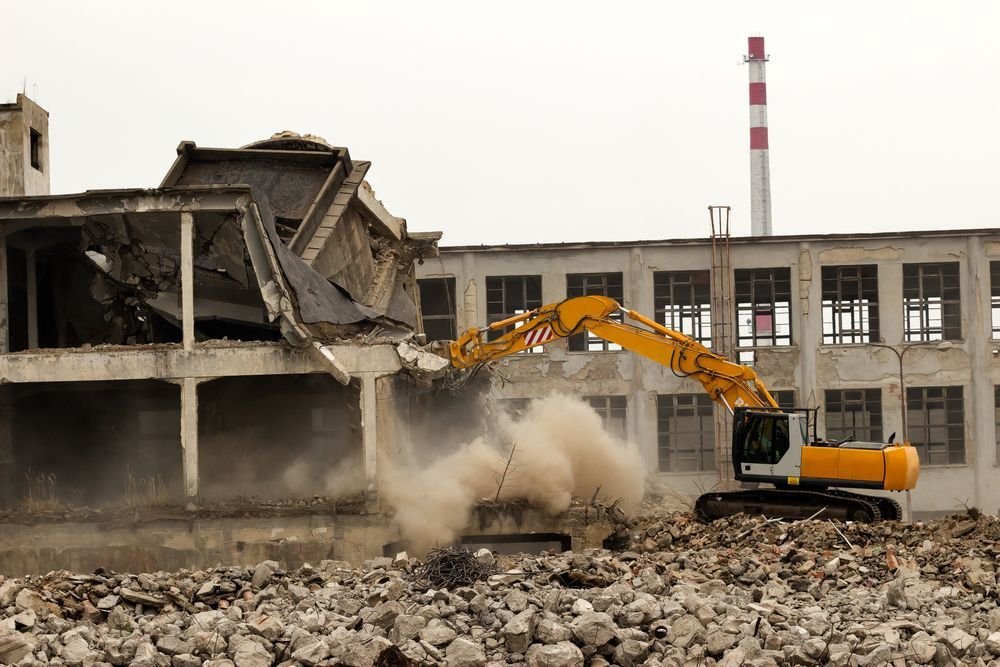
Before the new slab goes in, the old one has to come out, along with the footings under it, the pipes that fed it and the trees that grew through its parking lot. Demolition and site prep is the unglamorous start to redevelopment, and a surprising share of project surprises begin here, in the ground nobody looked at closely.
We take down structures, break out slabs and pavements, cap and remove utilities, clear vegetation and leave the lot graded, clean and ready for foundation work. The measure of our work is what the next trade finds when it arrives: no buried footing in the way, no abandoned line to chase and no pile of debris to haul.
Hazards that come with the old building
Older buildings carry hidden hazards. Before demolition, an asbestos survey is required for most commercial structures, and lead paint, mercury switches, PCB ballasts and similar items have to be identified and handled by qualified abatement crews. We do not start demolition until the owner can show us the survey and the abatement closeout. State rules on notification apply, and the owner's consultant manages them.
Controlled demolition has its own safety list: structural engineering checks on partial demolition, exclusion zones, dust suppression with water, utility shutoff verification, and fall protection for crews working above grade. Neighbors get notice. Pedestrians get protected walkways. If a wall is attached to a building that stays, we shore it and cut it free in a planned sequence.
Taking it down and clearing it out
Typical scope includes disconnecting and capping utilities at the main, removing structures to the foundation or below, breaking and hauling slabs and pavements, removing footings and below-grade tanks, clearing trees and brush, and backfilling holes with compacted fill. Concrete can often be crushed on site or at a recycler and reused as base, which saves hauling and disposal fees. Steel goes to scrap yards.
Below-grade surprises are routine. Old septic tanks, cisterns, basements filled with rubble, buried storage tanks and abandoned utility lines turn up on almost every redevelopment. We probe before we strip, open suspicious spots and document what we find with photos and measurements, because documented finds are billable unit items and undocumented ones become arguments. Our concrete demolition and removal and site clearing and grubbing pages cover those pieces in more detail.
What to settle before we start
First, who owns the utilities? Water, sewer, power, gas and communications each have their own shutoff process and lead time. Gas and electric in particular can take weeks to schedule, and nothing gets demolished until they confirm. Second, what stays? Trees, curbs, driveways, walls and underground lines to be preserved must be marked and protected.
Third, what is the target for the cleared site? A lot being sold as a pad site needs a clean, graded surface and a clean environmental report. A lot receiving a building the next week needs a compacted, tested subgrade. We price those differently and line the work up with building pad preparation when the owner wants a single crew from teardown to proof roll. Fourth, where does the debris go? We recycle concrete, asphalt and metal and haul the rest to approved disposal, with haul-off tickets for every load.
The kinds of buildings we take down
Redevelopment in this market includes everything from retail boxes and old warehouses to historic downtown buildings. In downtown Texarkana, for example, a Texas Department of Licensing and Regulation record lists a 29,700 square foot theater building at 221 Main Street in a modernization project, which is the kind of selective work, interior demolition and careful removal next to occupied space, that calls for patience more than horsepower. Our government and municipal and office building pages describe how we handle owners who stay in neighboring spaces.
Industrial demolition is a different scale. Red River Army Depot occupies over 15,000 acres with more than 1,400 buildings and eight million square feet of floor space, and the BRAC record for the Lone Star Army Ammunition Plant counted over 2 million square feet of storage and production space on a conveyed site that has gone to redevelopment. Where old industrial footprints become new pads, demolition and site prep come first, and industrial and manufacturing owners need a crew that knows to look for old process lines and tanks.
Where demolition budgets go
Hazardous material abatement, if any, is the largest and least predictable cost. After that come the volume of concrete and steel, haul distances and disposal fees, utility work and the amount of hand-work in tight conditions. Recycling can offset costs when markets are good.
The cheapest way to demolish is to control the unknowns. A pre-demolition survey, an as-built check against utility records and a few test pits before bidding all reduce the risk that gets priced into contingencies. We recommend them and are glad to help with the walk-through.
Fitting demolition ahead of construction
Demolition goes first, but it should not run so far ahead that a stripped lot sits open through a rainy season. We sequence it close to the start of grading, with erosion controls installed first. On tight schedules we split the lot into phases, clearing and prepping the first building's footprint while the rest is still coming down.
Permits matter here too. Demolition in the city generally needs a permit from the Inspections office before work starts, utilities must be verified as disconnected and the debris plan has to be in writing. Confirm with the city whether your lot needs anything beyond that, because the requirements change with the building's size and age. After demolition the lot is graded to drain, stabilized against erosion and, where the owner asks, fenced until construction begins. A flat, clean lot is a better first impression for the next contractor than a pile of rubble with a note on it.
Walk the site with us
Tell us what is on the lot and what you want left behind. We will walk it, probe the questionable spots and return a price with unit items for what we cannot see yet.
Common Questions
Do we need an asbestos survey?
For most commercial and many industrial structures, yes, before demolition or renovation. The owner hires a licensed inspector, and any regulated material is removed by licensed abatement contractors before we start. We ask for the report at the pre-construction meeting.
Can you recycle the concrete?
Usually. Clean broken concrete can be crushed to a base material on site or at a yard, which saves disposal fees and trucking. Reinforcing steel is separated and sold as scrap.
What if we find something unexpected below ground?
We stop, photograph, measure and notify you. Buried tanks, old fuel lines or unknown fill need an engineer or environmental consultant's guidance before we continue. Documentation protects everyone's schedule and budget.
How do you protect neighboring property?
With dust control, vibration awareness, exclusion zones and, where needed, shoring and protected walkways. We notify neighbors before the work starts and keep a point of contact available during demolition.
Who arranges utility shutoff?
The owner or the general contractor typically requests it, and we verify the disconnect before we demolish anything. Gas and power companies need lead time, so we ask for the request to go in early.