Excavation Contractor in Texarkana, Texas
Footing, basement, utility and bulk excavation in Texarkana and Bowie County, with shoring, groundwater and spoil planning handled before the first bucket.
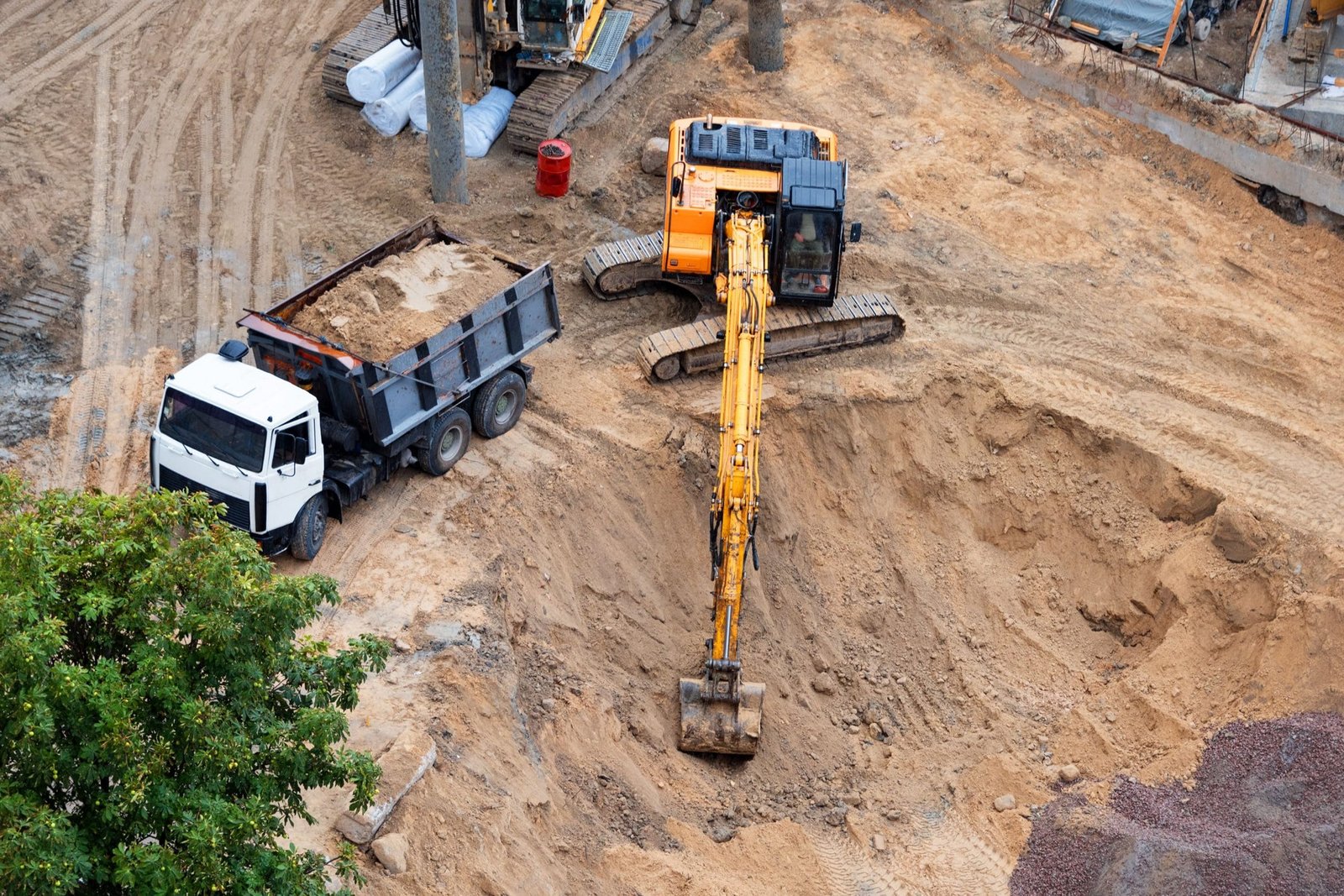
A hole is only useful if it stays open long enough to build in it. In Bowie County, with its clay walls, perched water and sudden rain, keeping an excavation stable is half the job. The digging itself is the easy half.
We excavate for foundations, pits, vaults, tank bases, elevator shafts, drainage structures and building pads, and for the odd job that starts with a surveyor's stake and a plan note reading 'excavate to suitable bearing.' That note carries a lot of weight. It means someone has to decide what suitable means, and it is usually decided at the bottom of the hole with an engineer standing at the edge.
Our coordination is built around that moment. We dig to the line, stop, let the engineer or testing technician look and respond with what the soil is telling us instead of what the drawing hoped for.
What we dig and how we leave it
Typical scope covers stripping and stockpiling, bulk excavation, footing and pier trenches, mat-slab excavation, pit and sump excavation, tank pits, utility structure pits and the over-dig needed for working room around forms. Each has its own tolerance. Footing bottoms are cut clean with a smooth bucket and left undisturbed. Pit floors are trimmed to grade with a laser, then protected with a mud slab or stone as soon as the engineer approves them.
Spoil is managed with a plan, not a pile. Good material is sorted for backfill, wet clay is held back for drying or treatment and anything that cannot be reused is trucked out. Our import, export and haul-off service covers the loads that leave, and topsoil stripping and stockpiling covers the surface layer we save for final grading.
Where excavations are near existing structures, roads or buried lines, we locate and expose utilities by hand or vacuum before the machine gets close, and we watch the cut face for movement as we go.
Permitting for the dig itself is usually light, but the project around it is not. Inside city limits the grading and floodplain questions go through the city, and the city's hazard mitigation plan notes that portions of Texarkana along waterways lie in the 100-year floodplain, which can change how deep and how long a cut may stay open. Work in Nash or Wake Village follows each city's own review, and unincorporated sites should be confirmed with the county before equipment arrives.
Trench walls, spoil piles and who is in the hole
Excavation is one of the most dangerous jobs on a construction site, and clay does not make it safe. Clay can stand straight for hours and then let go without a sound. Cuts deeper than five feet need a protective system, a competent person inspecting daily and after every storm, and a way in and out at least every twenty-five feet of lateral travel. Spoil sits at least two feet back from the edge.
We use sloping, benching and trench boxes by the soil classification the competent person assigns, not by habit. After rain, any excavation that had water in it or near it gets reinspected before anyone enters. Surface water is diverted away from the edge, and heavy equipment keeps a set-back that accounts for surcharge. If a shoring design is required, we follow the engineer's drawing, not our own estimate.
Reading the ground before the machine moves
We read the soils report first, then walk the site. The Texark clay series, typical of low ground in Bowie County, has slickensides at 12 to 20 inches and a water table that can sit at two to three and a half feet, which means footings cut in that ground reach water almost immediately. We plan dewatering into the bid rather than discovering the need halfway down.
On the higher red-clay ridges the hole stays drier, but sandy lenses can run or ravel. We watch for them and adjust slopes and sequencing so one bad layer does not shut down the whole cut. Footing excavations are poured the same day they are approved when we can arrange it, because a cut footing left open overnight in clay is a gamble against the weather.
Sequencing around the weather and the pour
Excavation sits at the front of the critical path, so a one-week slip echoes through every trade behind it. We sequence cuts so that the footing crew, the rebar crew and the concrete truck can follow the machine, with a one- or two-day gap at most. The longer an excavation stays open, the more it fills with rainwater and loses firmness.
Our superintendents watch the forecast and shorten or lengthen the open work accordingly. When a storm is coming, we pump, cap the cut with plastic or stone if the design allows and re-expose the bearing surface only when the next dry window opens. Owners get a plain statement of delay days with the cause attached.
Where we dig
We work across Texarkana, Nash, Wake Village, New Boston, Hooks and the rest of Bowie County, and into Cass County along US 59. Larger campuses have their own digging demands: the replacement Wadley Regional Medical Center on West Park Boulevard is listed at about 338,924 square feet, and healthcare footprints like that need deep utility trenches, elevator pits and heavy foundations that call for schools and healthcare owner experience around occupied neighbors. See also the CHRISTUS and Wadley medical campus and the hospital pages.
Industrial ground is different. The Red River Army Depot occupies over 15,000 acres with more than 1,400 buildings, so excavation near old foundations, buried lines and rail spurs asks for patient exploration. The rock and hard ground trade crew handles the stubborn material that older campuses hide below the surface.
Tell us what the hole is for
Send the foundation plan, the soils report and the date you need footings poured. We will answer with sequence, shoring approach and a price that shows dewatering and haul-off separately.
Common Questions
How deep can you dig without shoring?
Under five feet in stable soil a competent person may allow a vertical cut, but clay and wet ground often demand sloping or boxes sooner. Past five feet, a protective system is required. We classify the soil in the field and the competent person decides, so the depth limit changes from site to site.
What if we hit groundwater at footing depth?
We pump from sumps, use stone beds and in difficult ground bring in well points. The cost is usually modest if planned and large if it surprises us, so we ask for the boring logs and water readings before pricing.
Who calls in utility locates?
Texas requires a locate request before digging, and we place the call for work we perform. We still pothole where the locate marks are close to the cut, since marks can be off by several feet and older campuses often have lines nobody drew.
Can the soil we dig be reused as backfill?
Sometimes. Dry loams and sands often can. High-plasticity clay generally needs treatment or has to go. The engineer decides what qualifies, and we keep material sorted so that decision is easy to apply.
How quickly can you mobilize?
Typically within days for routine excavation, longer if a stormwater plan or shoring design has to be reviewed first. Send the plans and the target pour date and we will say plainly what is realistic.