
Concrete and Earthwork for Agriculture and Dairy Owners in Northeast Texas
Barn floors, feed pads, farm roads, culverts and basins for agricultural and dairy owners in Bowie and Cass counties, built for wet clay ground.
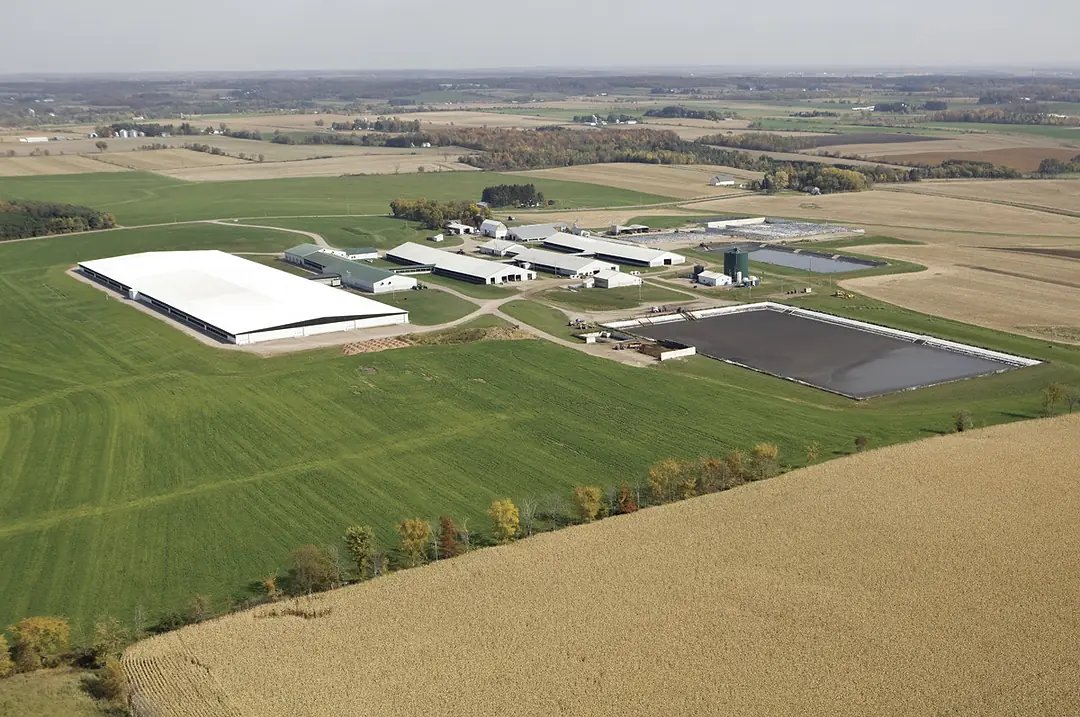
Hoof traffic wears concrete harder than a forklift does, and manure, milk and wash water are all corrosive. A feed alley, a holding pad or a milking parlor floor is a working surface that takes abuse several times a day. Agricultural owners in Northeast Texas need concrete that is rough enough for hooves, sloped enough to drain, and thick enough to stay in one piece for years.
We build concrete and earthwork for farms, dairies, processors and ag-service businesses in Bowie and Cass counties. That includes equipment and storage pads, feed and hay storage slabs, barn floors, driveways and farm roads, culverts and drainage, pond and basin excavation, and the utility trenching that brings water and power to a new building.
We do not run farms, and we say so. What we know is ground, drainage and concrete, and the owner brings the knowledge of the animals or the crop.
Farming and food in Bowie and Cass counties
Agriculture has deep roots across these counties. The Handbook of Texas lists farming and forestry among the principal industries of Atlanta, describes Linden's economy as centered on farming, lumber and oil in the early 1990s, and says DeKalb's cannery was known for large tomato shipments in the 1970s. Wikipedia notes that Omaha, a Morris County town, became known in the twentieth century for raising vegetable-plant seedlings shipped across the country. These are historical notes, not a current inventory, but they show how long food and fiber have shaped the region.
Today the buyers vary: a cattle or poultry operator adding a barn, a hay or feed business building a storage floor, a small processor expanding a production room, or a dairy upgrading its parlor and lagoon. The concrete needs are different from industrial work, and the budgets are often tighter, so we focus on what the operation needs to function and last.
Wet clay, flood plains and runoff
Wet ground is the central issue. The USDA describes the Texark soil, with its type location in Bowie County, as somewhat poorly drained with very slow permeability and an apparent water table at 2 to 3.5 feet, and the Billyhaw soil, with a type location in New Boston, as a very-fine clay on Red River flood plains that is rarely to commonly flooded. Those soils shrink and swell, hold water, and soften under load. A farm pad needs to be located above flood lines where possible, built on a proof-rolled base, and drained to a ditch or basin.
Climate matters too. The Texas Almanac lists Bowie County rainfall of 52.0 inches and Cass County 49.2 inches in 2019, and Bowie County issued a disaster declaration after heavy rain and flooding in April 2025. A feed lot or dairy lot can turn to mud quickly, and runoff must be managed. For pond and basin work, see pond and basin excavation and detention and retention ponds.
Barn floors, pads, roads and basins
Typical agricultural concrete includes slab-on-grade barn and shop floors, feed alleys, bunker and silage pads, equipment wash pads, hay storage floors, and concrete driveways at farm entrances. Where animals walk, we use broom or grooved finishes for traction and slope surfaces so liquids move to a collection point instead of ponding. Where chemicals or fuels are stored, containment pads keep spills off the soil.
Earthwork includes building pads, farm roads, culverts, ditch work, and excavation for ponds and lagoons. Lagoons and manure basins are regulated, and their design and permits belong to the owner's engineer and the state environmental agency. Our part is excavation to the design grades, compaction and liner subgrade preparation, as the engineer requires. We also set culverts and headwalls at driveways and field crossings, which a lot of farms need more than they expect.
Start with the water
Our approach is to start with the water. We walk the site after a rain if we can, because that tells us where the ground holds water, where it runs off and where a pad would flood. Then we locate the pad, set grades, and design the drain path before talking about thickness or finish.
We also build in stages when cash flow requires it. A grower may want the pad this fall and the building next spring, so we prepare and protect the pad and leave stub-outs for later. A dairy may want to keep milking during construction, so we build parlor floor repairs in sections. Staging, protection and clear communication keep work from interfering with the animals, the crop or the processing schedule. When a food-contact room is involved, our notes on food and beverage processing buildings explain the finish and drainage details.
Rural sites and neighboring segments
We serve farm and agribusiness clients across Bowie and Cass counties and the surrounding rural communities, including DeKalb, Atlanta and Linden. Many sites are off paved roads, so we plan haul routes and concrete delivery times with the weather in mind and confirm that ready-mix trucks can reach the pad.
Agricultural owners often overlap with other segments. A processor expanding a plant may need what industrial and manufacturing owners need, and a distributor shipping product may be looking at the same dock and truck-court details as logistics and warehouse developers. We are happy to talk through how those pieces fit.
Walk the site with us
Tell us what the pad has to carry, what animals or equipment will use it and where the water goes. We will come out, look at the ground and send you an itemized price.
Common Questions
What kind of finish works for a floor where animals walk?
A broomed or grooved finish gives traction without wearing hooves too hard, and a slope toward a drain or collection point keeps the surface from holding liquid. Finish details depend on the animals and the operation, so we ask your veterinarian or nutritionist to weigh in where needed.
Can you build on ground that stays wet?
Often. The solution is to improve drainage first with ditches, culverts and a raised pad, then replace or treat soft soil under the slab. Clay that holds water needs a stable base, not just more concrete on top.
Do you build manure lagoons or basins?
We excavate and shape basins to the engineer's design and prepare the subgrade for liners where specified. The design and permits belong to the owner's engineer and state regulators. We provide compaction records and survey as-builts to support their review.
How thick should a farm slab be?
It depends on what drives on it. A shop floor for pickups differs from a feed alley for loaders or a hay barn floor for heavy equipment. We recommend thickness and reinforcement based on the loads, and we build to an engineer's design where one exists.
Can concrete work be phased around crop or milking schedules?
Yes. We plan around harvest, calving, milking and processing schedules whenever we can, and break larger jobs into sections that keep part of the operation running. Tell us the dates you cannot lose and we will build the schedule around them.
Is concrete worth it for a farm road or entrance?
At the entrance and the first stretch where loaded trucks turn, usually yes. Gravel and asphalt rut and wash out where trailers pivot, while a concrete apron with a culvert and proper side ditches holds up through wet seasons. For long interior roads, a stabilized stone base is often the better value. We price both and show where the break-even sits for your traffic.