
Topsoil Stripping and Stockpiling
Stripping organic topsoil, separating it from clay and storing it for final grading on Texarkana-area development sites, without losing it to erosion or weeds.
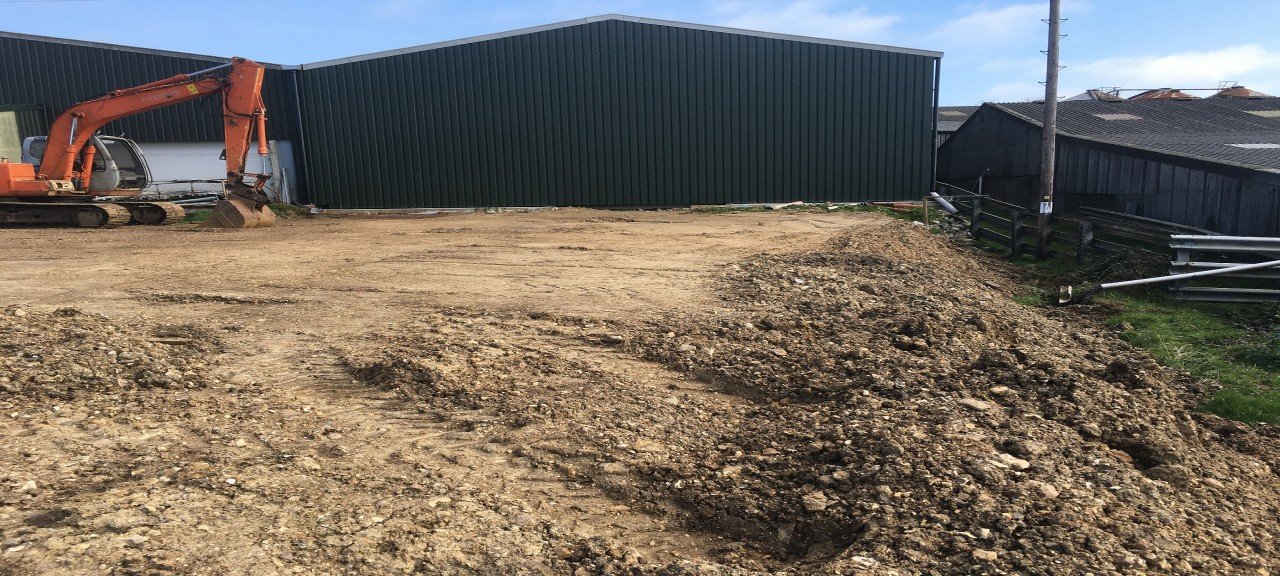
Topsoil is the first thing that has to come off a site and the last thing that goes back on. In between it sits in a pile, and what happens to that pile decides whether the lawn, the swale and the bioretention area look right or fail in the second year. We treat stockpiling as part of the work, not a place to put dirt.
Stripping removes the organic surface layer, usually four to eight inches in the Northeast Texas uplands, so that it does not end up under a slab or inside fill, where it will rot and settle. Stockpiling holds it, protected and separate, until landscaping needs it. Both steps are simple to describe and easy to get wrong when the weather turns.
Strip clean, keep it separate
We strip with a dozer or scraper working to a depth set from test pits, not from habit. Too shallow leaves organics under the pad. Too deep mixes subsoil into the topsoil, which makes a poor lawn bed and a heavier pile. Test pits at the start tell us where the dark layer ends, and the operator follows that line across the site.
Roots, brush and debris are separated from the soil. If the site had been farmed, grazed or used for timber, the topsoil can hold stumps, wire and trash, and all of it is screened or hauled before the soil is piled. The pile is shaped with side slopes the machine can climb and the crew can stabilize, not dumped in a mound that slides in the first heavy rain.
What stripping and stockpiling include
The scope covers clearing the strip limits, stripping, hauling to the stockpile area, shaping and stabilizing the pile and later respreading to the final grade. We also handle the surplus: topsoil in excess of landscape needs is a salable material or a disposal item depending on quality, and we place it where the owner directs.
Stockpile location matters. We keep piles out of drainage paths and away from creeks and inlets, ring them with silt fence or wattles and seed or mulch any pile that will stand more than a couple of weeks. A pile left uncovered through a wet spring loses a surprising amount of itself downstream. That loss is lost soil and a stormwater violation at once, which is why our erosion control work runs alongside the stripping.
Respreading is the other half. We scarify the finished subgrade lightly so the topsoil bonds to it instead of sliding on a smooth clay surface, place the soil in even lifts without driving heavy equipment over it afterwards and leave a surface the landscape contractor can seed or sod without more grading. Compacted topsoil is a common complaint on finished projects, and it comes from running trucks over spread soil, so we sequence the work to avoid it.
Space, time and soil quality
The questions that come up on almost every project are where to put it and how long it will sit. Large campuses have room. A tight infill lot may have none, and the topsoil has to be hauled to a holding yard and trucked back, a cost that belongs in the budget on day one.
Quality is variable. Bowie County ranges from 200 to 480 feet in elevation and Cass County from 167 to 627 feet according to the Texas Almanac, which gives a range of upland, bottomland and floodplain soils in a short drive. Floodplain clays and upland loams do not make the same topsoil. We sample, and when the topsoil is poor, we recommend blending or importing a proper topsoil for lawn areas rather than spreading what looks dark but grows nothing.
Rainfall tells the rest of the story. The Texas Almanac lists 52.0 inches in Bowie County and 49.2 inches in Cass County for 2019, a lot of water to land on an open pile. Piles on this ground should be shaped to shed rain, not hold it.
Who we strip and stockpile for
Large development owners, school districts and public agencies make up most of the demand. A 375-acre university campus near Bringle Lake, like the one on the Texas A&M University-Texarkana page, with a new academic building and student housing in construction, has landscaped quads and drainage swales that all need topsoil at the end. Education buildings, covered under schools, bring the same needs. Our schools and healthcare owner clients typically want a documented stockpile and a clear plan for its use. Commercial developers care more about the cost of respreading and the quality of the final surface, since retail frontage sells on looks.
Related work includes site clearing and grubbing before stripping, and fine grading to prepare the stripped surface or to place topsoil to final grade.
Pricing the pile
Stripping is priced by area and depth. Stockpile handling is priced by volume and distance. Respreading is priced per square yard at a specified depth, typically four to six inches for lawns and beds, plus the cost of grading it smooth. The best way to reduce the bill is to move topsoil only once: strip it, store it within a short haul and place it directly.
If surplus exists, say so up front. Some owners want it hauled, others want it spread across a berm or a back parcel. Either way, we need a destination before the first dozer pass. For a large project with phased work, plan stockpiles in each phase so topsoil does not travel across the site twice.
Plan where the topsoil goes
Tell us the site area, the landscape design and how much room you have for piles. We will price stripping, storage and respreading as separate lines.
Common Questions
How deep is the topsoil in this area?
Commonly four to eight inches, but it varies with land use and slope. We dig test pits before stripping to find where the dark organic layer ends and the subsoil begins, and we strip to that line.
How long can topsoil sit in a pile?
Months, if the pile is shaped, seeded or mulched and kept out of drainage. Long storage lowers the soil's biological quality somewhat, which is why we limit pile height and try to respread within a season where we can. A tall pile also heats and goes anaerobic in its core, so we keep heights moderate, usually under ten feet, and avoid driving on the pile once it is shaped. If a pile has to stay for a year or more, we recommend a cover crop of grass to hold the surface and keep weeds from taking it over.
Can we sell or reuse extra topsoil?
Usually. Good topsoil has value to landscapers and other projects. We can screen it and arrange a buyer or move it to another phase of your project. Poor topsoil goes to fill areas where vegetation is not critical.
What does the stormwater plan say about piles?
It generally requires perimeter controls around stockpiles and stabilization of piles left idle beyond a set number of days. We install and maintain those controls as part of the stockpile scope.
Will stripping affect trees we want to keep?
We mark protected trees and keep machines out of their root zones. If stripping near a tree is unavoidable, we strip by hand or with a small machine and the project arborist advises on root protection.