
Concrete Sawing, Cutting and Coring in Texarkana, Texas
Floor sawing, wall sawing, core drilling and slab openings for depot, plant and warehouse retrofits across Bowie and Cass counties, with scanning first.
Eight million square feet of floor space across more than 1,400 buildings is what the Army says Red River Army Depot holds, and almost none of it was built with the layout today's tenants want. Anyone who has tried to run a new conduit, drain line or equipment opening through a 70-year-old slab knows why cutting and coring is a trade of its own.
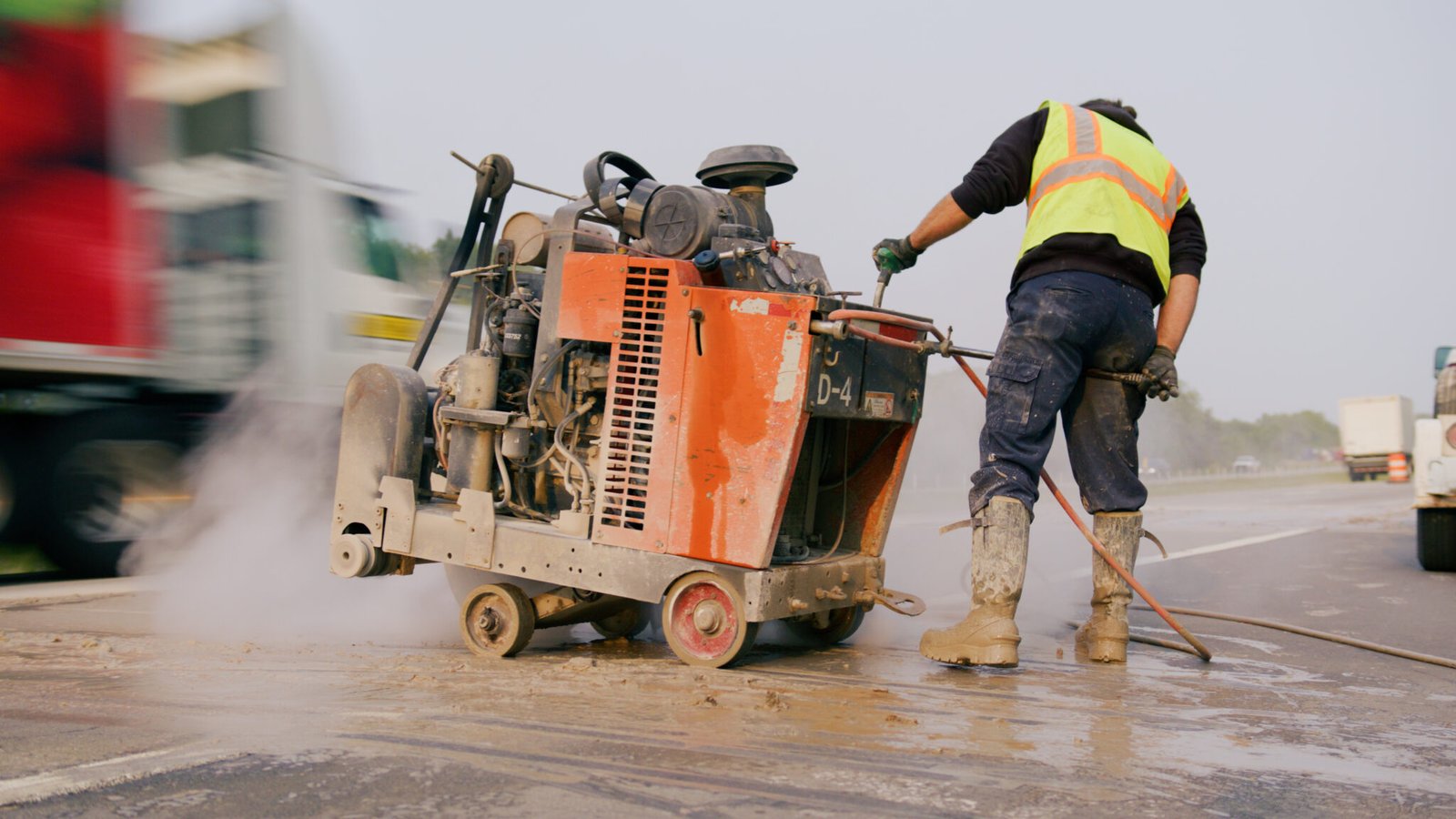
We saw, core, drill and break openings in concrete for utilities, doors, equipment, floor drains, expansion joints and structural modifications. We cut slabs on grade, elevated decks, walls, curbs and pavement. Wall saws, floor saws, wire saws and core rigs each have a job, and the right one saves days compared with a jackhammer.
Cutting concrete sounds simple and is not. Reinforcing, post-tensioning cables, embedded conduit and buried utilities all hide inside the slab. A saw does not know what it is cutting, so we find out first.
Cuts and cores we make
Floor sawing handles straight cuts in slabs and pavement, from control joints to full-depth trenches for new plumbing. Wall sawing opens doorways, windows and equipment openings in walls and decks with a track-mounted blade. Core drilling makes round holes for pipes, conduit, drains and anchor rods, in sizes from small sleeves to large penetrations. Wire sawing handles massive sections that cannot be cut with a blade, and flat sawing trims slab edges.
The work usually supports something else. A new line of machinery may need a trench for power and air. A renovated building may need a new elevator pit, a roll-up door or a stair opening. After cutting, we remove the slab section, which links to demolition and removal, and then patch with new concrete or repair and restoration mortar.
Dust, slurry and what is inside the slab
Crystalline silica dust is the main health hazard in concrete cutting. We cut wet with slurry capture or use dust extraction on dry cuts, and operators wear respirators when the task requires. Slurry is pumped to a containment and removed so it does not enter a storm drain or run across a floor.
Before any cut in an elevated slab or an old floor, we scan with ground-penetrating radar or locate by other means to find rebar, tendons, conduit and pipes. Cutting a post-tensioned tendon can release stored energy violently, and cutting a live conduit is dangerous for the crew. If a scan shows something in the way, we shift the opening or ask the engineer how to proceed. At depot and plant sites, we also follow site access rules, work permits and hot-work restrictions set by the owner.
Plan the cut, then cut the plan
We mark each opening on the slab with the owner's representative, confirm dimensions against the drawings and verify that the cut will not weaken a structural member. For large openings in elevated floors, shoring may be needed, and the engineer of record should approve the cut. On slabs on grade, we plan where the cut slab will be lifted, how it will be carried out and where the trench will be backfilled.
Overcutting at corners is a common mistake, and we avoid it by using core drilled corners or stopping the saw short and finishing with a chipping hammer. Clean edges help the new concrete bond, and square corners prevent cracks from starting at the opening. For rebar placement in infill pours, we drill and epoxy dowels into the old slab to tie it to the new.
Old buildings, active sites
Most of our cutting happens inside buildings that are in use. Noise, vibration, dust and traffic all matter. Night and weekend work is common, and we plan around production schedules, shift changes and inspections. The depot's work, described by DVIDS as ground combat and tactical systems sustainment maintenance, runs on its own calendar, and an opening that stops a production line is expensive.
The Hadrian Automation contract at the depot, valued at $39.2 million initially with possible growth to $80 million, shows the sort of modernization that triggers cutting and coring. New equipment brings new trenches, new power drops and new pits. The Army's record for the former ammunition plant behind TexAmericas Center lists over 2 million square feet of storage and production space, and tenants there are always converting older space to new uses. We plan cuts so adjacent operations can continue.
Fitting cuts into short windows
Owners usually give us a short shutdown. A trench has to be cut, the plumber or electrician has to place pipe, inspectors have to approve it and the concrete has to be backfilled before the floor reopens. We sequence so the cut is done early in the window, the other trades follow, and concrete testing and quality control is lined up for the new pour.
Weather matters less indoors, but outdoor pavement cuts depend on dry conditions. We schedule around rain and avoid cutting wet pavement when slurry would run into inlets. For work in the City of Texarkana, Texas right of way, a permit may be needed, and the city's Inspections office can say which applies.
Services that follow a cut
Cutting is the first step in many projects. After it, owners often need equipment pads and machine foundations, new drains or patching. If your project involves a plant retrofit, industrial and manufacturing owners often combine cutting, trenching, utility work and concrete placement under one contract. That helps avoid delay between trades.
When an owner is converting an old manufacturing plant or warehouse, we typically cut first, then coordinate the plumbing and electrical rough-in before pouring back. The key is to leave the building safe, dry and ready for the next trade.
Mark the opening and send the drawings
Show us the opening locations, the slab type and the schedule window. We will scan, price the cuts and tell you what we found before work begins.
Common Questions
How deep can you saw a slab?
Floor saws cut a slab to its full thickness in most cases, and wall saws handle thick walls in several passes. The limit depends on the blade size and the reinforcing. For very thick or heavily reinforced sections, wire sawing or core-and-break methods may be used.
Do you scan before cutting or coring?
Yes. Scanning finds rebar, tendons, conduit and voids, and it is routine on elevated slabs and old floors. A scan is not a guarantee, so we confirm findings with the engineer and drawings.
Can you cut a slab without shutting the building down?
Often. Wet cutting with slurry control and local ventilation limits dust, and we can section areas to keep access open. Noisy or disruptive work can be moved to nights or weekends.
How do you cut around post-tensioned cables?
We locate each cable first and, where possible, move the opening to avoid it. Cutting or detensioning a tendon is a structural decision and requires the engineer's approval and a specific plan.
What happens to the slurry and debris?
Slurry is collected and hauled off or settled in a containment before disposal. Slab sections are broken into pieces and hauled to a recycling or disposal site. We keep drains protected the whole time.