
Concrete for Rail-Served Sites in Texarkana, Texas
Transload pads, dock slabs, crossings and drainage for rail-served industrial sites near the Union Pacific and KCS lines in Texarkana, Texas.
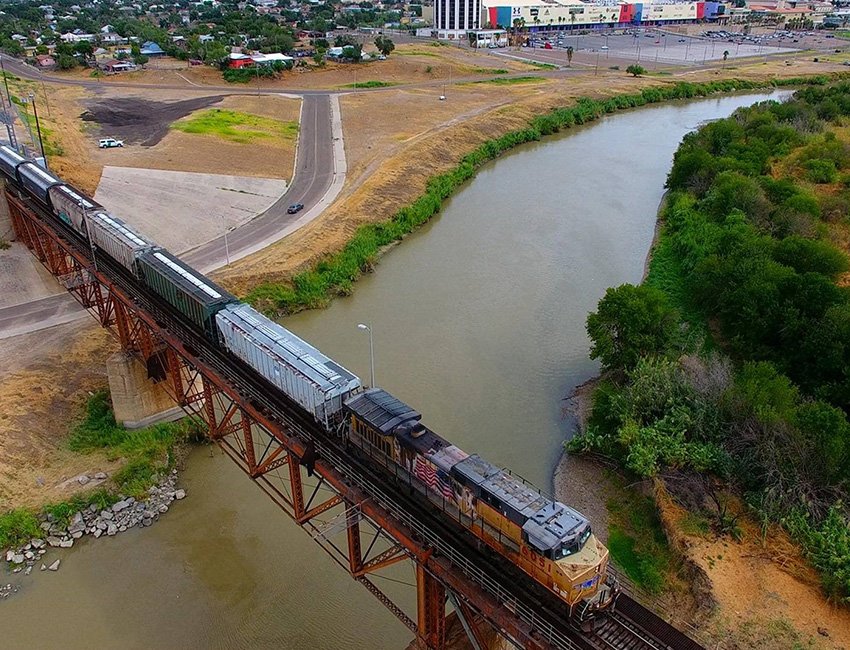
A rail spur is a concrete job as much as a steel one. The track needs a stable base and good drainage, the transload pad needs a slab that takes forklifts and loaded rail cars next to each other, and the road crossing needs panels or a pour that holds up under trucks without trapping water. Industrial owners who ship by rail ask us about all three, and we answer from the practical side: what the ground is, how the concrete is placed and what the railroad will require from the site.
In the Texarkana, Texas area, the short line is the Texas Northeastern Railroad. Union Pacific's short line page says it runs east from New Boston to Texarkana and connects with Union Pacific and KCS there. TxDOT's I-30 widening also includes a new mainlane bridge at the KCS railroad interchange, which tells you the main lines cross the highway corridor and that bridge work, clearances and shared right of way are part of the local picture.
The history helps explain the street layout. The Handbook of Texas says Texarkana was by 1948 the junction of four railroad systems with eight outlets, and that the Texas Northeastern Railroad serves Hooks, where rail service began in 1876. We treat the rail map as medium-confidence background rather than a current operating guide, and we always confirm the line's status with the railroad and the property owner before we plan work near it.
Transload pads, spotting areas and track crossings
TexAmericas Center's rail provider lists 38 miles of track on the East Campus and 100 rail-served acres on the Central Campus, with transload, storage and spotting services from the Texas Northeastern Railroad. For tenants there, the concrete scope can include a transload pad where material moves between rail cars and trucks, a containment pad for liquids and a heavy slab for storage. Our page on TexAmericas Center covers the park itself.
Crossings are a separate item. A road crossing a spur needs a smooth surface, a flangeway the wheels can clear and drainage that does not wash ballast onto the road. Whether the answer is precast panels, rubber or cast-in-place concrete, the railroad usually sets the details, and we build to them.
Material that sits beside track also deserves a plan. Bulk storage pads for aggregate, plastic pellets or dry chemicals need curbs, a sloped surface to a sump and sometimes a cover, and the slab edge has to stay clear of the track by the distance the railroad requires. We lay out those clearances on the plan before the first form is set so no one has to cut back a finished edge.
Building near track without disturbing it
Track structure is sensitive to load, water and vibration. We stay clear of the track's zone of influence with excavations, limit heavy equipment near the ballast and route runoff away from it. Excavations parallel to the track get shoring or a slope that the geotechnical engineer approves.
Drainage is the quiet partner. A slab that sheds water onto ballast can soften the track bed over months. We shape aprons so water goes to a ditch or an inlet, and we use loading dock pits and ramps and truck courts and dock aprons detail sheets that account for the rail side and the truck side separately.
Flagging, right of entry and clearances
Working within a railroad's right of way or close to it brings specific requirements. Many railroads require a right-of-entry agreement, insurance certificates, a flagger on site and training for workers near the track. Equipment boom heights and horizontal clearances are set by the railroad, and a crane or pump truck may need to be repositioned or stopped when a train passes.
We read the owner's contract and the railroad's terms before we mobilize, plan hours around train movements and keep a log of flagging, delays and inspections. For private spurs that sit entirely inside an owner's property, the owner's own safety rules and the short line's requirements still apply.
Emergency planning rounds out the safety side. Everyone on the crew knows where the nearest crossing is, how to reach the railroad's emergency contact and what to do if a pump boom or a truck gets stuck near the track. That information is written on the daily sheet, and we review it at the morning meeting before the first truck arrives.
Warehouses, terminals and plants that ship by rail
Rail-served buildings include warehouses with rail docks, bulk storage and manufacturing plants that receive raw material by car. The floor at a rail dock has to meet the car's door height, which means grade and slab elevation are set early and checked often. We survey the track grade, the dock height and the slab together so the heights agree.
A truck terminal or cross-dock that interchanges with rail has its own pattern. Trucks and railcars share the same yard, so the pavement thickness, drainage and lighting pads need to fit both. We build to the engineer's design and offer suggestions on joint layouts for turning loads.
Nearby industrial districts
In the city itself, the comprehensive plan says the Industrial District is bounded by the railroad to the east and south, which is why our page on Texarkana industrial areas and this one overlap. The Texas Northeastern Railroad also serves the Red River Army Depot at Defense, just west of Texarkana; see our Red River Army Depot page for the installation.
Owners of industrial and manufacturing properties with rail sidings ask us to inspect old pads and aprons. Concrete near track suffers from freeze-thaw, chemical spills and heavy axle loads, and we repair what is worth saving and replace what is not. A core sample and a few hammer taps tell us more about an old apron than a drawing does, and we share the results with the owner before recommending a repair or a replacement.
Bring the track plan
Send us the spur layout, the building plan and the railroad's requirements. We will lay out the slab heights, drainage and flagging plan and return a priced scope.
Common Questions
Can you build a transload pad?
Yes. We design the slab thickness and joint pattern with the engineer for forklift and truck loads, set the pad elevation to the track and cars, and add drainage and containment where product may spill.
Do you need railroad approval to work next to track?
Often. A right-of-entry agreement, insurance and flagging are typical when work is within a railroad right of way. We confirm what applies with the owner before we mobilize.
How do you keep water off the ballast?
We slope pavements away from the track, pipe or ditch the runoff and avoid discharging onto the ballast. The engineer sets the final drainage design.
What does a rail dock need from the floor?
The slab height has to match the car door height and the track grade, and the apron should slope away from the track. We survey all three before forming and verify again before the pour. A dock that is two inches off will cause trouble every day it is used.
Can you repair an old concrete apron beside a siding?
Usually yes. We test the slab, remove failed areas, dowel in new sections and seal joints. If the base is wet or contaminated, we replace the base along with the slab, because a patch over a bad base fails again quickly.
Is the rail map in your descriptions current?
We cite a short line page, a state road project and a historical encyclopedia, which together give a general picture. Confirm current operating details with the railroad before you plan a project.