
Automotive and EV Plant Construction in Texarkana and Bowie County
Concrete, subgrade and site utilities for automotive or EV plant sites in Texarkana and Bowie County, Texas, built around clay soil, rail and rain.
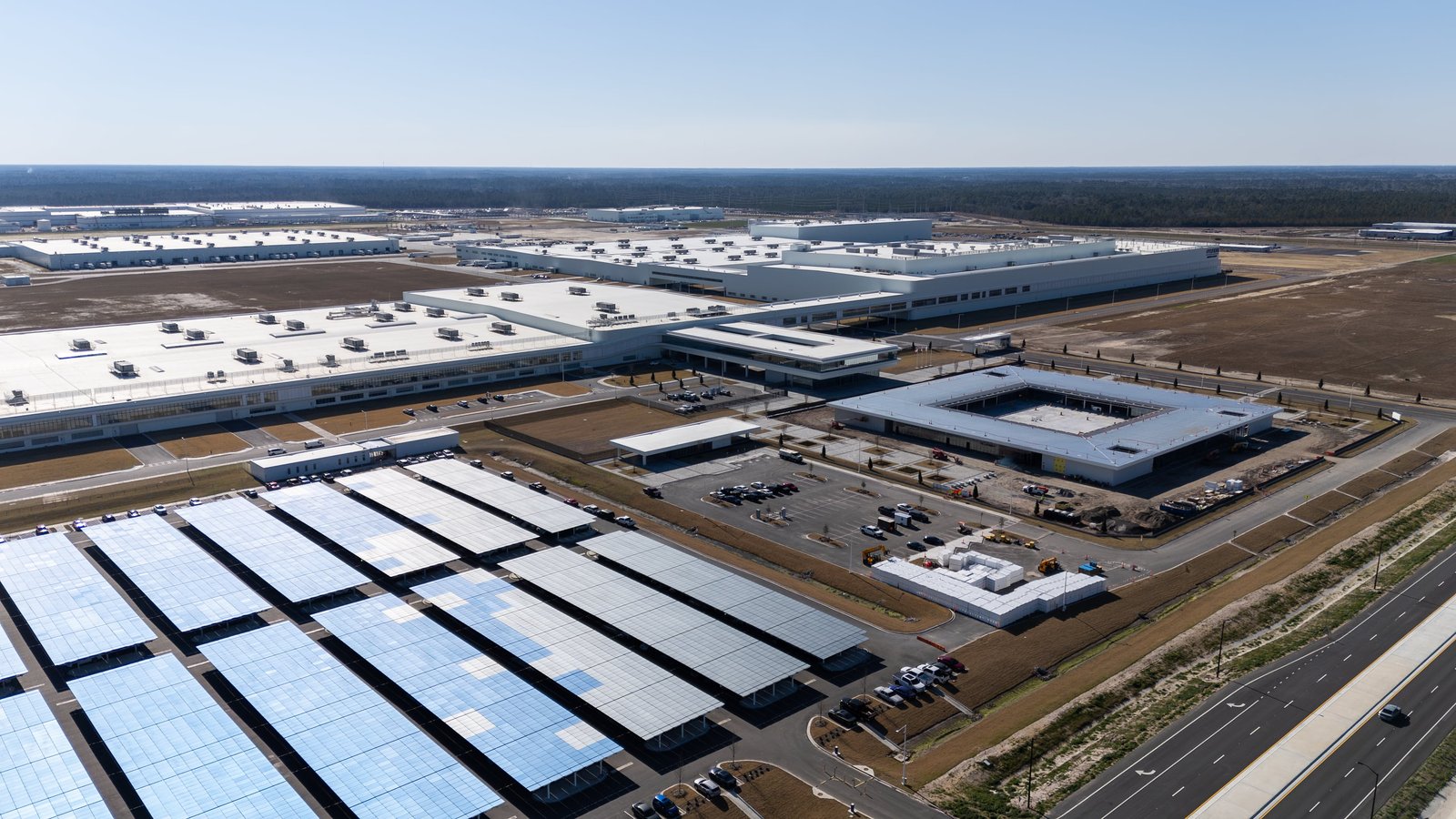
Nothing in our research points to an announced vehicle assembly or battery plant in Bowie County, and we would rather say so than invent one. What the market does have is large flat land, rail on site, a water treatment plant under way and a workforce that already rebuilds armored vehicles. Those are the same ingredients an automotive or EV plant asks for, and the concrete and earthwork side of such a plant is something we can describe without guessing at an owner.
A plant like this is a floor first. Stamping presses, body shop fixtures, paint line conveyors and battery module lines all sit on slabs that have to stay flat and not move. In Northeast Texas that means starting with the clay. The USDA description of the Texark soil, with a type location near Dalby Springs in Bowie County, calls for a very fine smectitic clay with 60 to 80 percent clay in the control section, cracks a quarter inch to two inches wide when dry, and very slow permeability. Build a press line on that without a plan and the floor will tell you about it within two wet seasons.
This page describes what we would do on such a site: how we would prepare the ground, how we would sequence the pours, where the utilities need to be before the slab, and what the schedule looks like when rain is part of it. If you are an industrial and manufacturing owner comparing sites, treat it as a working checklist, and read it alongside our general manufacturing plant page.
What the concrete and site package covers
The package for a vehicle or battery plant is bigger than the building. It starts with clearing and mass grading of a pad that may run to many acres, followed by lime or cement treatment where the borings call for it, proof rolling, and a placed and tested engineered fill. Then come the deep foundations or grade beams for crane rails and tall equipment, the floor slab itself, the truck court, the employee and visitor parking, and the underground that serves them all.
The underground is where automotive work gets crowded. Process water, sanitary, storm, fire, compressed air tunnels, electrical duct banks and fiber all share a corridor before the slab goes down, and every one of them needs a bedding and backfill plan that will not settle under a heavy floor. Our building pad preparation work is organized around that crowding, because a trench that settles an inch under a slab edge becomes a crack that the floor coating cannot hide.
What we coordinate with our trade partners
We coordinate the pieces that decide whether a floor performs: subgrade work, rebar and chair placement, forming, placement and finishing. A press room or paint shop floor is often specified to a flatness tolerance and to a joint layout that matches equipment bases, so the finishers need to know where the sawcuts go before the pour, not after. On a floor with tight tolerances, super flat floor slabs need a specific placing method and a dry, steady day.
Equipment bases get their own treatment. A stamping press or a heavy test stand may need a thickened mat or an isolated foundation that does not tie to the main slab, and those pours are scheduled separately with their own mix and curing. See how we think about equipment pads and machine foundations for the details we ask owners to confirm in writing before forming begins.
Why Bowie County has the land and the rail for it
TexAmericas Center holds about 12,000 acres of former military land west of Texarkana. When the Texas Commission on Environmental Quality removed the Army's RCRA permit in April 2021, the center announced more than 6,800 acres of additional shovel-ready ground, along with a new on-site water treatment plant described at that time as funded and heading toward construction.
The same center lists 38 miles of track on its East Campus and 100 rail-served acres on its Central Campus, served by a short line that connects with the two class one railroads at Texarkana. Parts, steel coil and finished goods all move by rail in this industry, so the track grade, the receiving apron and the plant slab have to agree in elevation. Read more about the park on our TexAmericas Center page, and about the rail connections on our rail corridor page.
Safety and environmental conditions on a big plant site
Haul roads, scrapers, compactors and ready-mix trucks share ground with surveyors and inspectors, so we run separated traffic lanes and spotters at crossings. On a former military tract we also ask what the owner knows about the ground before we dig.
Stormwater is the other thing that can stop a job. The City of Texarkana hazard plan reports average rainfall of 42 to 58 inches in the Piney Woods area, and red clay in a runoff channel does not settle quickly. We install and maintain the controls described in erosion control and SWPPP measures before we strip topsoil, and we keep them working through the pour season.
Where the money goes on a plant slab and pad
Soil treatment and fill volume are the largest swing items. A pad that needs two feet of lime treated clay under the entire footprint costs a very different amount from one that needs an eight inch cap, and the borings should drive that decision before anyone prices the slab. The next swing is slab thickness and reinforcing: heavy forklifts, AGV paths and equipment loads can push the design toward thicker sections, post tensioning, or both. Post tensioned slabs reduce joints and cracking on expansive clay but add stressing, inspection and a longer curing window.
After that come utilities and detention. A plant of this scale will usually need a detention basin sized to the paved area, which we cover as detention and retention ponds, and long runs of water and sewer from the nearest tie point.
Pour days, rain days and the order of work
Sequence matters more than speed. The grading and treatment season is the dry season, and a pad that is treated, proof rolled and capped before the wet months can sit under a temporary cover and be ready when steel arrives. Utilities go in before the capping stone. Foundations and equipment pits go in before the floor. The slab comes last, and the crew that places it needs a closed or nearly closed building so that wind and sun do not strip moisture out of the surface. For tall wall systems, our tilt wall building work shows how the panel pours and floor pours can be sequenced together.
Cold snaps in this region are rare but real; town climate records for Nash and Atlanta list record lows below zero in some years. We plan blankets for the pours that fall in those windows, and we ask for a heating plan from the general contractor when the building envelope will not be closed.
Send us the plant footprint and the geotechnical report
Tell us the building size, the floor loading the equipment vendor has given your engineer, and where the site sits. We will come back with a subgrade strategy, a pour sequence and a utility plan you can hold against your own schedule. Use the quote form near the top of the page and include any soil boring logs you already have.
Common Questions
Is there an EV or automotive plant planned in Bowie County?
Not in anything we can source. The major announcements in our research are a recycling facility with more than $145 million in capital investment, a specialty chemical expansion, an automation initiative at the Army depot and a proposed data center campus. We write this page so a buyer can see how we would handle the concrete and earthwork if such a plant came, and we do not claim a specific owner or project.
How do you handle heavy equipment loads on clay?
The slab design comes from your engineer, but our part is making the subgrade uniform under it. That means lime or cement treatment where the borings show high plasticity clay, controlled lifts of fill, moisture conditioning and a proof roll witnessed by the geotechnical firm. Heavy bases get thickened or isolated foundations on top of that prepared ground.
How long does site work take before the building can start?
It depends on acreage, utilities and the weather, but plan for a dry season of grading and treatment ahead of the first foundation. A tract the size of TexAmericas Center parcels is often cleared and graded in phases, so the building pad can finish early while the rest of the site continues.
Who pulls the permits for a plant outside the city limits?
A third-party permit guide reports no county issued general building permit requirement for Bowie County, with septic as the exception. That guide is not an official source, so confirm with the Bowie County Commissioners Court and with the redevelopment authority that controls the land before you assume anything.
Can rail be tied into the plant slab?
Yes, and it is common at the former ammunition plant tract where track is already in place. The track grade, the dock height and the slab elevation have to be set together, and the concrete beside the rail takes more abuse than interior flatwork.