
Engineered Fill and Soil Stabilization
Controlled structural fill, geogrid and stabilization methods for weak or wet subgrades in Texarkana, tested lift by lift to the engineer's specification.
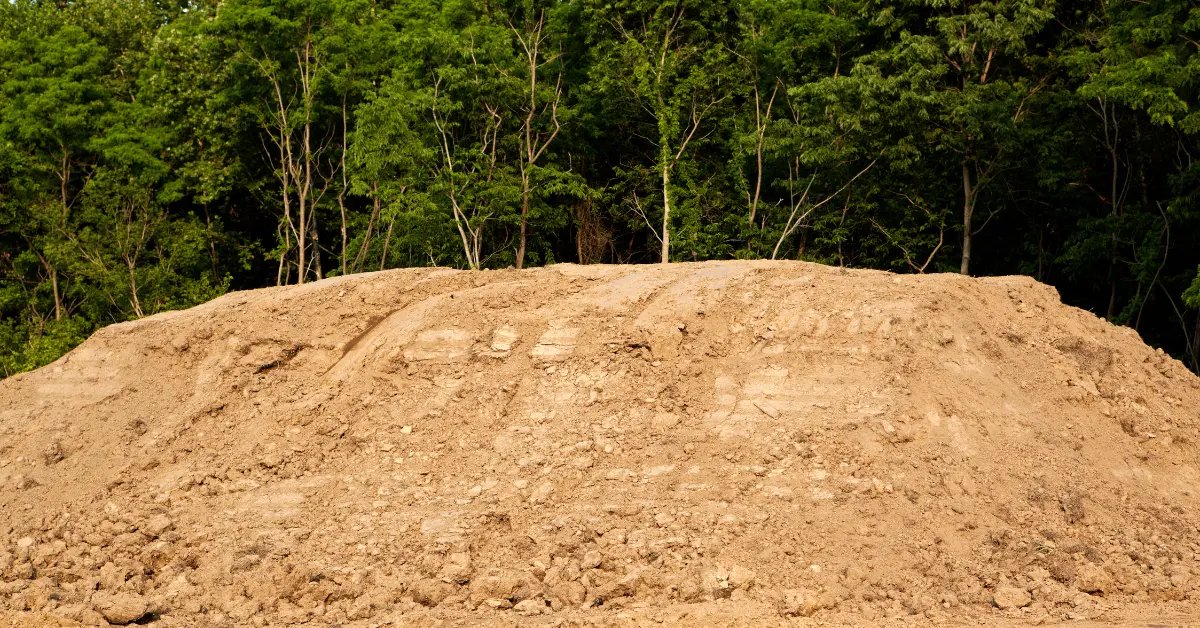
Engineered fill is dirt with a paper trail. Every lift has a source, a thickness, a moisture reading and a density test, and the engineer can trace any square yard of it back to the day it was placed. That documentation is what separates a pad that supports a building from a pile of material that happens to be flat on top.
We place engineered fill under slabs, pavements, equipment pads and embankments, and we stabilize weak subgrades in place where removal is not practical. On a site with Bowie County's clay, a decision about stabilization is usually a decision about money and weather, and we help owners make it with real numbers and an honest read of the schedule.
The work is repetitive by design: spread, moisture, compact, test, repeat. Done right it looks boring. Done wrong it looks fine until the first wet spring.
Fill types and stabilization methods
Select fill is low-plasticity material, often sandy clay or clayey sand, that compacts well and resists swelling. Flexible base is crushed stone graded for strength and drainage. Cement-stabilized sand and flowable fill serve where trenches and tight corners cannot be compacted by machine. Geogrid and geotextile reinforce soft ground by spreading load and separating clay from stone.
In-place stabilization blends a binder into the native soil. Lime and cement are the common choices, and the details sit on our lime and cement soil treatment page. Which method wins depends on soil tests, depth, schedule and how much material would otherwise leave the site. We prepare comparison prices where the engineer allows more than one approach.
Lift by lift, with the test result in hand
We spread fill in loose lifts of uniform thickness, adjust moisture with a water truck or by disking to dry, and compact with the roller type that suits the soil: sheepsfoot for clay, smooth drum for sand and base. Before we cover a lift, the technician tests it. If it fails, we rework it until it passes. Nothing gets buried that we have not seen pass.
Edges deserve special care. A pad's perimeter compacts worse than its center because rollers cannot always reach it, and the edges are where slabs curl and cracks begin. We overbuild the fill width and trim back to the design line, so the edge density matches the interior. The same thinking applies to the interface with trenches, where we use select backfill and small compactors to bridge the transition.
What we coordinate
Compactors, motor graders, dozers, water trucks, tandem and end-dump trucks and stabilizer attachments are all scheduled together, so there is less waiting for a subcontractor to arrive after a rain delay. Operators who run these machines every week know how to read the surface and when to quit for the day.
We also coordinate proctor-ready sample handling. Material for lab testing is pulled in the volume the lab requests and delivered promptly, since results have to be in hand before fill starts. A test that takes a week to return costs a week of schedule.
Who needs engineered fill here
Industrial and manufacturing owners lead the list. TexAmericas Center's 2026 annual report coverage cites 44 companies and 1.4 million square feet of industrial and commercial space in use, and activity on that scale, together with a defense workload that includes a reported multi-million-dollar automation contract at Red River Army Depot, keeps pad construction going. Our industrial and manufacturing and logistics and warehouse customers look to us for pads that stay flat under racking and forklift traffic.
Public owners use engineered fill under roads, trails and drainage structures. Municipal and public works groups are often more concerned with long-term performance than with first cost, which suits stabilization well.
Specifications and the fill record
Fill specifications are in the geotechnical report and the project manual. They name the allowed soil classification, plasticity limits, density as a percentage of standard or modified Proctor and moisture range. We follow them and keep a daily record of lifts, tests, source and weather, which the owner receives at closeout.
The Texark clay series mapped in Bowie County, at 60 to 80 percent clay with cracks up to two inches wide when dry, is the type of soil these specifications are written to avoid. The City of Texarkana comprehensive plan also notes that floodplain areas are generally not able to be developed, so fill placed to raise a lot out of a floodplain needs floodplain permitting through the City Engineer and cannot be assumed.
Where it fits in the sequence
Engineered fill often arrives after over-excavation and recompaction and before building pad preparation, and it supports road subgrade preparation on entrances and truck routes. Ask us to plan those activities under one coordinated scope and the handoffs get shorter.
The handoff that goes wrong most often is the one between earthwork and concrete. The fill crew finishes, the surface looks good and then it rains for three days. By the time the slab crew arrives the surface is not what was tested. We keep the fill crew on until the forms are set, so a surface that needs touching up gets touched up by the people who built it and understand its moisture history.
Questions to settle before fill starts
First, who selects the source? Imported fill should be approved and sampled at the borrow pit before the first truck arrives, not after fifty loads are on the ground. We can haul from any approved source and will hold a load if the technician is not satisfied with its look and moisture.
Second, what is the schedule risk? A dry window of two weeks is enough to place a large pad in good conditions, but the same pad in a wet March may need twice the time. Ask your contractor what rain days are in the schedule and what the plan is for protecting finished lifts. We answer that in the proposal.
Third, who owns the testing? An independent agency hired by the owner is the usual arrangement, and it keeps everyone honest. We schedule around the technician's availability and call for tests as soon as a lift is ready, so the crew is not waiting on a truck with a nuclear gauge. Finally, plan for the finished subgrade elevation to settle slightly as the fill consolidates under its own weight, particularly in deeper fills. The engineer may call for a waiting period or surcharge on tall embankments before slabs are poured on top.
Match the fill to the soil, not the other way around
Send the geotechnical report and the pad drawing and we will price the options side by side, material, placement and testing included.
Common Questions
When is stabilization better than removing the soil?
When the soft layer is deep, when disposal or import costs are high, or when schedule matters more than material. Lime or cement treatment can often finish a pad in days where removal would take weeks. The lab results on your site's soil decide it.
What density do you compact to?
Whatever the geotechnical report specifies, commonly 95 percent of standard Proctor under slabs and pavements and a lower figure for general fill. We confirm with the testing agency which method applies before we place the first lift.
Can you use geogrid instead of excavating?
In some cases, yes. Geogrid and stone can bridge soft ground and reduce undercut depth, but only if the engineer approves it and the subgrade can support the first stone lift. It rarely fixes expansive clay by itself.
How much does engineered fill cost?
It depends on the material, haul distance and lift count. The cheapest fill is usually the nearest suitable source, and the expensive part is often the testing and the rework when moisture is wrong. We quote material, placement and testing allowances separately.
Does weather stop fill placement?
Heavy rain does. Clay fill placed wet will not reach density. We shut down, seal the surface and resume after it dries to the specified moisture, and we include realistic rain days in our schedule.