Decorative and Stamped Concrete in Texarkana, Texas
Stamped, colored and broom-finished flatwork in Texarkana: base prep, joint layout and curing that keep the surface sound past the first summer.
An arts-focused pedestrian promenade is part of the City of Texarkana, Texas downtown revitalization strategy, along with the Farmers' Market, the Perot Theatre and the Scott Joplin Mural, and the city has described a $100,000 National Endowment for the Arts Our Town grant tied to that work. We bring it up because public space like that is where decorative flatwork gets its hardest test: foot traffic, weather, spilled drinks, and nobody to blame but the contractor.
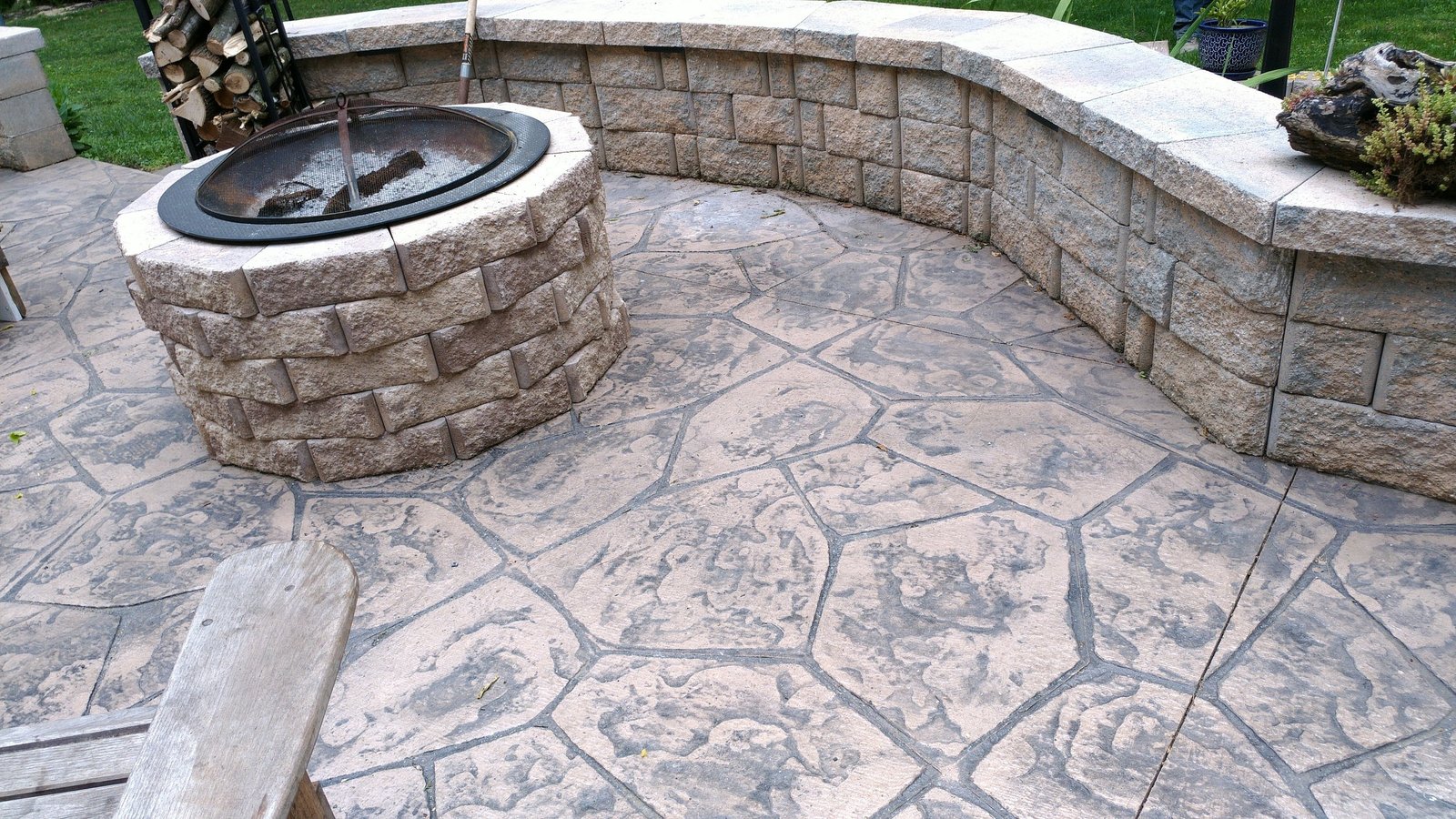
Decorative concrete here means stamped patterns, integral color, exposed aggregate and carefully broomed or sawcut surfaces. All of it is still concrete, and it fails for the same reasons plain concrete fails. A stamped plaza on a soft subgrade will crack through the pattern. A colored slab cured in the wind will show blotches. A pattern with joints in the wrong places looks like a mistake.
We do this work, and we do not oversell it. Color and pattern are the last decisions on the list, and often the cheapest ones to change. We start with the base, the drainage and the joint layout, then pick a finish that the slab can honestly carry.
Where decorative flatwork makes sense here
Downtown plazas, courtyards, building entries and walkways are the obvious fits. So are hospitality entries, church grounds and campuses. Wikipedia lists the Texas A&M University-Texarkana campus at 375 acres near Bringle Lake, with a 294-bed residence hall, and a campus that size carries a lot of walking surface where appearance and accessibility both matter.
Much of the area is clay soil, with annual rainfall that runs well past what a drier region sees. That shapes the decorative work in two ways: the base needs proper drainage and compaction so it does not heave, and sealers and joint treatments need to be chosen for wet weather and for freeze and thaw swings that are occasional but real. Nash, for example, has a recorded low of minus 6 F in the weather record on Wikipedia, so a surface that looks fine in October still needs to take a cold snap in January.
Finishes we place
We place stamped concrete with release agent and texture mats, colored concrete with integral color or color hardener, exposed aggregate finishes, and broom and salt finishes for paths. For drives and walkways, we also saw-cut patterns that give a clean, durable surface without full stamping.
Edges, borders and bands can be formed with contrast color or a different texture, and we plan where each begins and ends before the concrete arrives. Sealers are applied after the cure, and we tell owners how long that takes and how often resealing is needed. A plaza that is closed for a week of cure and sealing is easier to plan than one that is surprised by it.
Base, joints and cure come first
Our order is the base, the forms, the mix and the joints, then the finish. We compact and proof roll the subgrade, place stone where it is specified, set forms and reinforcing, and confirm slopes for drainage. Joints are laid out at pattern lines, corners and columns, where cracks are most likely and where saw cuts hide best.
On pour day, we match mix and slump to the pattern, since too wet a mix will not hold a stamp and too dry a mix will not finish. Release agent, stamping, and cleanup are timed to the set. Curing is controlled and the sealer waits until the slab is ready for it. We do not rush the surface in heat or wind just to complete the stamp. On a hot afternoon we will stop, wait for the shade or cover the slab, and come back to it, because a stamped pattern forced into a skinned-over surface looks like torn paper.
What to decide before pricing
Decide the use first. A pedestrian plaza, a driveway, and a loading area all want different thicknesses, reinforcing and finishes. Decide whether the surface must meet accessibility slope limits, and what slip resistance the pattern needs when wet. Decide who will seal and maintain it.
Expect variation. Color and texture differ from pour to pour, and tying two pours together takes planning. We try to place continuous areas on the same day and use joints to separate sections, but we do not promise a perfect match across separate pours. Large areas are broken into panels that the pattern can follow, so the joint reads as part of the design instead of a repair. Our ADA ramps and accessible routes work covers the slope limits that apply at curb ramps and entries.
How decorative work ties to the rest of the site
Most decorative work is a finish choice on top of ordinary flatwork. The technical fundamentals are in our sidewalks and flatwork work, and the interior version of the same attention is our polished concrete floors.
Public owners looking at streetscape and plaza projects can read about municipal and public works work, and the Texarkana core and downtown page describes how we plan for older city streets. Hotel and hospitality owners may find the hospitality hotel page more relevant to entry courts and pool decks.
Show us the site and the pattern
Send the plan, the finish you have in mind and the use of the space. We will tell you what the base needs, how we would lay out the joints and what the surface will realistically look like.
Common Questions
Will stamped concrete crack?
Yes, concrete can crack even when it is stamped. Good base preparation, reinforcing and joints in the right places control the cracks and hide them in the pattern. We will not promise a floor with no cracks, but we will tell you where they are likely and how we plan for them.
How long does a decorative slab need to cure before it can be used?
Foot traffic is typically allowed after a few days, and vehicles after longer, depending on the mix and the weather. Sealing waits until the slab is dry enough for the sealer. We give a schedule at bid time so the owner knows when the space reopens.
Is stamped concrete slippery when wet?
It can be. The texture helps, but sealers can add slipperiness. We can add a slip-resistant additive to the sealer or choose a more textured pattern for wet areas. We recommend that choice be made with the owner and the designer.
Can color be matched between pours?
Not perfectly. Even small differences in water, temperature and finishing change the shade. We plan pours so the visible area is placed in one go, and we use joints to hide the seams between sections.
How often does decorative concrete need to be resealed?
It depends on traffic, sun and weather, but owners should expect resealing every few years. Surfaces in heavy-use or exposed areas need it sooner. We provide a maintenance note with the sealer we use.