Concrete and Earthwork Contractor in New Boston, Texas
Heavy slabs, truck courts and subgrade work on New Boston clay along U.S. 82 and I-30, with flood, rain and permit planning built into each job.
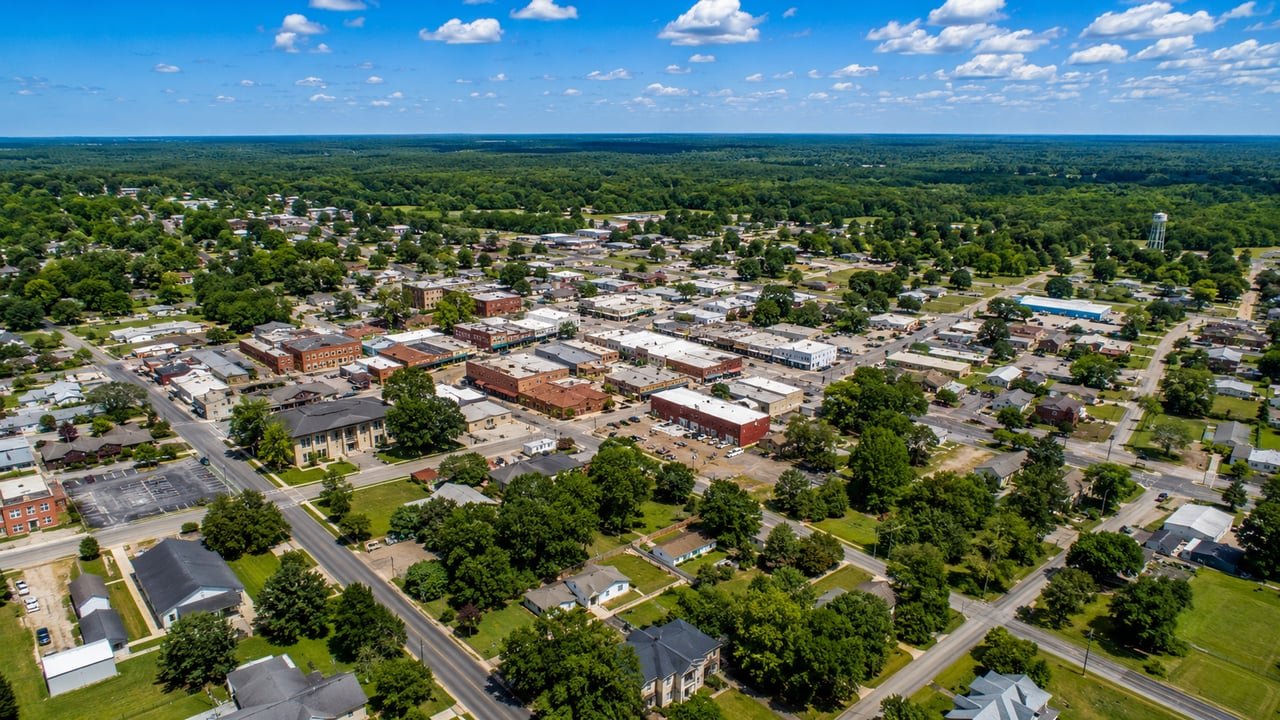
Truck courts, loading aprons and heavy equipment pads are the concrete we are asked to build most often around New Boston, and every one of them starts with the same question: what is under the slab. West of Texarkana the answer is usually a very-fine clay that swells when it is wet and cracks open when it is dry, so the job is won or lost in the subgrade long before the first truck arrives with concrete.
We coordinate the earthwork, the forming, the rebar and the placement, which keeps one team accountable for the whole sequence from stripping topsoil to the final cure. New Boston sits where U.S. Route 82 crosses the middle of town and Interstate 30 runs along the northern edge, with State Highway 8 running south toward Old Boston and north toward the Red River, so the delivery routes for ready-mix, reinforcing steel and haul-off trucks are better than the distance from the city would suggest.
If you are a plant owner, a developer or a general contractor weighing a site here, send us the geotechnical report and the paving or floor spec. We will tell you what the clay is likely to ask of the design, what it does to the schedule when it rains, and what we would build to keep joints tight and surfaces flat for the life of the facility. Our trade partners also work the U.S. 82 corridor at Hooks, so mobilizing here is a short haul.
Industrial roots that still shape the work
The Handbook of Texas describes New Boston as a town that grew around a railroad built about four miles north of Boston, and later relied heavily on the Lone Star Army Ammunition Plant and Red River Army Depot, which were built just southeast of town during World War II. It also credits a large paper mill and a few smaller factories with giving the town its industrial base. That history explains the land: big flat parcels, rail corridors and old plant pavements.
The Army BRAC page names TexAmericas Center in New Boston as the Local Redevelopment Authority for the former Lone Star Army Ammunition Plant. We hold no contract there and make no claim of one. What it tells a buyer is that redevelopment of large former military ground is a live subject in this town, and that anyone building on that kind of land will want a contractor who can handle demolition debris, old foundations, utility surprises and heavy slab design. The demolition and site prep trade partners treat an old industrial footprint as a survey problem first and a digging problem second.
What very-fine clay does to a pour
The USDA series description for the Billyhaw soil gives its type location as Texas Highway 8 and Interstate 30 in New Boston. It describes a very-fine smectitic clay with 60 to 80 percent clay on Red River flood plains, rarely to commonly flooded, moderately well drained with very slow permeability. In plain terms, this is the blackland-type clay that moves with moisture. A slab placed on it without a plan will curl, heave or settle in patches, and a truck court that was dry on a Tuesday can be a mud pan by Friday.
Our answer is to prove the subgrade rather than hope for it. That means stripping, moisture conditioning, a documented proof roll, and where the geotechnical report calls for it, lime or cement treatment or over-excavation and recompaction to a stable depth. We would rather spend an extra day on the pad than explain a cracked panel to an owner a year later. Vapor barrier, chairs, and a curing plan with blankets or compound are written into the pour sequence, not added when the weather turns.
Heavy duty paving and floors in one coordinated scope
For distribution and light manufacturing buyers we build industrial concrete floors with joint layouts drawn around column grids, racking loads and forklift paths, and we place truck courts and dock aprons thick enough to carry loaded trailers and reinforced at the landing-gear zones where failures usually start. Dowelled construction joints, saw-cut control joints cut inside the early window, and a cure that runs at least as long as the spec asks are the things we care about more than the surface sheen.
Earthwork and concrete are sequenced so drainage is set before forms. Storm inlets, trench drains and swales that pull water off a dock apron are installed as part of the base, so the finished slope is real rather than a surveyor's hope. When utilities cross the site, the storm drain and water trade partners tie into the pad schedule so nobody trenches through new concrete.
Permits, review and who to call
The International Code Council notes that building code adoption in Texas takes place at the local level, so builders should contact the local jurisdiction for the editions and amendments that apply. That is the right instinct in New Boston as well. Before we price, we ask whether the project is inside city limits, whether a county or state agency has a say, and whether any tenant or lender spec is stricter than the code. We do not assume an edition, and we will not guess at one in a bid.
Where a project disturbs enough ground to require stormwater controls, we plan the erosion measures and inlet protection before mobilizing. Floodplain status matters here because Red River flood-plain soils are part of the local picture, and a flood determination can change finished floor elevation or fill requirements. We ask for that determination during pre-construction rather than after the foundation plan is final.
Buildings that suit this ground
The work we see fits a few building types best. Industrial and manufacturing owners running a manufacturing plant need heavy floors, machine foundations and containment curbs. Developers looking at flex and light industrial space want economical slabs and truck apron paving that does not rut. Logistics users, including warehouse developers, want flat floors, long dock aprons and car parking that drains.
We also pour pads for equipment, pump stations and small utility structures along rail and highway corridors. If your building is not on that list, bring the drawings anyway.
Rain, haul roads and pour days
Bowie County recorded 52.0 inches of rainfall in 2019 according to the Texas Almanac, with a July mean maximum of 92.9 F and elevations ranging from 200 to 480 feet. The county also issued a disaster declaration on April 7, 2025 after heavy rain and flooding over a weekend. Those are not rare events here, so our schedules carry rain days as a normal line item, and we keep poly, curing blankets and pump access ready so a forecast change shifts a pour by a day instead of ruining one.
Red clay haul roads soften fast, so we stage gravel and rock entrances before the first load. On a large industrial site we phase placements so crews finish a bay completely, sawing, curing and protecting it, before moving to the next. That sequencing is slower on paper and faster in practice, because rework on a failed bay costs more time than a careful day does.
Send us the soil report
Bring the geotechnical report, the paving or floor spec and the site plan. We will walk the ground, check access and drainage, and return a written scope, a subgrade plan and a pour schedule that carries rain days honestly. If you are still choosing a parcel, we will give you a quick budget range first. You can also see how we approach the nearby corridor in our Leary work.
Common Questions
How does the clay near New Boston change a slab design?
The USDA description for the Billyhaw soil near Highway 8 and Interstate 30 reports 60 to 80 percent clay with very slow permeability. That means moisture changes drive movement, so we favor a moisture-conditioned or treated subgrade, a uniform thickness of non-expansive fill under the slab, and joints placed where the slab can move without cracking. The geotechnical report tells us how deep to go, and we price that work as its own line.
Can you build on land that was once part of a larger industrial or military site?
Yes, with the right preparation. Old foundations, buried utilities and fill of unknown quality all need to be located and tested before new concrete goes in. We do not claim any work at the former Lone Star plant or the depot. We can demolish, excavate and rebuild a pad on ground of that type once the owner supplies the environmental and geotechnical records.
What should a developer ask before buying a parcel near U.S. 82 and Interstate 30 here?
Ask for a flood determination, the soil report, and a utility survey. Confirm whether the site is inside city limits, because permit and inspection responsibilities depend on the jurisdiction. Then let us run a quick earthwork and slab budget so you know whether the clay adds treatment cost before you close.
Do you do the earthwork and the concrete, or do I need two contractors?
We do both. The scope covers stripping, grading, compaction and proof rolling followed by forming, reinforcement and placement. Documented handoffs assign responsibility for the receiving surface and concrete work. That also lets us sequence around rain.
How do you keep heavy truck courts from rutting?
We design the section for the loads, reinforce the landing-gear areas, use dowelled joints and cure properly. Pavement fails from poor subgrade support and water getting under the slab, so drainage and base are part of the concrete spec.